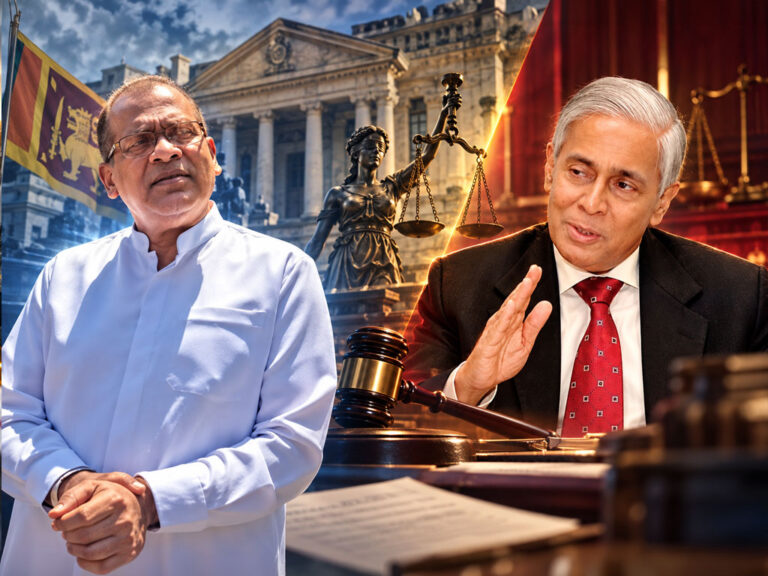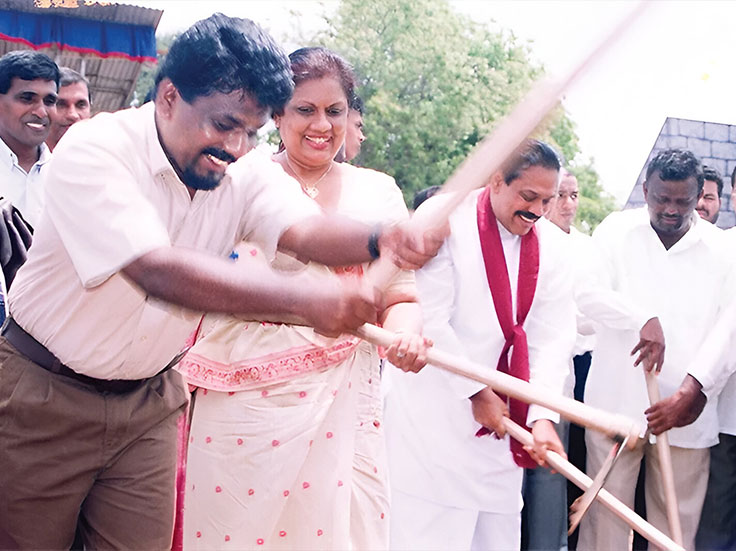
From a Marxist vanguard that once preached insurrection to a governing bloc cutting quiet deals with New Delhi, Sri Lanka’s JVP has executed the most dramatic metamorphosis in modern island politics, trading street thunder for realpolitik and sealing an irreversible partnership with India.
The story of Sri Lanka’s Janatha Vimukthi Peramuna is a study in survival, reinvention, and timing. The movement that began as a revolutionary project now presides over the National People’s Power coalition, manages statecraft with a lawyerly cool, and courts foreign partners it once denounced. The decisive inflection point arrived this year when the JVP led NPP government approved seven Memoranda of Understanding with India in April, including a sensitive understanding on defence cooperation. Though the texts remain under wraps, senior officials on both sides describe the framework as enduring and comprehensive. In one stroke the coalition that built its brand on anti expansionist rhetoric crossed a strategic Rubicon and tied its fortunes to India’s security and development architecture.

To understand how the party reached this moment, it is necessary to return to February 2014. On the second day of that month, at the JVP’s seventh national convention at the Sugathadasa Indoor Stadium, Anura Kumara Dissanayake took the reins. He was 46, already a seasoned parliamentarian, and stepped in after Somawansa Amarasinghe had kept the party alive through the bleak post insurrection decades following the custodial execution of founder Rohana Wijeweera under the Premadasa regime. The convention also ratified a revised constitution. At the time the JVP sat inside the Democratic National Alliance, a vehicle created under former Army Commander Sarath Fonseka for the 2010 parliamentary race. Besides the JVP, the DNA had little organic base. Its national list yielded a short cast that included Fonseka, cricket icon Arjuna Ranatunga, businessman Tiran Alles and Dissanayake himself.
Coalition making has always been the JVP’s instrument for leverage. Long before the NPP was formalized, the party had tested tents with the People’s Alliance and the United National Party. The NPP emerged only in December 2021 at a delegates conference at Monarch Imperial in Sri Jayewardenepura, where Dissanayake was elected leader. That single decision produced a constitutional anomaly. The same person now helmed a registered political party and a separate electoral alliance. The first year of the NPP led administration offers a convenient milestone to trace the JVP’s twisting trail through alliances over the last quarter century and to measure how a party born in opposition culture learned to govern.
The first notable bargain of the modern era came in September 2001, when President Chandrika Bandaranaike Kumaratunga’s People’s Alliance was bleeding support as over a dozen MPs decamped to the UNP. The JVP PA SLFP understanding was engineered to stabilize the government and stop a UNP impeachment push grounded in charges of abuse of power, constitutional violations, and financial irregularities. The UNP believed it had the numbers and even circulated a draft of the motion, led by the veteran K. N. Choksy, to likely allies, the JVP included. The Marxist caucus at the time counted ten MPs. Wimal Weerawansa served as parliamentary leader and Tilvin Silva as general secretary. Dissanayake was already inside that group and part of the negotiating circle.
In a twist dripping with irony, Somawansa Amarasinghe, who had fled the country in the late eighties to evade death squads that were locked in a brutal duel with the JVP, returned in November 2001, weeks before parliamentary polls. At his first public speech in Kalutara, he thanked India for saving his life. The United National Front went on to win the election without a simple majority. The JVP increased its strength from ten to sixteen, including three National List seats. Executive power sat with the presidency and the legislature had a UNF majority. The two tracks tore at each other. The deadlock generated a rolling crisis that the JVP exploited to agitate for a fresh mandate.
The next hinge came with the Ceasefire Agreement of February 2002 that Prime Minister Ranil Wickremesinghe signed with LTTE leader Velupillai Prabhakaran under Norwegian facilitation. Repeated LTTE violations, the persistence of High Security Zones, and the insurgent calculus of war and negotiation created political oxygen for a broader anti Wickremesinghe coalition. Quiet talks between the JVP and PA SLFP deepened. Some senior SLFP figures such as Anura Bandaranaike and Mangala Samaraweera drove the strategy, while Maithripala Sirisena maintained a cautious balance. Dissanayake sat alongside Tilvin Silva, Wimal Weerawansa and Lal Kantha on the JVP team. After months of bargaining, an agreement took shape in January 2004. Contentious national questions were shelved in favor of a tactical program to topple the government. The partners baptized their front as the United People’s Freedom Alliance.
President Kumaratunga initially preferred to let Parliament run to January 2005. Political realities intervened. Under pressure from allies who had built the UPFA architecture, she asserted presidential control of Defence, Interior and Media and dissolved Parliament in February 2004. The JVP contested under the Betel Leaf symbol of the UPFA, fielding 39 candidates and expecting five National List slots whatever the outcome. The campaign surged beyond expectations. The UPFA won 105 seats. The JVP delivered 36 elected MPs plus three National List places. That scale rattled the SLFP, which was forced to concede NL space to the new partner. After a sharp exchange the parties settled on three.
A power sharing formula among UPFA constituents envisioned 35 cabinet ministers and an equal number of deputies. The SLFP was thrown off balance when the JVP announced that Wimal Weerawansa and Nandana Gunatilake would decline cabinet office. Four ministries were earmarked for JVP nominees. The party placed Dissanayake at Agriculture, Lands and Irrigation, with Bimal Rathnayake as deputy. Vijitha Herath received Cultural Affairs, with Samantha Vidyaratne as deputy. Lal Kantha took Rural Economy, with Sunil Handunnetti assisting. Fisheries and Aquatic Resources went to Chandrasena Wijesinghe, and Nihal Galappaththy served as his deputy.
The honeymoon did not last. The JVP tried to block Mahinda Rajapaksa’s appointment as Prime Minister after the UPFA victory, presenting Lakshman Kadirgamar as the ideal choice. If a Sinhala Buddhist was necessary, the JVP proposed Anura Bandaranaike or Maithripala Sirisena. President Kumaratunga opted to proceed with Rajapaksa. The JVP still believed Kadirgamar could be elevated in the longer chess game, but the assassination of the foreign minister in August 2005 crushed that possibility and sharpened the security narrative ahead of the presidential election.
Even before that tragedy, the JVP had quit the UPFA over the proposed Tsunami Relief Council, arguing that the mechanism compromised sovereignty by granting the LTTE undue space in post disaster coordination. The break set the stage for a realignment during the 2005 presidential race. The JVP threw its organizational weight behind Rajapaksa. Without firm SLFP unity behind him, Rajapaksa leaned on JVP cadres to edge out Wickremesinghe. In exchange, the JVP secured an agreement, signed by Rajapaksa and Tilvin Silva, affirming the unitary nature of the state in any future solution to the national question.
Once in office, President Rajapaksa opened exploratory channels to the LTTE under international pressure, including Japanese interest and continued Norwegian facilitation. The JVP agitated for a hard line, but the government pursued a hybrid course that mixed talks and battlefield pressure. Even as the LTTE targeted Army Commander Sarath Fonseka in April 2006 and Defence Secretary Gotabaya Rajapaksa in October the same year, Oslo hosted discrete engagements. The JVP withdrew support early in the first term. A split followed. Wimal Weerawansa and Nandana Gunatilake migrated to the president’s camp. The remaining leadership challenged air strike narratives at press briefings and faced pushback as major SLAF operations unfolded. The war ended in May 2009 with the LTTE decisively defeated. Both the UNP and the JVP paid political costs for their uneven wartime positioning.
The next pivot was startling. Under Amarasinghe’s stewardship the JVP entered a UNP led alliance for the 2010 presidential election to back Sarath Fonseka. American encouragement was hardly a secret. The Tamil National Alliance, long viewed by Sinhala nationalists as an LTTE proxy, also joined. The JVP overlooked a painful memory. In November 1989, the UNP state killed Wijeweera in custody and decimated the JVP’s known leadership across the island except for Amarasinghe who had escaped abroad. That trauma had branded the party’s identity for a generation, but tactical arithmetic prevailed.
The UNP partnership meandered until 2019 when Dissanayake contested the presidency and finished a distant third with fewer than half a million votes. In 2015 the JVP supported the Maithripala Sirisena candidacy in a broad opposition platform. The party’s parliamentary strength slid to six seats in 2015 and three in 2020. The reversal could have been terminal if not for the patient groundwork that rebranded the project as the National People’s Power and for the entry of Dr Harini Amarasuriya on the NPP National List, which gave the alliance scholarly ballast and a modern, reformist veneer. The protest wave of Aragalaya, amplified by economic collapse, discredited the old parties and prepared the terrain for an NPP surge in 2024.
That ascent required a new foreign policy grammar. The JVP NPP machine had to prove it could run a modern economy, attract capital, and secure the island in a contested Indian Ocean. The April MoUs with India are the signature of that shift. Though unpublished, the basket reportedly covers energy connectivity, grid links, coastal security, logistics, training exchanges, digital public infrastructure, investments in ports and industrial zones, and targeted sectoral reforms. The defence understanding is the headline. For decades the JVP used the vocabulary of non alignment and sovereignty to attack engagement with major powers. Today it sells the India relationship as a risk managed partnership that protects Sri Lanka’s autonomy while unlocking growth. It is a gamble that redefines the party’s identity and asks its base to accept a pragmatic bargain with the neighbor that once embodied the specter of intervention.
The United States angle matters as well. The NPP leadership has opened channels with Washington, arguing that transparency, anti corruption reforms, predictable regulation, and an independent judiciary are not ideological gifts but economic tools that reduce risk premiums and lower the cost of capital. Early gestures and careful rhetoric have softened long standing suspicions. None of this has turned the JVP into a centrist party. Instead it suggests a disciplined recalibration that keeps the social justice frame while aligning security and development with available power. In other words, realpolitik without surrendering the brand of clean government and accountability.
The party’s pathway also illustrates a paradox. It has opposed the UNP, partnered with the UNP, fought the SLFP, joined the SLFP, mobilized for Mahinda Rajapaksa, and then battled him. Its leaders have declined ministries to preserve purity and taken ministries to shape policy. It has partnered with cadres who later defected and then built a fresh bench almost from scratch. This plasticity is often condemned as opportunism by rivals. Yet it is also the reason the movement remains relevant after half a century. The choice to place Dissanayake at the helm of both the JVP and the NPP formalized that adaptability. A single face could speak to hard core activists and middle class swing voters and could sign memoranda with New Delhi while citing socialist tradition at home.
The transformation is not cost free. Old comrades point to the memory of 1989 and warn that fraternizing with former enemies erodes the moral core that once distinguished the JVP from patronage machines. Critics of the India tilt cite unresolved sensitivities from the Indo Sri Lanka Accord and the IPKF era and caution that defence cooperation can slide into strategic dependency if not ring fenced. Fishermen’s disputes, trade asymmetries, and fears over land and energy projects still inflame opinion. Managing those anxieties will test the NPP’s communication discipline and its willingness to put transparency ahead of tactical secrecy. Keeping the seven MoUs unpublished has already fed suspicions. Publishing the texts, subjecting them to parliamentary scrutiny, and presenting a clear benefits ledger would signal that the new realism includes democratic accountability.
None of this erases the party’s earlier experiences. The episode over the Tsunami Relief Council, the bid to push Lakshman Kadirgamar to the premiership, the later embrace of Mahinda Rajapaksa, and the brief romance with a UNP led Fonseka platform all reveal a single lesson. The JVP has always sought vantage points where its limited numbers could shape outcomes. The difference today is that it must convert that instinct into a governing habit. Economic stabilization, debt restructuring, and cost of living relief demand boring competence as much as ideological clarity. Voters who lined up for the NPP did not buy a manifesto of revolt. They purchased a promise of clean, effective administration that would end the cycle of cronyism and waste. The India pivot is only defensible if it delivers lower energy prices, reliable power, more jobs, and credible security.
There is also a deeper historical echo. In 1989 Somawansa Amarasinghe was alive because an external actor intervened. That rescue leaves a mark on institutional memory. It is a reminder that in moments of danger, alliances can be decisive. The current leadership uses that parable to justify a doctrine that values strategic friendships without surrendering sovereignty. Whether the base internalizes that interpretation will decide the durability of the pivot. For now the leadership is betting that a public exhausted by economic pain and political scandal will reward competence and transparency even if the flag of partnership flutters over previously taboo ground.
The optics are striking. A party that once taught cadres to chant against foreign meddling now tours New Delhi’s policy ecosystem and speaks about digital public goods, multimodal logistics, and skill pipelines. The same organization that once rejected cabinet office on principle now runs ministries and writes budgets. It is a long way from a clandestine movement that dreamed of seizure of power to a coalition that files cabinet papers, negotiates with creditors, and sends working groups to Indian think tanks. If the past two decades were about surviving trauma, purging excess, and re schooling a generation in electoral craft, the next two will be about whether the JVP NPP can institutionalize a culture of rule bound, data driven governance while keeping its egalitarian promise.
The stakes are national. Sri Lanka sits at the intersection of sea lanes, debt workouts, and a fragile social contract. A clean government that can lock in growth and keep the peace would transform lives. A government that squanders the mandate in factional quarrels or secrecy would harden cynicism for a generation. The choice to bind with India is therefore not a minor tactical shift. It is the central wager of a party that has decided to exchange romantic purity for usable power. The wager will be measured in megawatts delivered, factories opened, tourists flown in, fishermen protected, and rupees stabilized. Deliver those and the pivot will look like wisdom. Fail and the old charge of betrayal will echo again.
That is why the new leadership’s rhetoric emphasizes process. Publish agreements. Audit projects. Invite parliamentary and civic oversight. Honour local communities in development zones. Resolve fisheries and border waters disputes through structured diplomacy that shields livelihoods. Insist that every cross border initiative has a clear, public balance sheet with costs, benefits, and risk mitigation. Apply the same standard to partnerships with any other power or investor. If the coalition can pair its anti corruption credentials with professional execution, it will reset the political marketplace for a generation.
The JVP began as an insurgent manual. It is now writing a handbook of coalition government. The April MoUs with India are the most visible chapter so far. They symbolize a party that has learned to live inside the world as it is. The movement still speaks the language of equality, still attacks waste and privilege, and still points to grassroots participation as its compass. The difference is that it now courts large partners, negotiates behind closed doors, and tries to convert ideology into policy. Whether one calls that maturity or compromise depends on where one stands. What cannot be denied is that the JVP has crossed its own Rubicon. In politics, as in war, the bridge you burn or the bridge you build becomes your fate. The JVP has chosen to build.
Sri Lanka’s voters will judge the results soon enough. If prices soften, jobs spread, and national dignity is protected, the coalition will have demonstrated that a radical tradition can coexist with strategic partnerships. If secrecy deepens and benefits do not reach citizens, the old fears about foreign capture and elite bargains will return with force. Either way, the party that once weaponized purity has embraced power. The quiet signature on seven memoranda in April did not only inaugurate a relationship with India. It marked the moment the JVP’s long journey from revolution to realpolitik became irreversible.