He walked out of a burning plane when 241 others died. Now he says survival feels like a punishment, not a miracle.
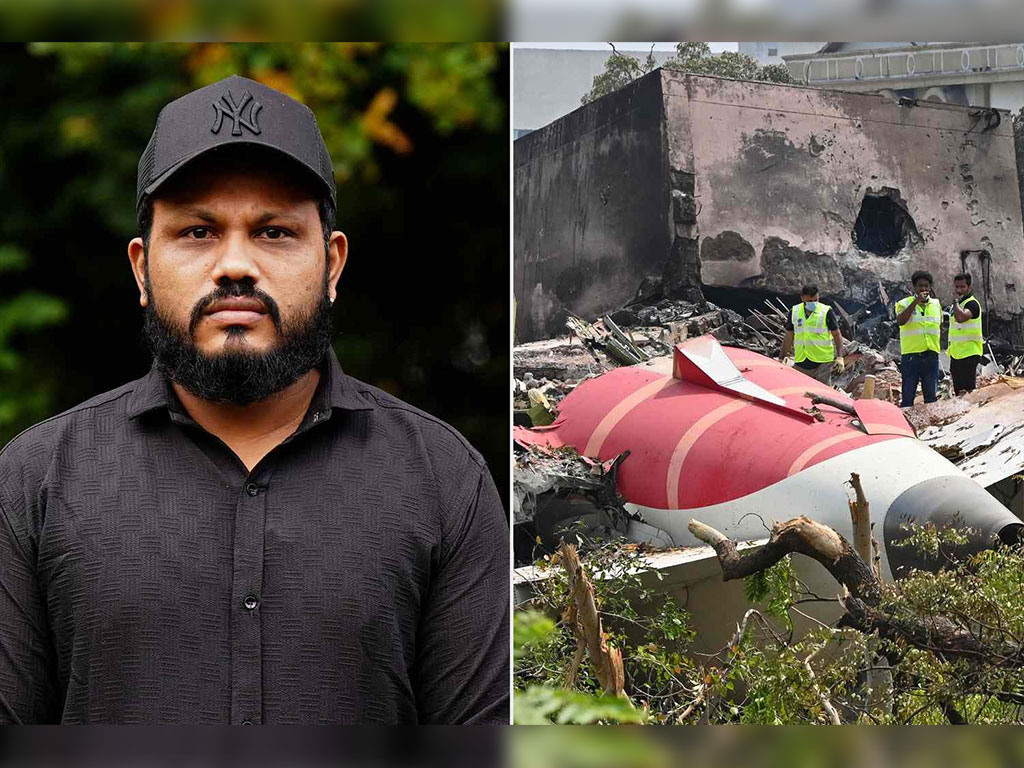
The sole survivor of the Air India crash that killed 241 people says he feels like “the luckiest man” but is also suffering physically and mentally. Vishwaskumar Ramesh walked through the wreckage of the London-bound plane in Ahmedabad in a moment captured on video that stunned the world. He called his escape a miracle, but said that his life since the crash has been filled with trauma, grief and isolation. His younger brother Ajay, who was seated just a few rows away on the same flight, was among the victims who died in June.

Since returning to his home in Leicester, Ramesh has suffered from post-traumatic stress disorder and has been unable to speak to his wife and four-year-old son, according to counsellors who have been following his condition. The Air India Boeing 787 crashed shortly after takeoff in western India and burst into flames, killing nearly everyone on board and also those in the building where the plane came down.
A shocking video posted at the time showed Ramesh walking away from the burning aircraft with visible injuries, as smoke filled the background. Speaking to BBC News in his first media interview since his return to the UK, an emotional Ramesh said: “I am the only survivor. I still can’t believe it. It’s a miracle.” He then added, “I also lost my brother. My brother was my backbone. He always supported me in the last few years.”
He described the devastating impact the crash has had on his family life. “Now I am alone. I am sitting alone in my room, I don’t talk to my wife or my son. I prefer to be alone in my house,” he said. Speaking from a hospital bed in India shortly after the crash, Ramesh described how he crawled out of the wreckage through a gap in the fuselage and later met Indian Prime Minister Narendra Modi while receiving treatment for his injuries.
Of the passengers and crew who died, 169 were Indian and 52 were British. Nineteen more people were killed in the building where the plane crashed. A preliminary report published in July by India’s Aircraft Accident Investigation Bureau stated that the plane’s engines had lost fuel seconds after takeoff. The full investigation is ongoing, and the airline has said that supporting Ramesh and the families of the victims is “our top priority.”
It was the first time the 39-year-old had spoken to the media since arriving back in the UK. Several news organisations were invited for interviews, and a documentary crew was also present in the room. The BBC held detailed discussions with his advisers to ensure his safety before the interview began. When asked to describe his memories of the crash, Ramesh responded quietly: “I can’t say anything about it now.”
“I’m suffering,” he said during another moment of the interview. Ramesh, who was accompanied by community leader Sanjeev Patel and spokesman Rad Seeger, broke down in tears at Patel’s home in Leicester. “I’m in a lot of pain after this accident,” he said. “Physically, mentally, as well as my family, mentally… My mother has been sitting at the door every day for the last four months, not talking, not doing anything.”
“I don’t talk to anyone else. I don’t want to talk to anyone else.” He continued, “I can’t talk much. I’ve been thinking all night. I’m suffering mentally. Every day is painful for the whole family.”
Ramesh also spoke about the physical injuries he sustained, including severe pain in his legs, shoulders, knees and back. He explained that he escaped the wreckage through a hole in the aircraft’s body near his seat, 11A. “I can’t walk properly, I walk slowly, slowly, my wife helps me,” he added.
Ramesh was diagnosed with post-traumatic stress disorder while receiving treatment in India, but his lawyers say he has received no medical care since returning home. They describe him as disoriented, depressed, and facing a long road to recovery. His legal team has requested a meeting with Air India executives, accusing the airline of failing to support him after the tragedy. Patel said the family has been “emotionally, physically and financially devastated” and that the disaster has destroyed their lives.
Patel added, “Anyone responsible at the highest level should meet the victims of this tragic incident and understand their needs and listen to them.” Air India has offered Ramesh interim compensation of £21,500, which he accepted, but his lawyers say the money is nowhere near enough to cover his immediate needs. The fishing business Ramesh ran with his brother in the Diu region of India has collapsed since the crash.
Family spokesman Rad Seeger said they had invited Air India for talks three times but had been “ignored or rejected” on each occasion. He said the press interviews were the group’s way of reissuing the appeal publicly. “It is dangerous for us to be here today and bring him to this,” Seeger said. “The executives of Air India who should be sitting here today are the ones responsible for trying to right the wrongs that have been done.”
“Please join us, so that together we can try to alleviate this suffering,” he added. Air India, which is now owned by the Tata Group, said in a statement that senior leaders of the company would visit affected families to express condolences. “A proposal has been made to Ramesh’s representatives to arrange such a meeting. We are continuing to engage. We very much hope for a positive response,” the airline stated. Air India also told the BBC that this offer was made before Ramesh’s press conference.
Ramesh remains the face of a tragedy that has left hundreds mourning and one survivor trapped between life and memory. His story has become a painful symbol of aviation disaster, mental health struggle, family loss, and the unanswered question of responsibility. While investigators search for the cause of the crash, Ramesh continues to search for the strength to live with what he survived.