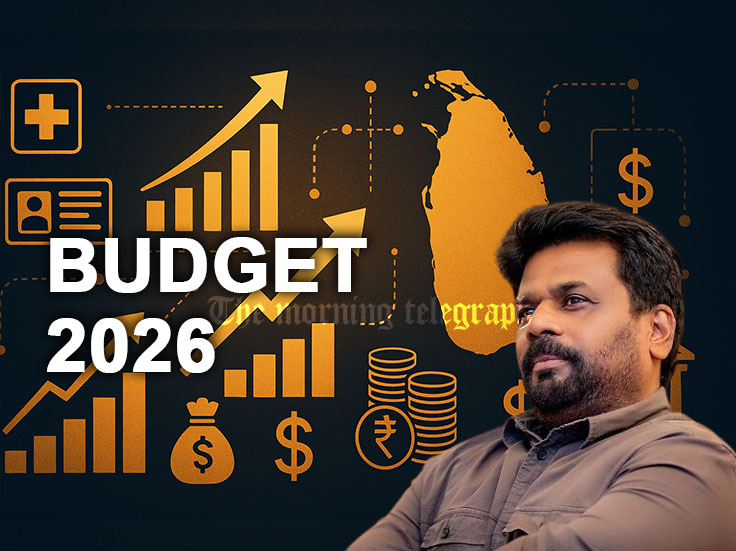
From a massive Rs 91.7 billion irrigation investment to nationwide digital ID cards and a Rs 1,750 estate worker wage, Budget 2026 lays out a detailed financial blueprint for Sri Lanka’s recovery, targeting 7% growth through sweeping reforms in governance, healthcare, and infrastructure.
President Anura Kumara Dissanayake’s presentation of Budget 2026 in Parliament represents a comprehensive policy statement, detailing a multi-pronged strategy to steer Sri Lanka through its post-crisis recovery and toward sustainable growth. The budget is characterized by its reform-driven and inclusive direction, balancing immediate social welfare needs with long-term investments in digital transformation, infrastructure, and economic modernization. The government’s narrative is one of achieving hard-won macroeconomic stability and now leveraging that foundation to build a more resilient, equitable, and technologically advanced nation. The extensive allocations signal a decisive turn towards a state that is simultaneously more supportive of its vulnerable citizens and more ambitious in its economic goals.

The macroeconomic framework of Budget 2026 projects confidence and targets aggressive improvement. The government asserts that macroeconomic stability has been achieved, a key signal to international investors and financial institutions. This stability is underpinned by inflation remaining below 5%. The fiscal targets are equally ambitious:
- The budget deficit is projected at 5.2% of GDP for the current year.
- The debt-to-GDP ratio is forecasted to fall to 95%, with a further decline to 87% targeted by 2030.
- Government revenue is expected to reach 16% of GDP by the end of 2025, with a target of 15.3% set for 2026.
To fuel this fiscal consolidation and drive development, the government is targeting an annual economic growth rate of 7%. This growth is envisioned to be supported by strategic foreign investment and enhanced trade facilitation. Key institutional steps include:
- Appointing a dedicated committee to negotiate Free Trade Agreements.
- Amending the Colombo Port City Economic Commission Act to presumably enhance its attractiveness to global capital.
The social welfare and public health sectors receive significant financial commitment, reflecting a core policy of inclusivity and human capital development. The budget makes substantial allocations for healthcare infrastructure and services, including:
- Rs 11 billion for medical faculties in state universities.
- Rs 4.2 billion for the Suwasariya Ambulance Service.
- Rs 1.5 billion to pilot Primary Healthcare Centres.
- Rs 200 million for a National Cardiologic Hospital in Colombo.
- Rs 1 billion to relocate Dambulla and Deniyaya Hospitals.
Support for vulnerable groups is a prominent theme, with specific measures such as:
- A Rs 10,000 monthly allowance for thalassaemia patients.
- A Rs 5,000 monthly allowance for differently-abled children in higher education.
- An increase of Rs 2,500 to the Mahapola Scholarship.
- Rs 500 million for day-care centres for children with disabilities.
- A reservation of 3% of all government recruitments for persons with disabilities.
A massive allocation of Rs 91.7 billion is dedicated to the agriculture, livestock, and irrigation development sector, underscoring its critical role in food security and rural livelihoods. This investment focuses on revitalizing key infrastructure and boosting productivity:
- Major restoration works for the Senanayake Samudraya, Gal Oya, Rajanganaya, Huruluwewa, and Minneriya reservoirs.
- Rs 5 billion for the Lower Malwathu Oya Multipurpose Project.
- Rs 50 million to restart the Mundeni Aru Project.
- Rs 3 billion for the Milco Badalgama factory renovation.
- Rs 1 billion for cattle and swine breeding and another Rs 1 billion to boost domestic milk production, aiming for 75% self-sufficiency by 2030.
- Rs 600 million for the Jaffna Coconut Triangle.
The fisheries sector also receives targeted support for modernization and safety, including:
- Rs 350 million for the Valaichchenai Fishing Harbour.
- Rs 500 million for wharf infrastructure improvements.
- Rs 100 million for life-saving equipment for fishermen.
- Rs 100 million for satellite-based fish-ground identification technology.
Infrastructure and regional connectivity are major priorities, with significant funding aimed at improving transport networks and boosting tourism and trade potential. Key infrastructure allocations include:
- Rs 24 billion for rural road construction and Rs 2.5 billion for rural bridges.
- Commencement of the Bandaranaike International Airport (BIA) expansion next year.
- Rs 1 billion for developing Hingurakgoda, Sigiriya, and Trincomalee domestic airports and expanding Jaffna Airport.
- Rs 2.5 billion to develop Beira Lake into a public attraction.
- Rs 2.5 billion for the National Single Window for trade facilitation.
Budget 2026 outlines a clear and ambitious vision for a digital transformation of governance and the economy. This digital push is designed to increase efficiency, reduce corruption, and foster a modern business environment. The key digital initiatives announced are:
- Moving all government payments online, with no service fees for transactions under Rs 5,000.
- Issuing Digital ID cards by March 2026.
- Establishing a Virtual Economic Zone.
- Offering five-year tax concessions for digital communication towers.
- Launching an e-procurement system and a digital assets registry in 2026.
- Deploying 100 new telecom towers to enhance national connectivity.
- Providing broadband vouchers for children from low-income families.
Entrepreneurship and employment generation are addressed through targeted financial support and wage reforms. The budget provides:
- Rs 5.9 billion in loan schemes for Small and Medium Enterprises (SMEs).
- Rs 800 million for a Sustainable Agricultural Loan Fund.
- Rs 240 million to uplift self-employment and women entrepreneurs.
- An increase in the daily wage for estate workers from Rs 1,350 to Rs 1,750 by January 2026, supported by a government attendance incentive.
- A Rs 2 billion allocation from the Foreign Employment Bureau to introduce a pension scheme for migrant workers in 2026.
Underpinning the entire budget is a strong emphasis on governance and anti-corruption reforms. The government has reaffirmed its commitment to fiscal discipline and transparency through several measures:
- Abolishing tax exemptions and relief transfers to friends and associates.
- Converting 900 state bungalows into profitable Public-Private Partnership (PPP) ventures.
- Implementing strict anti-corruption measures, with a promise to punish wrongdoers regardless of position.
- Introducing a residence visa system for tourists.
- Appointing an expert committee to draft a Judicial Code of Ethics.
In conclusion, Budget 2026 is a detailed and expansive document that seeks to address multiple fronts of national life simultaneously. It attempts to bridge the immediate need for social protection with the long-term imperative of economic modernization and digitalization. Its success will hinge on the effective implementation of these wide-ranging proposals, the realization of its optimistic revenue and growth targets, and the government’s ability to maintain its stated commitment to fiscal prudence and anti-corruption in the face of significant spending pressures. The budget sets a high bar for Sri Lanka’s recovery, outlining a vision of a disciplined, inclusive, and modern nation poised for a new chapter of growth.
As of 04.05 PM