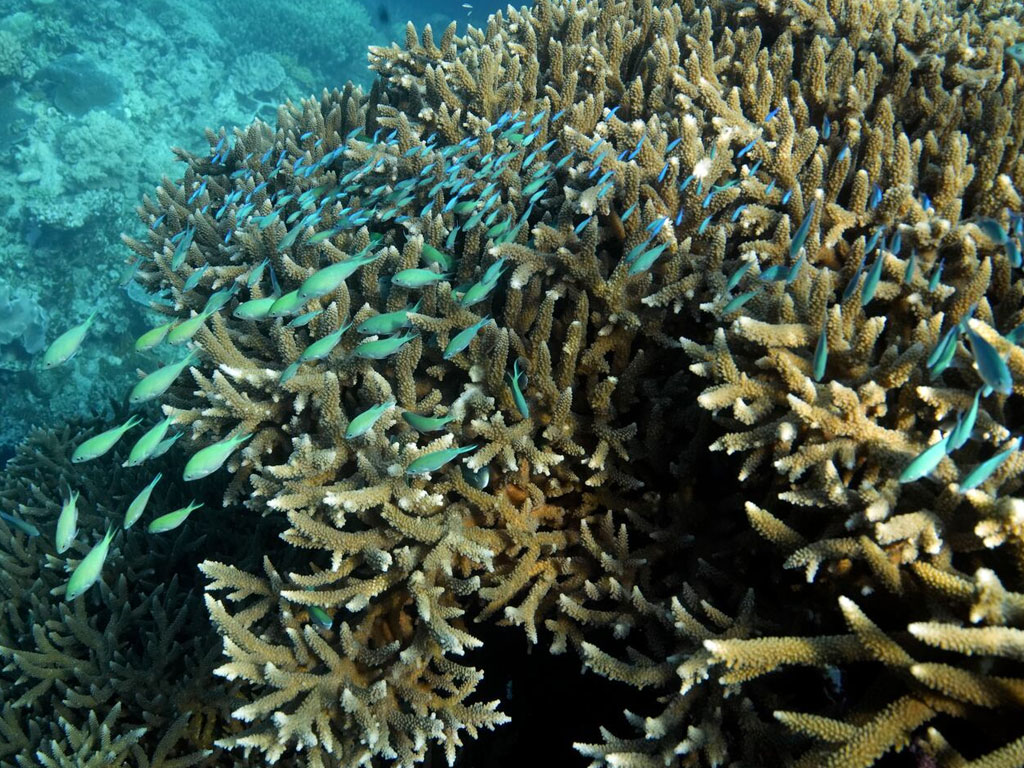
Scientists say the Great Barrier Reef is still on the brink of collapse — but new modelling shows parts of it could rebound after 2050 if global heating is kept below 2°C, offering a rare window of hope for the world’s largest coral ecosystem.
The Great Barrier Reef, one of the world’s most biodiverse ecosystems, faces a “grim future” with a rapid decline in coral health expected by 2050, but a new study suggests partial recovery is possible if global warming is limited to below 2°C. Researchers from the University of Queensland modelled the lifecycles of more than 3,800 coral reefs and found that some species are adapting better to warming oceans, potentially aiding regrowth. Reefs exposed to cooler-water currents were shown to be more resilient, offering a “glimmer of hope” amid widespread bleaching caused by rising ocean temperatures. The researchers warned that reducing carbon emissions remains crucial to prevent a near-total collapse of the reef system.

Lead author Dr Yves-Marie Bozec said the team’s simulations incorporated the latest climate data to examine coral evolution and adaptation across the Great Barrier Reef. “We forecast a rapid coral decline before the middle of this century regardless of emissions scenario,” he said. “However, some reefs may partially recover after 2050 if warming slows enough to allow natural adaptation.” The reef, which stretches over 2,300 kilometres off Australia’s northeast coast, has endured four severe marine heatwaves between 2016 and 2022. These events triggered mass coral bleaching, where corals lose their algae and colour, often resulting in death. Recent surveys show some regions of the reef have suffered the steepest coral loss recorded in nearly 40 years.
The researchers said keeping global temperature rises below 2°C, as targeted by the Paris Agreement, is essential for the reef’s survival. Professor Peter Mumby, a co-author of the study, said reefs in well-mixed, cooler waters showed higher resistance and could help regenerate surrounding areas. He added that identifying these resilient zones would allow conservationists to prioritise “strategic parts” of the reef to preserve what remains of this natural wonder.