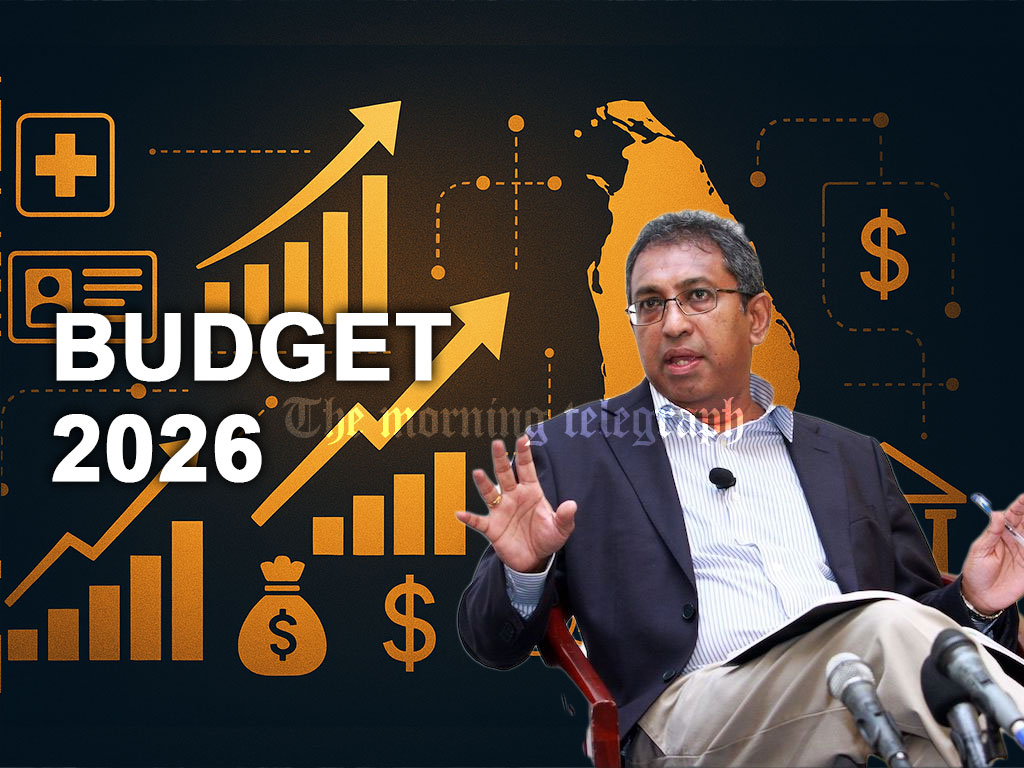
Dr. Harsha de Silva says the 2026 Budget is built on unrealistic promises, hidden taxes and silent frauds — accusing the government of borrowing billions while offering nothing to the struggling public.
Samagi Jana Balawegaya MP and Chairman of the Finance Committee, Dr. Harsha de Silva, has slammed the 2026 Budget presented by President Anura Kumara Dissanayake, claiming it is filled with unrealistic targets, concealed burdens and no real economic direction. Speaking during the Budget debate, he said the government plans to borrow an unprecedented Rs 3,800 billion while preparing to introduce a property tax in 2027 under an agreement with the IMF, despite already taxing the public at multiple levels.

Dr. de Silva said the budget exposes how the economic thinking of the current leadership is shaped by the same “centralised and ideological mindset” once promoted by long-time leftist figures. He argued that although the government has continued the macroeconomic stability achieved under the previous administration, it has completely failed to set the country on a genuine high-growth path. He said the 7 percent growth target is not enough to rebuild a collapsing middle class and does not match the scale of the crisis.
He questioned whether the government is attempting to turn a multi-party democracy into a one-party system through economic centralisation. The MP also raised concerns about the double cab vehicle tender for MPs and demanded its suspension, criticising the government’s silence on the sugar tax scam and e-visa fraud. He said that while the government earns easy revenue through vehicle imports and taxes, it has not provided a single meaningful relief measure to citizens crushed by the cost of living.
Dr. de Silva warned that even a small business earning Rs 100,000 per day is now trapped under VAT, driving prices higher for ordinary people. He said the government could have renegotiated with the IMF to give tax relief to low and middle-income earners but instead chose not to. He added that only 4,166 government workers will benefit from the proposed subsidised housing loan scheme, far below national demand.
He also revealed that although the government claims US$ 823 million in foreign direct investment has arrived, it is hiding the fact that 67 percent of those agreements were signed under the previous administration. Dr. de Silva concluded that the budget fails the youth who want jobs, housing, mobility and a stable future — and instead burdens them with new debt, new taxes and fewer opportunities.