A leader once lifted to mythical heights now stands as a living reminder of how worship, power and symbolism can imprison the very man they elevate.
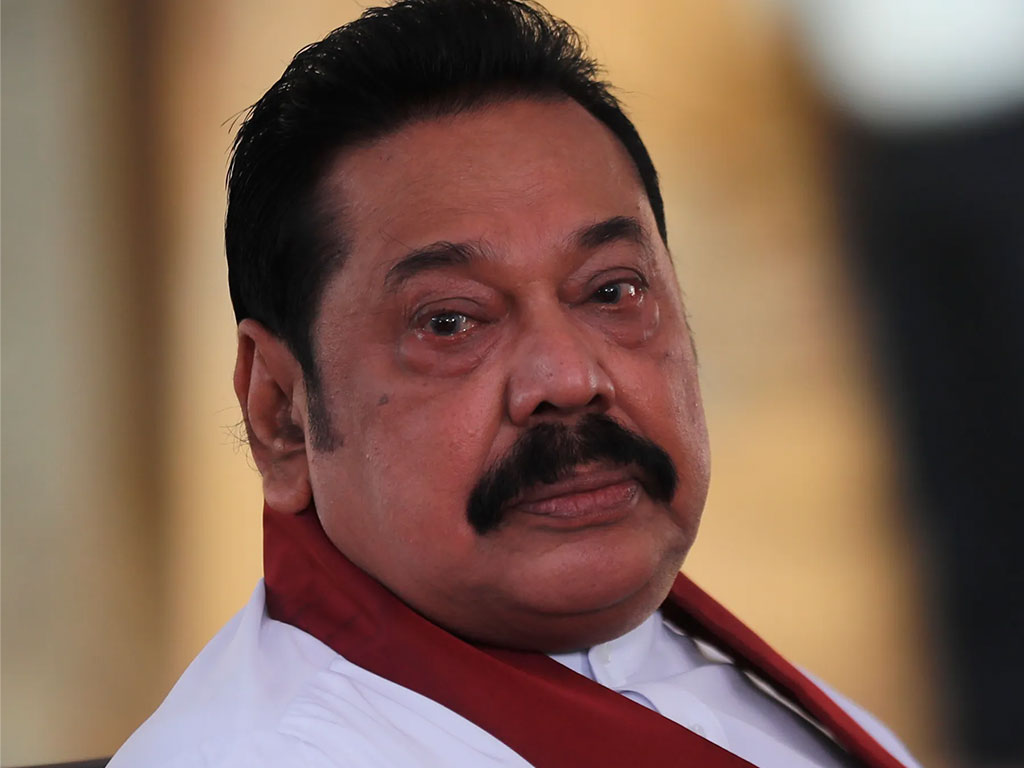
Former President Mahinda Rajapaksa will celebrate his eightieth birthday next Tuesday. Whether one admires or despises his politics, there is no denying that he decisively shaped the destiny of Sri Lanka for decades, and his imprint will linger long into the future. Understanding Mahinda Rajapaksa is crucial not only as a study of a single human being but as a lens through which to examine the intersection of society, religion, charisma, national psychology and political identity. His trajectory forces us to confront the anatomy of political symbolism, the philosophical tragedy of the big man, and the collapse of institutional balance when personality begins to overshadow principle.

Mahinda rose to prominence at a decisive moment of national crisis. At the end of a brutal civil war, he embodied the image of a saviour and warrior-statesman, echoing Pericles rallying Athens during the Peloponnesian wars or Augustus consolidating Rome after years of chaos. Max Weber’s concept of charismatic authority is indispensable for understanding this moment. Mahinda commanded not merely office but loyalty, belief and symbolic legitimacy. Weber described charisma as “a certain quality of an individual personality by virtue of which he is set apart from ordinary men and treated as endowed with supernatural, superhuman, or at least specifically exceptional powers or qualities.” For Mahinda, these powers were political rather than mystical, yet society projected its anxieties, hopes and collective identity onto him in precisely the same way.
Charisma, however, is inherently unstable. Weber warned that it must either transform into legal and bureaucratic frameworks or it dissolves. Unlike Augustus who institutionalised his power or Pericles who fused civic virtue with democratic governance, Mahinda remained the centre of a deeply personal system surrounded by family and loyalists who reflected his will rather than challenged it. Here lies the cruel irony: the admiration that elevated him became the very force that blinded him. As the public celebrated him and his inner circle amplified every gesture, he gradually lost the ability to distinguish genuine strategy from mere flattery, principle from applause. In the post-war era, Mahinda became more than a politician. He transformed into a symbol, a vessel of national hope and an avatar of Sinhala Buddhist identity. Yet symbols do not govern. They are interpreted, repurposed and often tragically misunderstood.
Mahinda’s trajectory invites reflection on history, power and social perception. There is a distinctly Nietzschean element to his rise and fall: a temporary Übermensch, a man lifted above conventional norms and turned into the axis of collective aspiration. But like all such figures, he ultimately confronts mortality, social expectation and the limitations of human frailty.
The post-war period exposed the fragility of personalised power. Weber insisted that charisma must either routinise into institutional authority or break apart. Mahinda’s independence slowly eroded because those around him began to worship the symbol rather than engage the substance. Advisors, loyalists and even family members treated national exaltation as justification for decisions detached from reasoned governance. Buddhism, historically decentralised and grounded in lay community life rather than political authority, became increasingly mobilised to serve personal legitimacy. His rhetoric and gestures drew on a century of nationalist Buddhist revival, echoing the work of scholars such as Prof S. T. Tambiah and Prof Gananath Obeyesekere, who described how religious identity could be reshaped into a tool of political mobilisation. A philosophy centred on impermanence and the dissolution of ego became instrumentalised in pursuit of political permanence for one man.
This manipulation of religious authority was neither accidental nor purely symbolic. Mahinda’s administration drew on multiple religious institutions including the Catholic Church, each seeking to assert its relevance in the post-war state. In this process, he became increasingly dependent on these institutions. His once secular framing of national unity and reconstruction shifted under the weight of symbolic expectation. Just as Augustus used Roman religion to fortify political authority or Pericles entwined civic and religious pride to strengthen the polis, Mahinda’s political philosophy became inseparable from institutions that ultimately constrained him. Ironically, he was often used by the Catholic Church just as he was by Buddhist clergy who, in many cases, ignored opportunities for meaningful structural reform.
The inevitable result was a gradual unraveling of independence, first political and then familial. The network that once amplified his authority became the very mechanism that restricted it. Loyalty mixed with unexamined adulation became a cage. Siblings and close allies, once extensions of his will, transformed into mirrors reflecting only public desire, amplifying triumphs and shielding him from critique. Mahinda lost power not only externally but internally. He became politically incapacitated within his own household. This was a tragic inversion of the charismatic logic that had elevated him. In Lacanian terms, the mirror stage of political projection trapped the subject within the desires of the Other. Mahinda became blindfolded by affection and intoxicated by praise, losing touch with political reality.
Mahinda’s trajectory again calls for reflection on history, power and perception. His rise resembled the creation of a temporary Übermensch, a man elevated beyond ordinary constraints, yet inevitably confronted by the limitations of human nature. The worship that once empowered him became the mechanism of his constraint. Camus’ concept of absurdity applies powerfully here: a man once perceived as invincible now confronts the absurdity of societal projection, a populace demanding permanence from a fundamentally impermanent human being.
The post-war narrative also illustrates the perilous combination of historical contingency and generational expectation. Unlike countries such as South Korea or Singapore, where leaders institutionalised authority to last beyond their lifetimes, Mahinda’s charisma remained entirely personalistic. The familiar post-colonial big man syndrome collided with democratic uncertainty, economic pressures and familial competition. There was no proceduralisation or legal scaffolding to convert adulation into sustainable governance. In Weberian terms, Mahinda failed to transform charisma into institutional power. He left behind a paradoxical legacy of national reverence intertwined with political paralysis.
At eighty, Mahinda Rajapaksa stands both as a relic and a warning. His life captures the intersection of ambition, public projection and religious symbolism. The distortion of Buddhist revivalism and the co-option of religious institutions for political legitimacy reveal the fragility of governance when it becomes entwined with mass adoration. The post-war era, filled with triumph and symbolic ritual, mirrors ancient political patterns. Augustus used ritual to consolidate Rome. Pericles combined civic pride with political control. In both cases, institutionalisation protected the state from collapse. Mahinda, in contrast, demonstrates the limits of unmediated charisma: the adored man becomes the trapped man, and the nation that worshipped becomes constrained by its own expectations.
History rarely reproduces such figures. No successor has inherited Mahinda’s symbolic power or political aura. Attempts to imitate him falter because the phenomenon was deeply personal and rooted in a specific moment. His eightieth year is not merely a birthday. It serves as a prism through which to examine society, religion and political psychology. It is a reminder that leadership requires not only decisiveness and heroism but also foresight, management of public adulation and ethical stewardship of symbolic power.
Mahinda Rajapaksa’s life chronicles the collision of human expectation with impermanence. Society elevated him, religious institutions sanctified him, family amplified him, yet every force that lifted him eventually contributed to his political constriction. The charismatic paradox is simple and devastating: the greater the worship, the narrower the freedom, and the more powerful the symbol, the sharper the distortion. Sri Lanka’s history and its philosophical lessons of political life demand that we study such figures not only for their achievements but for the dynamics they reveal: the societies that exalt them, the ideologies they embody and the vulnerabilities that inevitably emerge from human aspiration.