
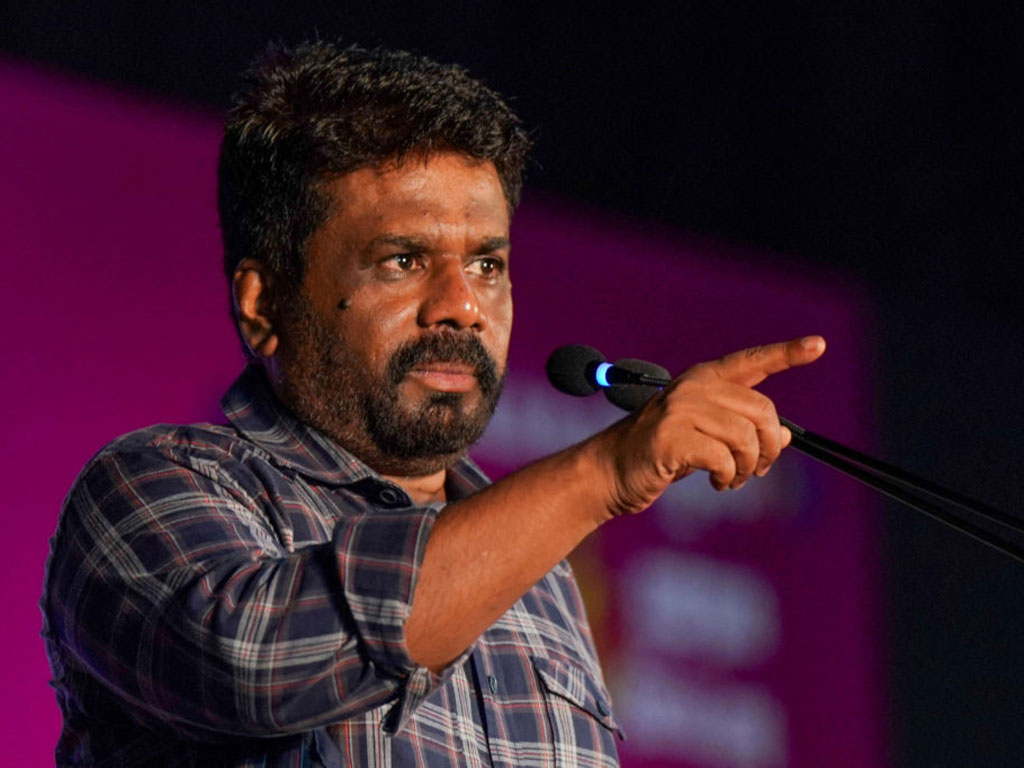
A nation watches in growing alarm as President Anura Kumara Dissanayake’s leadership buckles under pressure, exposing deep fractures in governance while an unprepared opposition fails to offer a lifeline.
Sri Lanka’s political climate has entered a dangerous phase, one marked by instability, uncertainty and the unmistakable scent of leadership unraveling. President Anura Kumara Dissanayake’s recent closed-door address to Parliament, delivered in the aftermath of the Trincomalee fiasco, revealed a leader struggling to steady himself. His speech, filled with evasions and vague warnings about unseen saboteurs, exposed a deeper truth that no press release could hide. At a moment that demanded clarity, accountability and emotional ballast, he chose instead to sidestep responsibility and gesture at invisible enemies. The spectacle revealed a leader overwhelmed by the sheer weight of governing a fragile state, a leader suddenly aware that power alone does not grant competence.

When rulers recognise their own inadequacy, paranoia becomes their closest companion. History is crowded with examples of leaders whose fear of failure mutated into suspicion and aggression. Dissanayake’s mounting anxiety is not merely political gossip; it has begun to distort the functions of the state. His government, once buoyed by fiery rhetoric and promises of purification, is now sustained by two reflexes that betray desperation. The first is a constant shower of loosely constructed accusations against the opposition. The second is the compulsive insistence that everything is under control, even as secretive dealings with external actors and internal fractures grow more visible. Parliament has transformed from a chamber of national deliberation into a ceremonial stage managed for a loyal inner circle. Centralisation has hardened, narrowing governance into a small cluster of political interests that now chart the nation’s course.
This pattern is not unfamiliar. Leaders rising from deprivation and anger often enter office with romantic dreams of cleansing and rebuilding the state. But ambition curdles when confronted with the vast machinery of governance, a machinery that punishes inexperience. The psychological descent is visible. It mirrors the path of Robert Mugabe, who struggled to reconcile the promises of liberation with the responsibility of governance. It recalls Nicolae Ceausescu, whose panic swelled into delusions about imaginary conspiracies. As Václav Havel once observed, such rulers project their fears onto the world because they cannot confront them internally. Dissanayake’s circumstances echo this dynamic. His administration increasingly behaves as if surrounded by shadows.
Government rhetoric has shifted from development to vengeance. With the economy resting on a perilous edge, leadership should be focused on fiscal stewardship, institutional repair and negotiation with both regional partners and global lenders. Instead, energy is spent on public feuds, punitive gestures and polarising theatrics amplified on social media. The machinery of policymaking has shrunk into a sequence of online counterattacks designed for spectacle. Governance has begun to resemble an improvised performance curated for digital applause rather than sober administrative action.
Yet the opposition, despite the government’s deterioration, remains lost in its own abyss. Its leaders are tangled in self-promotion, personal branding and premature presidential fantasies. They lack both ideological grounding and a coherent structural plan for the republic’s future. This presents a bizarre political stage: a government stumbling under its own incompetence and an opposition too consumed by its illusions to articulate an alternative vision. Many in the opposition believe that power itself will grant capability, ignoring the longstanding warning by Helmut Schmidt that those who rely on visions rather than planning should seek a doctor, not a mandate.
For all of Dissanayake’s shortcomings, he relies heavily on the institutional scaffolding built by former President Ranil Wickremesinghe. Ranil’s unexpected presidency, though deeply flawed, prevented a national collapse during the previous economic crisis. His influence persists because no contemporary political figure possesses his technocratic endurance. But this inheritance is not infinite. Borrowed strength erodes. A leader who relies too heavily on the answers of a predecessor may pass a temporary test but cannot achieve mastery. Once the façade cracks, the vacuum left behind becomes fertile ground for coercive power. Nations fall into authoritarian grips not through sudden coups but through gradual normalisation of repression.
Sri Lanka’s political trajectory now mirrors this pattern. The nation is sliding toward the phase where insecurity at the top begins to reshape the state. When leaders sense that their authority is slipping, coercion becomes a tempting instrument. Hugo Chávez once became most dangerous when he realised his charisma no longer disguised the failures of governance. Sri Lanka appears to be entering a comparable moment. A leader conscious of his limits finds himself presiding over a deeply indebted economy, decaying institutions and a population increasingly sceptical of political promises.
The country now stands on the edge of a political eruption. The crisis festering beneath surface-level assurances cannot be resolved through speeches or ritual attacks on the opposition. As fractures widen, Dissanayake is likely to continue offering the same thin reassurances. But crises do not respond to repetition. When the structural scaffolding finally collapses, it will do so suddenly, engulfing both state and citizen.
The opposition must abandon its performative theatrics and begin crafting a serious conceptual and operational roadmap for the country after Dissanayake. The danger is not the president’s eventual downfall, for that seems increasingly self-inflicted. The danger is what follows: a vacuum filled by another unprepared group propelled more by ambition than competence. Sri Lanka cannot endure another cycle of improvisation, ideology-free governance or political vengeance disguised as reform. The nation’s slope toward calamity will steepen unless a prepared, disciplined and grounded leadership emerges.
This moment demands sobriety rather than spectacle. Both government and opposition must confront the consequences of their illusions, insecurities and inadequacies. If neither rises to meet the hour, Sri Lanka will once again be forced to pay the price for leadership that mistakes theatrics for governance and fear for strategy.
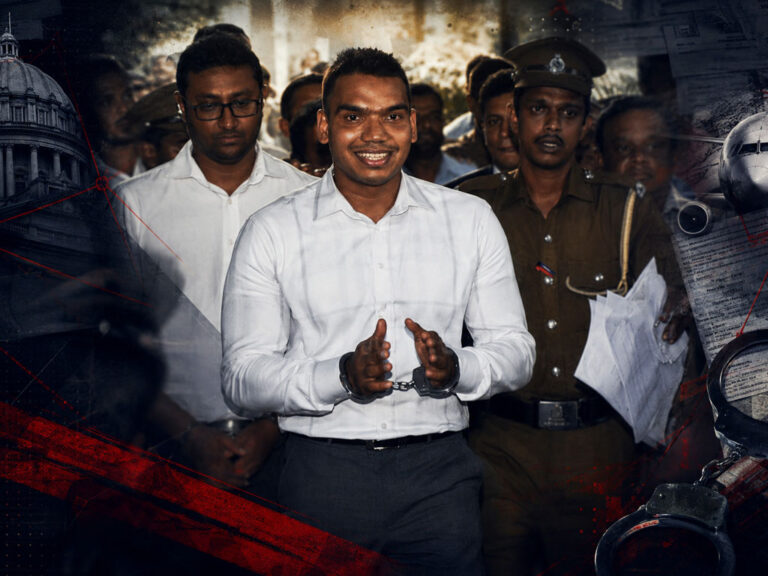
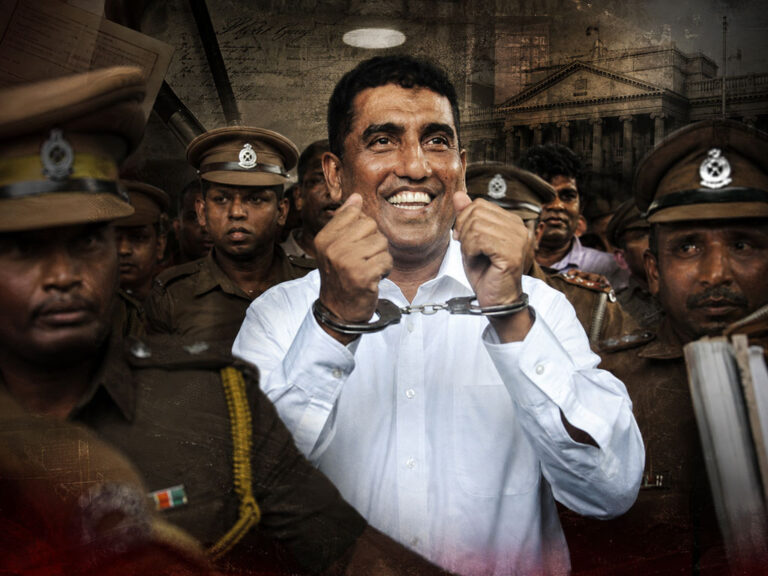
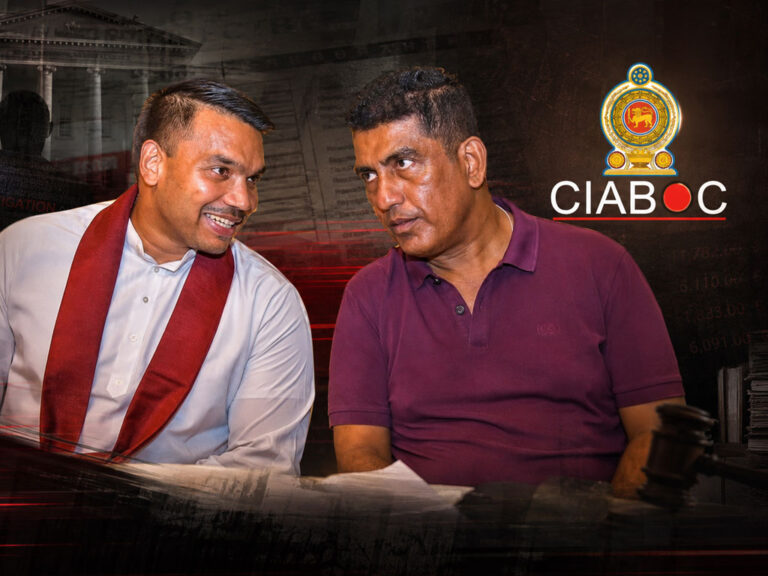
“A lie becomes a truth and the truth becomes a lie”. This can go on for a while but, finally the truth prevails. When you come into power on lies and deceit, the fall is close by.