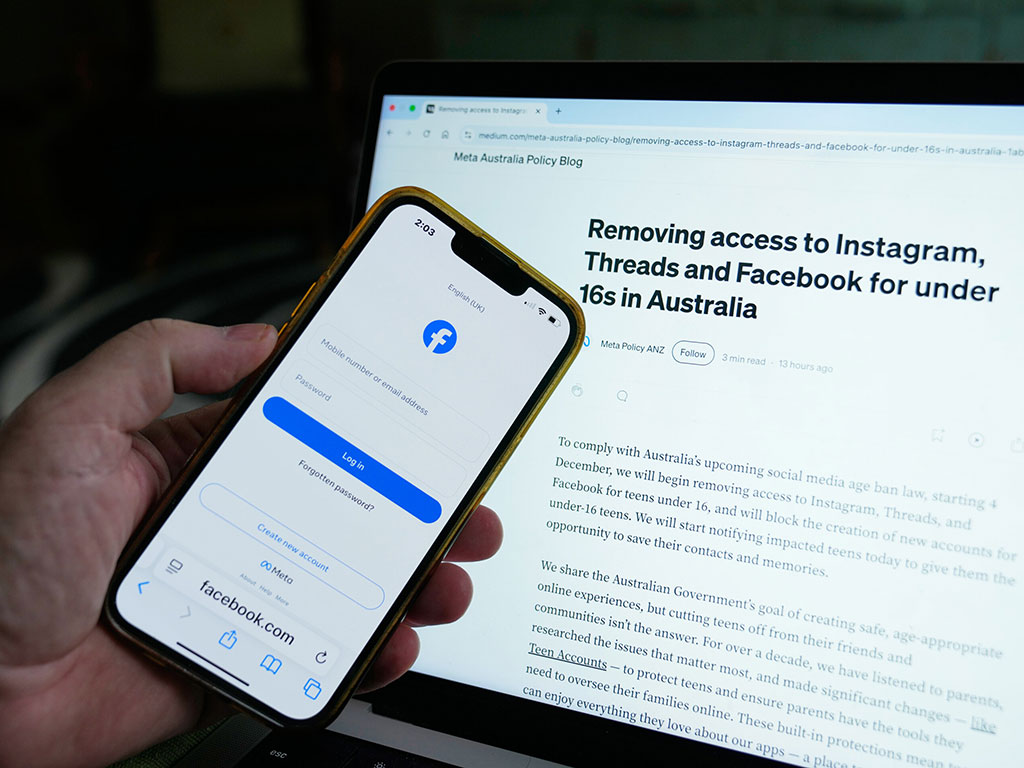
A global first unfolds in Australia as Meta warns thousands of teens to urgently save their digital lives before new laws force a nationwide shutdown of under-16 social media accounts, igniting debate over privacy, technology and childhood in the digital age.
Meta has begun issuing urgent two week warnings to thousands of young Australians, advising them to download their personal data and prepare for account deletion on Facebook, Instagram and Threads ahead of a world first social media ban targeting users younger than 16. The Australian government announced that Meta platforms along with Snapchat, TikTok, X and YouTube must take reasonable steps to prevent children under 16 from accessing their services beginning December 10.

Meta is the first major tech company to explain publicly how it will comply with the new law. On Thursday, the company sent SMS and email alerts to young users, warning that suspected underage account holders will be locked out starting December 4. Meta said the notice period is meant to help teenagers save their photos, messages, contacts and memories before access is cut.
Meta explained that young users can use this time to update their contact information so the company can reconnect with them once they turn 16. The technology giant estimates that Instagram currently has around 350,000 Australian users aged 13 to 15, while Facebook has approximately 150,000 in the same age group in a country with a population of 28 million. The upcoming restrictions form part of a broad push for online child protection and safer digital environments.
Meta also informed users that anyone aged 16 or older who mistakenly received a lockout warning can verify their age through Yoti Age Verification. This process requires government ID or a video selfie. Experts, however, raised concerns regarding accuracy. Terry Flew, co director of Sydney University’s Center for AI, Trust and Governance, said failure rates for facial recognition systems typically sit at around 5 percent. He explained that without a national digital ID system, platforms are left with limited imperfect alternatives for age verification.
The government has warned platforms that demanding age verification from all account holders would be considered unreasonable. Instead, authorities insist that platforms already possess enough behavioural and account data to identify likely underage users. Failure to take what regulators deem reasonable steps to exclude young users could result in fines as high as 50 million Australian dollars.
Meta’s global head of safety, Antigone Davis, argued that app stores such as Google Play and Apple App Store should collect age information directly at the point of download. She said this would create a more reliable and privacy protecting system for confirming that users are at least 16, reducing pressure on platforms like Facebook and Instagram to verify ages independently. Davis added that combining app store level age checks with Meta’s ongoing safety measures would create a more secure online environment for teenagers.
Dany Elachi, founder of the parents’ group Heaps Up Alliance that pushed strongly for these restrictions, said parents should now begin helping their children prepare for life with fewer hours spent on social media. He criticized the government for delaying the final announcement of affected platforms until November 5. Elachi said his organisation supports the idea that children under 16 are better off spending more time in the real world. He encouraged families to view the ban positively and help teenagers recognise the benefits and opportunities that may open once online hours decrease.