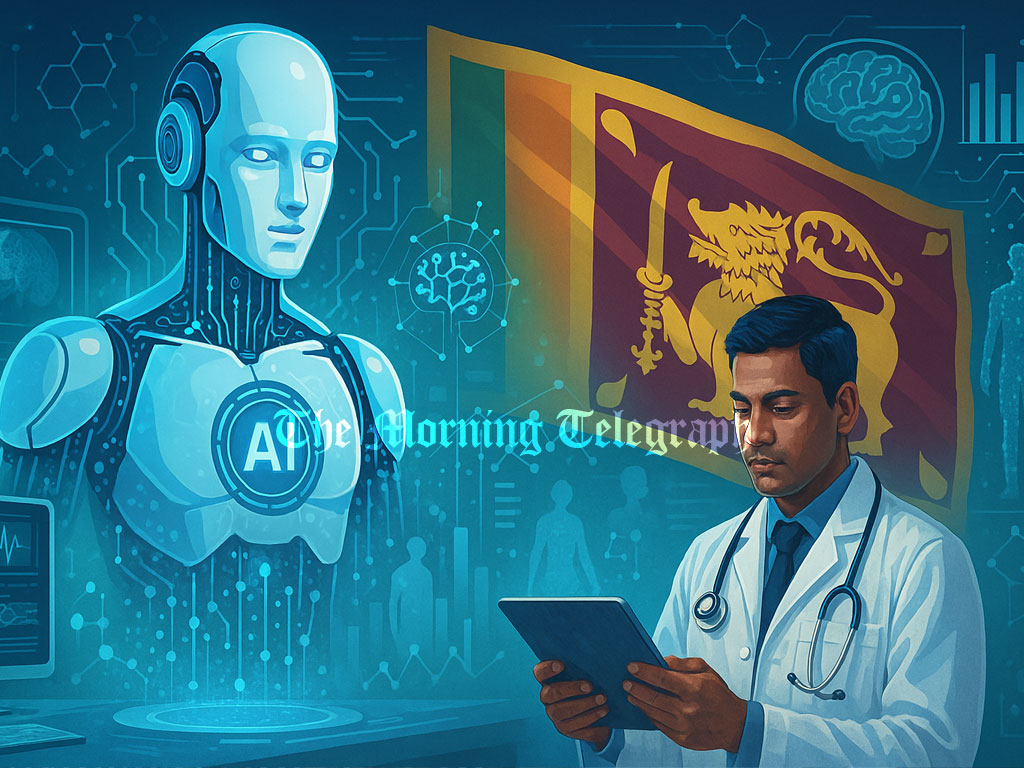
Sri Lanka’s health and technology leaders unite to launch a groundbreaking AI-powered research initiative, promising a new era of medical innovation and efficient healthcare delivery for the nation.
Sri Lanka stands at the forefront of a healthcare revolution with the commencement of the 2025 National Health Research Conference at Colombo’s Galadari Hotel. This landmark event, held under the distinguished patronage of Health and Mass Media Minister Dr. Nalinda Jayatissa and Science and Technology Minister Prof. Krishantha Abeysena, was built around the forward-thinking theme, “Advancing Health Research in the Age of Artificial Intelligence,” signaling a new strategic direction for the nation’s medical research community.

Minister Dr. Nalinda Jayatissa, in his keynote address, laid out a comprehensive framework for integrating artificial intelligence into the nation’s healthcare ecosystem. He emphasized that the mission extends far beyond the simple adoption of new software. The focus, he stressed, must be on building the foundational knowledge, practical skills, and, crucially, the ethical framework for healthcare professionals to use this powerful technology responsibly. “It is a matter of joy that Sri Lankan researchers are studying and using AI technology to improve epidemiology, chemistry, service delivery and health systems,” the Minister stated, expressing pride in the local expertise driving this change. He positioned this national effort as a vital mechanism to bridge the persistent gap between academic research and its real-world application in clinics and public health policy, a challenge faced by the global health community. This ambitious goal, he noted, hinges on the strengthened mutual cooperation and commitment between the Ministry of Health and the National Health Research Council.
Detailing the transformative potential, Dr. Jayatissa explained that AI applications are poised to overhaul critical areas including medical diagnosis, complex data analysis, tracking emerging health trends, and devising solutions to persistent public health problems. He articulated a vision where AI technology makes the essential pillars of a modern health system—accuracy, efficiency, and fairness—a tangible reality for Sri Lanka. To achieve this, the initiative will foster an unprecedented collaborative environment. Universities, technical colleges, international development partners, and researchers from across the globe will be invited to work in partnership. This coalition will work across the entire spectrum of healthcare development, from generating robust scientific evidence and informing policy development to preparing clinical guidelines and shaping national health planning. The Minister concluded by framing this as a historic opportunity to enhance the precision and impact of health research, ultimately building a more agile, responsive, and resilient national health system prepared for the challenges of the future.