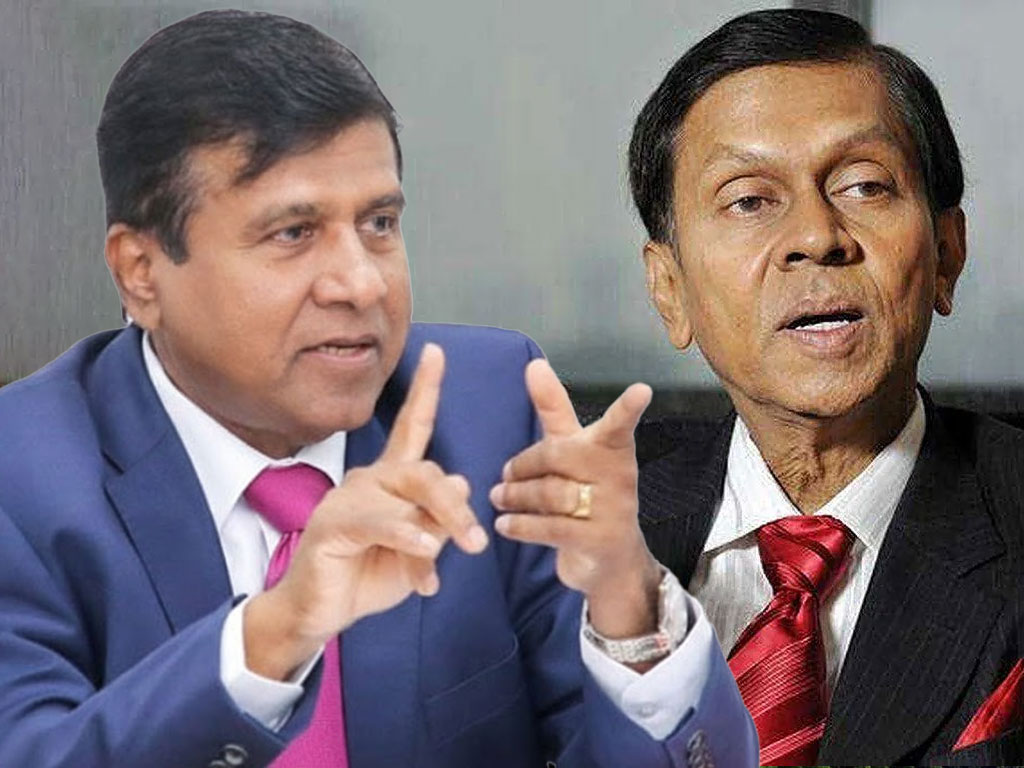
Former Justice Minister Wijedasa Rajapaksa warns that the withdrawal of the corruption case against Ajith Nivard Cabraal has permanently shut the door on any future prosecution, exposing a critical legal failure under the Anti-Corruption Act.
President’s Counsel Wijedasa Rajapaksa has clarified that the corruption case filed by the Commission to Investigate Allegations of Bribery or Corruption against former Central Bank Governor Ajith Nivard Cabraal and four others is effectively over, with no legal avenue left to file it again.
Rajapaksa, who as Justice Minister spearheaded the drafting of the 2023 Anti-Corruption Act, explained that the manner in which the case was withdrawn has stripped the Bribery Commission of any right to revive proceedings. He stressed that the court order does not preserve the option of refiling the case.

Addressing widespread confusion, the President’s Counsel noted that the accused in this matter cannot be considered “convicted” or “cleared through settlement,” but were instead acquitted purely due to the prosecution withdrawing the case without a trial. In such circumstances, he explained, the court has no option other than acquittal.
The case was withdrawn under Section 67 of the Anti-Corruption Act, a provision Rajapaksa himself introduced to allow limited withdrawals in cases where evidence is weak or difficult to establish, in order to avoid wasting judicial time. However, he emphasized that Section 67 comes with strict conditions.
Under that section, withdrawal is only valid if the accused agrees in court to multiple conditions, including issuing a public apology, compensating the loss caused, publicly admitting the offense and undertaking not to repeat such conduct, and accepting a permanent ban from holding elected or appointed public office. Any such agreement must be formally recorded in court.
Rajapaksa pointed out that none of these conditions were met in the Cabraal case. Court records clearly indicate that the accused reached no agreement and explicitly refused to pay the alleged loss. As a result, the withdrawal did not legally fall under Section 67.
Although the Bribery Commission later claimed that the case could be refiled if the loss was not repaid within three months, Rajapaksa rejected this assertion, stating that without a Section 67 agreement recorded in the judgment, there is no legal basis to reopen the case.
He further clarified that the charge was not bribery, but corruption involving an alleged loss to the state, and that the disputed amount was not money personally held by the accused.