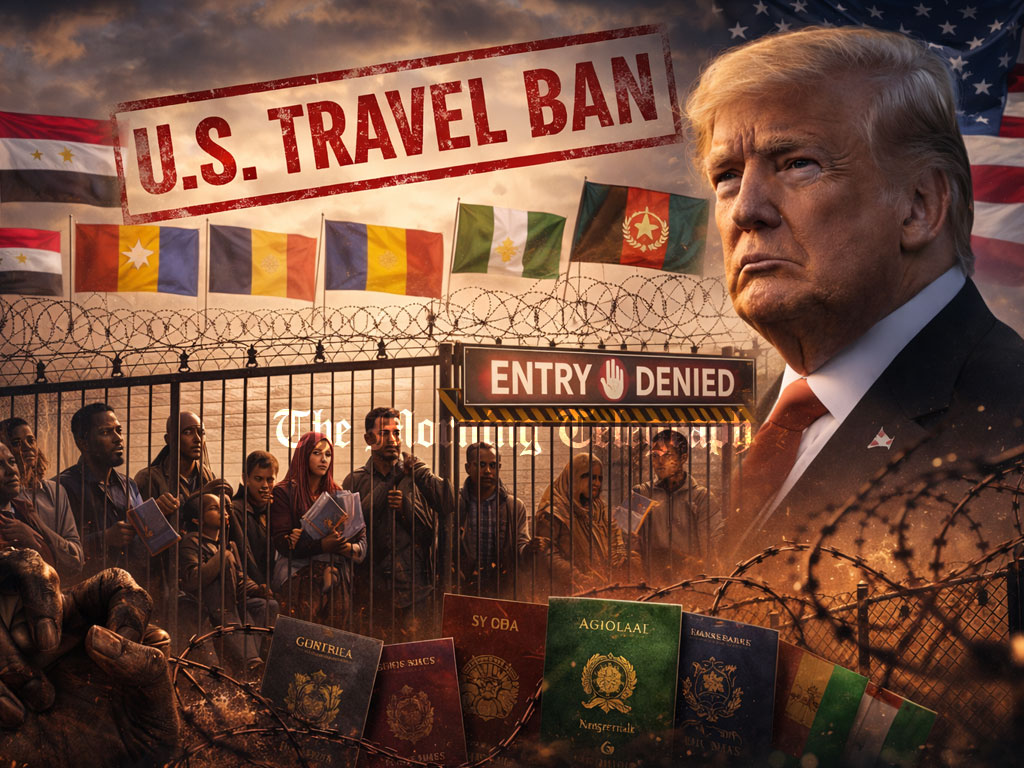
A sweeping expansion of America’s travel ban signals a tougher border stance, triggering global concern over security, migration, and human impact as dozens of nations face new US entry barriers.
The Trump administration has significantly expanded the United States travel ban, adding six more countries to the list of nations whose citizens are barred from entering the US. The move marks one of the most extensive immigration restrictions introduced during President Donald Trump’s current term.
According to US officials, the expanded ban now includes nationals holding travel documents issued by Syria and the Palestinian Authority. Under a presidential proclamation signed yesterday, citizens of the newly added countries will face a complete prohibition on entry into the United States once the policy comes into force.

The countries placed under the full travel ban are Syria, Afghanistan, Myanmar, Chad, the Republic of the Congo, along with holders of travel documents issued by the Palestinian Authority. In addition to these full restrictions, citizens from 15 other countries will face partial travel bans and tighter visa controls across selected categories.
Those countries include Nigeria, Angola, Zambia, Cameroon, Ethiopia, Ghana, Ivory Coast, Senegal, Tanzania, Uganda, Zimbabwe, Eritrea, Sudan, Sierra Leone, and Gambia. Individuals from these nations may still apply for certain visas, but applications will be subject to heightened scrutiny or outright denial depending on the category.
The Trump administration said national security concerns were the driving force behind the decision. Officials cited inadequate identity screening systems, limited cooperation on information sharing, and high visa overstay rates as key reasons for imposing stricter US immigration controls.
The White House said the policy is aimed at strengthening border security and ensuring that foreign nationals entering the United States meet strict security standards. The restrictions are scheduled to take effect on January 1, 2026.
This latest announcement expands an earlier travel ban introduced earlier this year, dramatically increasing the number of countries affected by US entry restrictions. Critics, including civil rights groups and immigration advocates, warned the expanded ban unfairly targets individuals based on nationality and could disrupt families, students, workers, and humanitarian cases.
Administration officials said exemptions will apply to lawful permanent residents, existing visa holders, diplomats, and specific humanitarian categories, although new applications from affected countries will face tougher barriers.