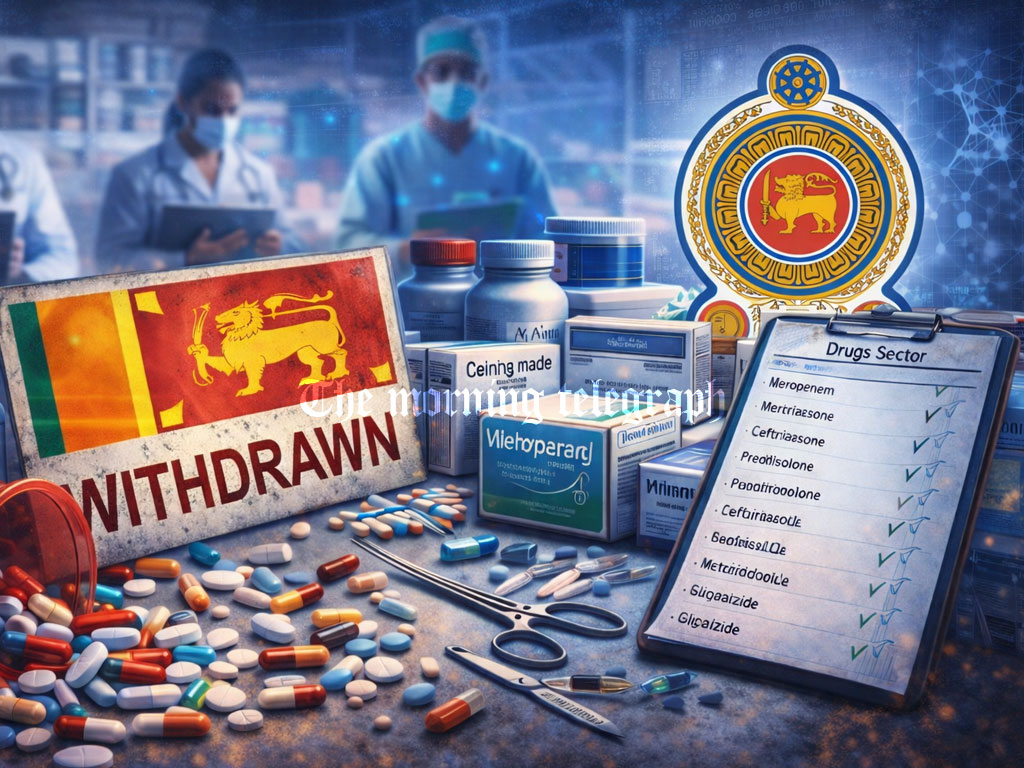
Nearly 75 essential medicines and surgical items have been withdrawn in Sri Lanka over the past year, raising fresh concerns over drug quality, imports, and patient safety.
In the past twelve months, the Risk and Technical Committee of the National Medicines Regulatory Authority has withdrawn close to 75 categories of medicines and surgical instruments, either permanently or temporarily, according to Dr. Chamal Sanjeewa, Chairman of the Doctors’ Trade Union Alliance for Medical and Civil Rights. He made this observation based on information published on the official website of the Medicines Regulatory Authority.

The website lists several widely used drugs among those withdrawn, including Meropenem, Prednisolone, Imipenem, Ceftriaxone, Paracetamol, Gliclazide, Levofloxacin, Immunoglobulin, Metronidazole, Tenecteplase, Salbutamol, Netilmicin and saline, along with a range of surgical instruments. These medicines play a critical role in treating infections, chronic illnesses, emergency conditions and routine hospital care.
According to Dr. Sanjeewa, most of the withdrawn medicines are imported from India. However, he also noted that products manufactured in Sri Lanka, Bangladesh and Germany are included in the list, indicating that the issue is not limited to a single source country. The authority further states that some drug categories withdrawn on a temporary basis have later been permitted for reuse.
The reasons cited for withdrawal include the presence of glass fragments, visible colour changes, ingredient-related defects, failure to comply with British Pharmaceutical Code standards and non-fulfilment of approved specifications. The decision to reintroduce some temporarily withdrawn drugs has sparked controversy within the medical community.
Dr. Sanjeewa warns that the absence of a World Health Organization or Sri Lanka Standards Institute approved laboratory has allowed substandard medicines to enter the supply chain. He stresses that the government must urgently establish a phased, internationally compliant quality control laboratory under the Drug Regulatory Authority.