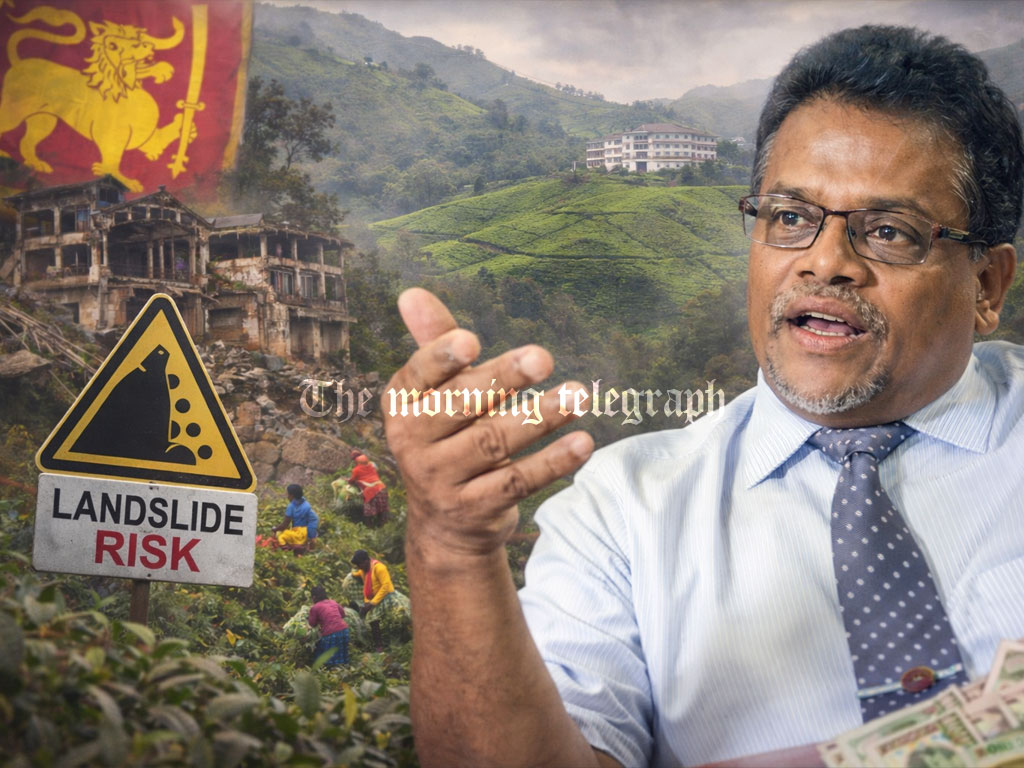
Experts warn that sweeping removals in Sri Lanka’s central hills could devastate tourism, tea plantations, and livelihoods while offering little real protection against landslides.
Former Senior Professor of Geological Sciences at the University of Peradeniya, Athula Senaratne, has cautioned that proposals to remove all buildings located above 5,000 feet in the central hills are neither practical nor economically viable. Speaking to the media, he stressed that such a decision would have far-reaching consequences for the national economy and the tourism industry.

Professor Senaratne pointed out that Nuwara Eliya town itself sits at an elevation of approximately 5,000 feet above sea level. He warned that enforcing a blanket removal policy would directly impact the tea industry, hospitality sector, and other hill country-based economic activities, triggering serious disruptions to employment and revenue generation.
He explained that dismantling long-established industries and settlements in the central highlands could create more harm than benefit, particularly in regions that rely heavily on plantation agriculture and eco-tourism. According to him, such measures would weaken rural economies rather than address environmental risks in a sustainable manner.
As an alternative approach to mitigating landslide hazards, Professor Senaratne proposed targeted afforestation projects using abandoned land in the central hills. He suggested that unused or abandoned tea estates could serve as pilot areas for reforestation, helping stabilize soil and improve environmental resilience.
He further emphasized that any afforestation initiative must be preceded by a detailed feasibility study. Special attention, he said, should be given to soil layer conditions and the presence of boulders before implementing large-scale projects, ensuring that environmental solutions are both scientifically sound and economically responsible.