With hundreds of elephants dying each year, Sri Lanka now records the highest elephant mortality rate in South Asia, as human conflict, damaged fences, and climate disasters push the island’s iconic wildlife toward crisis.
Sri Lanka has recorded the highest number of elephant deaths in South Asia, with conservationists warning that the island now has one of the world’s worst elephant mortality rates driven by human elephant conflict, wildlife officials said.
Although India has an estimated 20,000 to 27,000 elephants, Sri Lanka’s elephant population is much smaller, numbering around 6,000 to 7,000. Despite this, official data shows that the proportion of elephants dying annually in Sri Lanka is the highest in the region, raising serious concerns about wildlife protection and conservation policy.

According to the Department of Wildlife Conservation, 397 elephants have died so far in 2025 as of mid December. This follows 386 to 388 deaths recorded in 2024. The situation reached a grim peak in 2023, which remains the worst year on record with 488 elephant deaths.
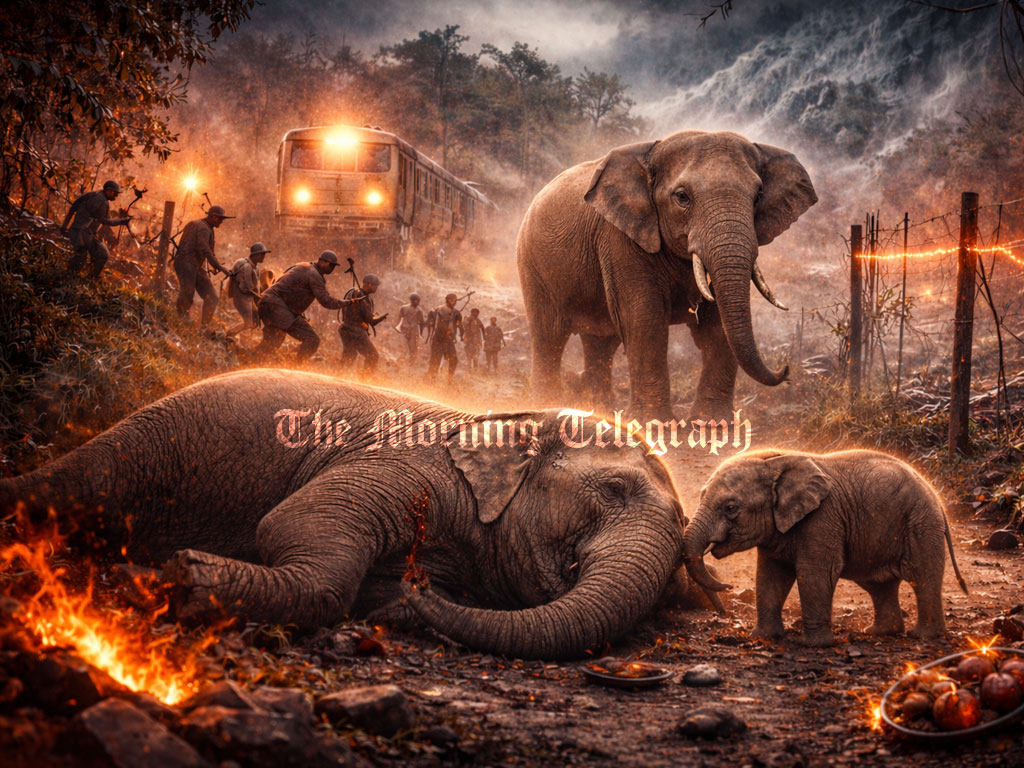
Most elephant deaths continue to be caused by human elephant conflict. Wildlife officials confirmed that elephants were killed due to gunshot wounds, illegal electric fencing, train collisions, and hakka patas, which are improvised explosive devices concealed in food. This year alone, 71 elephants were shot, 56 died from electrocution, 46 were killed in train accidents, and 20 died after triggering hakka patas. Two elephants died due to poisoning. In a particularly disturbing incident, one elephant was killed last week after being set on fire by three individuals in Seeppukulama in Mihintale. Other deaths were caused by drowning and falls into abandoned wells.
The situation has worsened following Cyclone Ditwah, according to Anton Jayakody. Speaking to the media, he said damage to electric fences has forced elephants into villages.
“The electric fence system is not fully functional, and some wildlife areas are still under water,” he said.
Out of approximately 5,700 kilometres of electric fencing maintained by the Wildlife Ministry, 838 kilometres were damaged by the cyclone, with about half now repaired. Deputy Director of Elephant Conservation U.L. Taufiq said four elephant calves died due to flooding, while six were rescued.
The DWC stressed the urgent need for stronger measures to reduce human elephant conflict and safeguard Sri Lanka’s remaining wild elephants.