Scientists have discovered that the Indian tectonic plate is not just colliding with Asia but splitting from within, raising new questions about earthquakes, mountains, and the future stability of South Asia.
For millions of years, the Earth’s surface has never stood still. The continents we recognize today were once part of entirely different landmasses, drifting slowly across the planet. One of the most dramatic chapters in this long geological story is the collision of the Indian plate with the Asian continent, an impact that gave birth to the mighty Himalayan mountain range.

Recent geological research, however, suggests this collision is far more complex and unsettling than previously believed. Until now, scientists assumed the Indian plate was simply sliding beneath Asia or compressing against it. New evidence shows something far more dramatic is happening deep underground. The Indian plate is splitting in half.
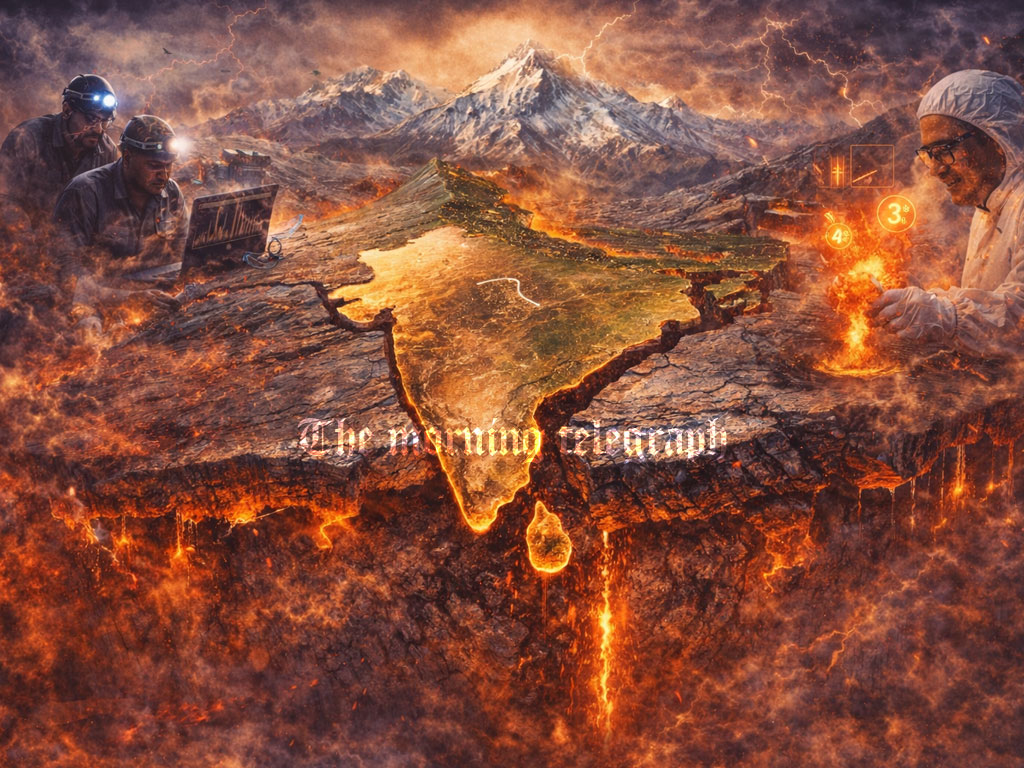
According to a study presented at a meeting of the American Geophysical Union, the Indian plate is experiencing a horizontal tear as it moves beneath Tibet. Scientists compare this process to plywood peeling apart or a banana skin separating. The lighter upper layer of the plate is being pushed toward Tibet, while the heavier lower layer is sinking deep into the Earth’s mantle. This process, known as delamination, marks a significant shift in how geologists understand plate tectonics.
Researchers confirmed this phenomenon by analyzing seismic waves and gases released from natural springs in Tibet. Seismic waves travel differently through dense and less dense material, allowing scientists to map what lies beneath the surface. The data revealed part of the Indian plate descending into the deep mantle. Even more striking was the detection of helium-3 gas, a rare substance typically found far below the Earth’s crust. Its presence suggests material from the deep mantle is rising through the torn plate.
This internal rupture may reshape future earthquake risk across the Himalayan region. While India will not physically split into separate landmasses, the tearing beneath the surface could alter seismic activity in northern India and Tibet. Scientists believe some earthquakes already occurring may be linked to this deep geological process.
Ultimately, this discovery is a reminder that Earth is a living, changing planet. The slow movement of tectonic plates over millions of years shapes mountains, triggers earthquakes, and continuously remodels the crust beneath our feet. As science advances, hidden forces beneath the surface are finally coming into view, changing how we understand the world itself.