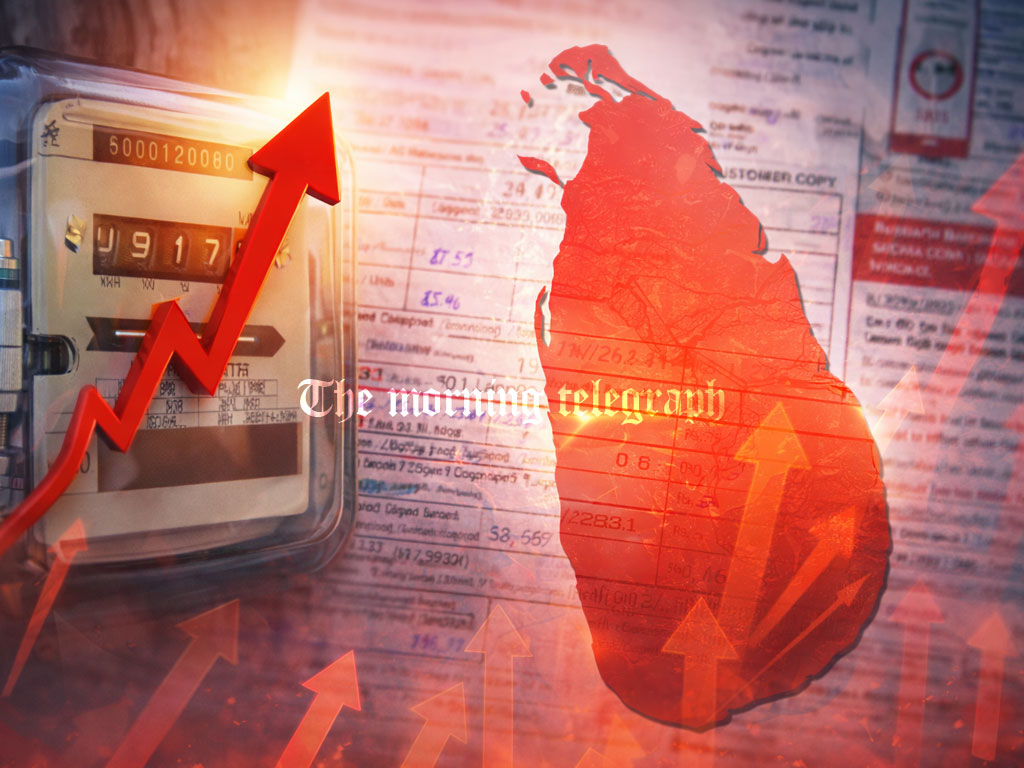
Sri Lankan households, businesses, and religious institutions could face higher electricity bills in early 2026 as the Ceylon Electricity Board moves to plug a growing revenue gap driven by rising generation costs and reform expenses.
The Ceylon Electricity Board has formally submitted a proposal to the Public Utilities Commission of Sri Lanka seeking approval to increase electricity tariffs by 11.57 percent for the first quarter of 2026.

According to the proposal submitted on December 24, the total cost of electricity generation and distribution for the first three months of 2026 is estimated at Rs. 137,016 million. However, under the existing tariff structure, expected revenue is projected at only Rs. 113,161 million, creating a shortfall that the board says must be addressed.
To bridge this gap, the CEB has indicated that an additional Rs. 13,094 million in revenue is required. Electricity generation during the first quarter of 2026 is forecast at 4,453 gigawatt hours. Of this, 1,172 GWh is expected from hydropower, 2,203 GWh from thermal sources, with the balance coming from other renewable energy generation.
The board has also warned that national electricity demand is expected to grow by 3.72 percent annually, based on economic projections by the International Monetary Fund. This anticipated growth has been factored into the tariff revision request.
A portion of the cost linked to the Voluntary Retirement Scheme, amounting to Rs. 11,554 million under the CEB’s reform programme, has also been included in the proposed tariff increase. At the same time, the board noted that it has not transferred the full financial burden of cyclone related damage, estimated at around Rs. 20 billion, to consumers, as external funding is expected.
If approved, domestic tariffs for the lowest consumption bracket of 0 to 30 units would rise from Rs. 4.50 to Rs. 5.29 per unit. For the highest usage category exceeding 181 units, the per unit charge would increase from Rs. 61.00 to Rs. 71.76. Similar tariff adjustments have also been proposed for religious institutions and industrial users.