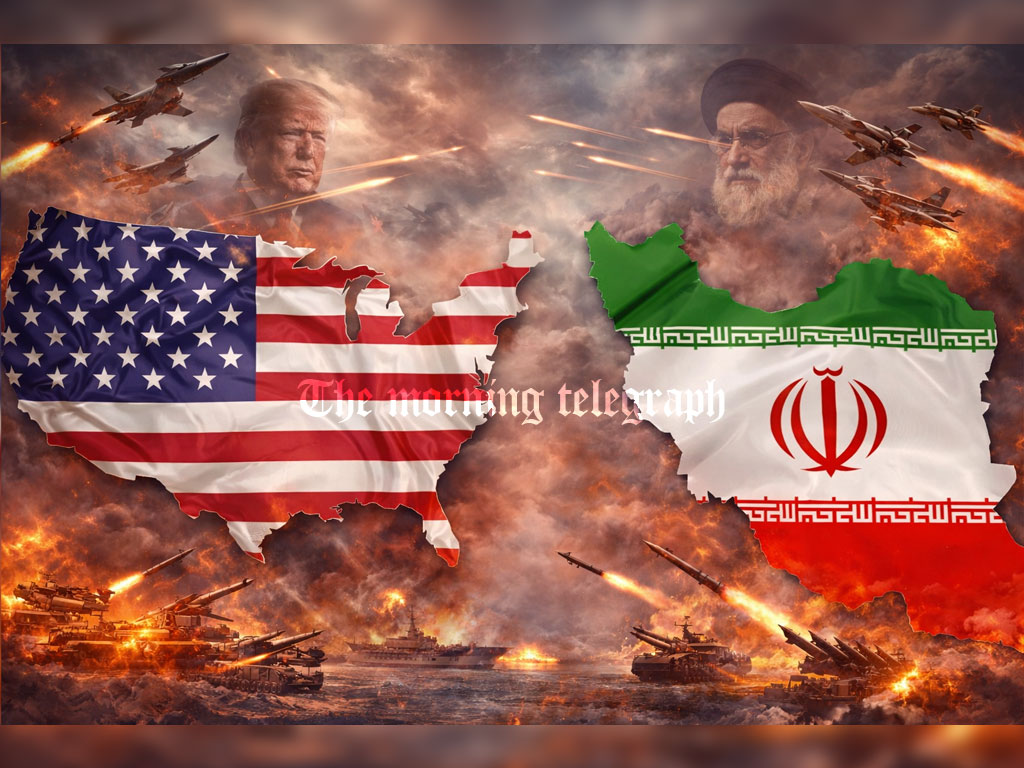
Tensions between Washington and Tehran are rapidly escalating as protests rage inside Iran, currency collapse deepens public anger, and both sides issue warnings that hint at a dangerous regional showdown.
A growing sense of unease is spreading across the Middle East as senior Iranian officials warn that any direct United States intervention in Iran’s ongoing protests would cross a clear and dangerous red line. The warning follows a recent social media post by President Donald Trump, who stated that the United States would intervene if Iranian protesters were shot and killed by the government. He added that Washington was ready to act “at any time.”

Iranian leaders responded swiftly and sharply. Ali Shamkhani, an adviser to Supreme Leader Ayatollah Ali Khamenei, said Iran’s national security was “a red line” and not a subject for what he described as adventurous Twitter messages. He warned that any hand attempting to interfere in Iran’s security under false pretexts would be cut off.
Echoing that sentiment, Ali Larijani, Secretary of Iran’s Supreme National Security Council, cautioned that American interference would threaten the stability of the entire region. He also urged Americans to consider the safety of US soldiers stationed across the Middle East, a reminder of Iran’s earlier threats and actions. Last June, Iran launched an attack on a US air base in Qatar, underlining its willingness to respond militarily.
At the heart of the unrest is Iran’s deepening economic crisis. The Iranian rial has collapsed to around 1.4 million to the US dollar, triggering widespread protests now entering their sixth day. At least seven people have reportedly been killed. The scale of the demonstrations is being described as the most significant since the 2022 protests following the death of Mahsa Amini.
Iranian President Masoud Peskov initially adopted a conciliatory tone, urging authorities to listen to the protesters’ “reasonable demands.” However, as tensions mount, the Iranian Revolutionary Guard Corps has warned of strong action against any foreign interference or what it terms treasonous acts.
Amid the rising rhetoric, Iran has rejected US accusations that it is attempting to revive its nuclear weapons program, insisting it remains open to dialogue with Western nations. Yet with threats, warnings, and military posturing intensifying, fears are growing that miscalculation could push the region toward a far wider conflict.