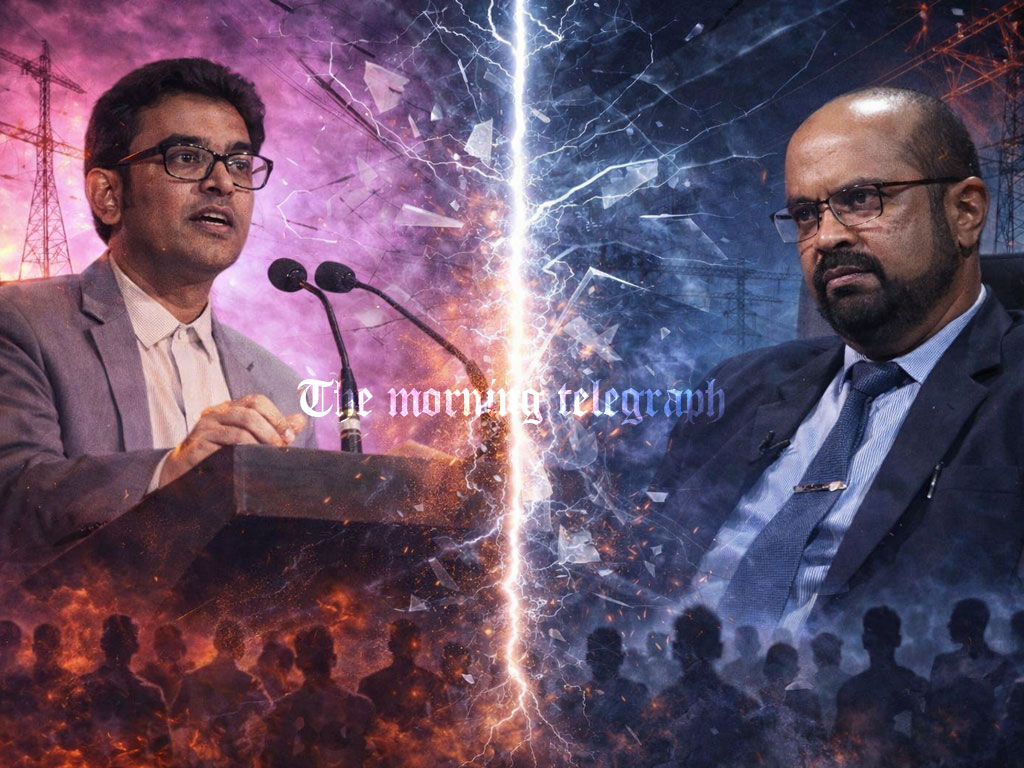
A sudden resignation at the heart of Sri Lanka’s electricity sector has exposed deep tensions within the reform process, triggering administrative uncertainty, employee unrest, and mounting pressure on the Energy Ministry to act.
Mr. Pubudu Niroshan Hadigalla, who served as Director General of the Secretariat established in 2024 to oversee the restructuring of the Ceylon Electricity Board, has formally informed the Secretary of the Ministry of Energy of his decision to resign from his position with effect from January 15.

The resignation is considered particularly significant as it comes despite an earlier decision by the Energy Minister to cancel the extension of his service. That decision was later reversed following the intervention of the President, resulting in Hadigalla’s tenure being extended until June next year. His departure at this stage has therefore raised concerns within the institution.
Employees have warned that the resignation, which comes at a critical phase of the electricity reform programme, has already created serious administrative difficulties within the Secretariat and the wider restructuring process.
According to a report by the Sunday Times, the Electricity Board has submitted a request to the Energy Minister seeking the immediate release of more than 2,200 employees who opted for the Voluntary Retirement Scheme introduced as part of the restructuring. A significant number of these workers are mid-level professionals who allege they are being forcibly retained by management despite having formally opted to leave.
The voluntary retirement scheme was announced through a special gazette notification on August 26 last year, under the government’s plan to divide the Ceylon Electricity Board into four independent entities covering Generation, Transmission, System Operations, and Distribution.
Under the relevant Act, employees were granted a two-month period to decide whether to join the newly formed companies. By October 27, 2025, around 2,200 employees had officially notified the authorities of their decision not to transfer to the new organizations.
In a letter addressed to the Energy Minister, affected employees state that while there is no dispute regarding the payment of retirement benefits at a later stage, it is essential that permission be granted for them to leave service immediately. They warn that ongoing delays are causing them to lose foreign employment opportunities, private sector jobs, and chances to begin self-employment ventures.
“Many young professionals who trusted the system and decided to go abroad or turn to entrepreneurship are currently under severe mental and financial pressure. Some employees have gone abroad and even their pension rights are at risk due to the issuance of notices as if they have left their service,” the letter states.
Although February 1, 2026 has been identified as the due date for the transfer of assets under the reform process, the required gazette notification has yet to be issued. As a result, the newly established companies lack legal authority, while employees warn that productivity has sharply declined as workers remain in limbo against their will.
They have urged the minister to formally announce the due date on or before February 1, 2026, bring clarity to the reform process, and allow those who opted for voluntary retirement to exit the service without further delay.