A Sri Lankan cabinet minister’s blistering attack on a prominent Buddhist monk has ignited a national debate on moral hypocrisy, religious authority, and resistance to education reform.
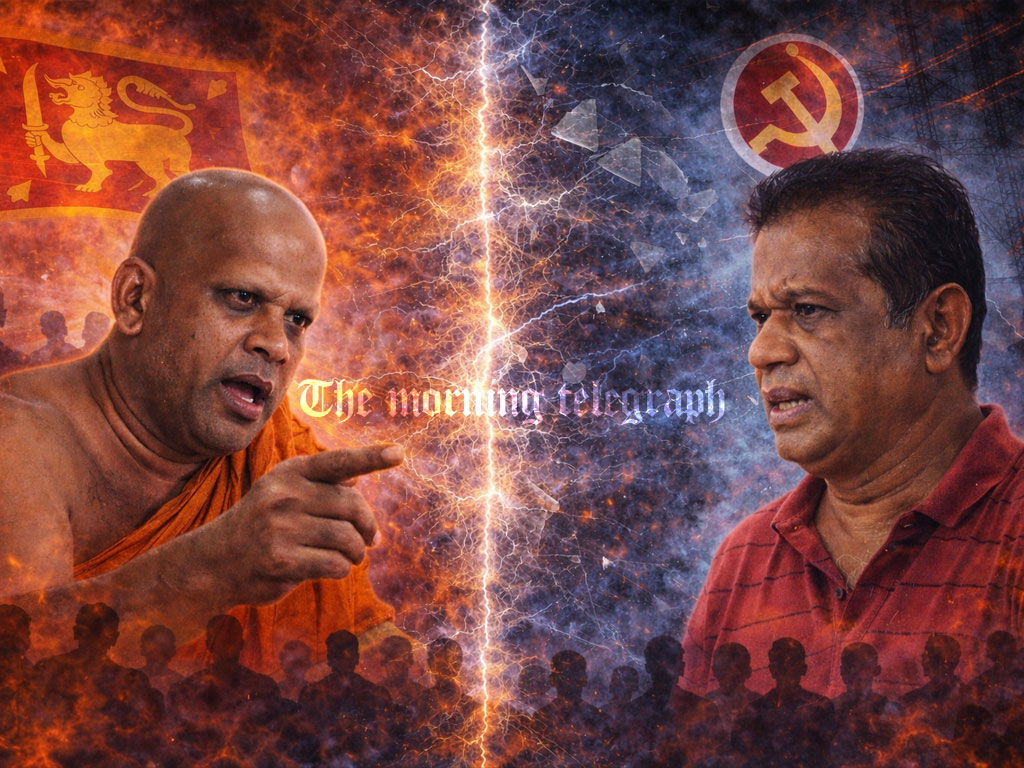
Sri Lanka’s Minister of Agriculture, Livestock, Lands and Irrigation, Lal Kantha, has launched an unusually direct and public attack on a Buddhist monk attached to the Mihintale temple, accusing him of moral hypocrisy and deliberate obstruction of education reform. Addressing the annual Sri Lanka Agricultural College Alumni Association conference at the Asliya Golden Cassandra Hotel in Kurunegala on 11 January, Kantha described the monk as a “wild man,” citing his repeated use of foul language and personal abuse directed at Prime Minister Dr. Harini Amarasuriya.

Kantha argued that the monk’s conduct exposed deeper flaws within male dominated religious institutions, particularly their fixation on the Prime Minister’s personal life rather than substantive policy debate. “The ones who criticize her the most are men who are mostly in religious institutions,” he said, highlighting what he described as sexual hypocrisy and moral contradictions among senior religious figures.
According to the minister, these attacks have nothing to do with education reform and instead undermine public trust while distracting from urgent national priorities. “Our religious institutions are mostly men. There is sexual hypocrisy. Those who promote to stay aside often talk the most about the Prime Minister, not about education,” Kantha said, calling for a shift away from personal attacks toward constructive reform.
Political observers say the remarks mark one of the sharpest public rebukes of a Buddhist monk by a sitting Sri Lankan minister in recent years. The comments come amid growing controversy over government education reforms, which have faced resistance from Buddhist temples and the Catholic Church following revelations about controversial textbook content for underage students.