A sharp internal divide within Sri Lanka’s top legal office has cast doubt over whether a former president will face charges, exposing fault lines in a high-profile state funds investigation.
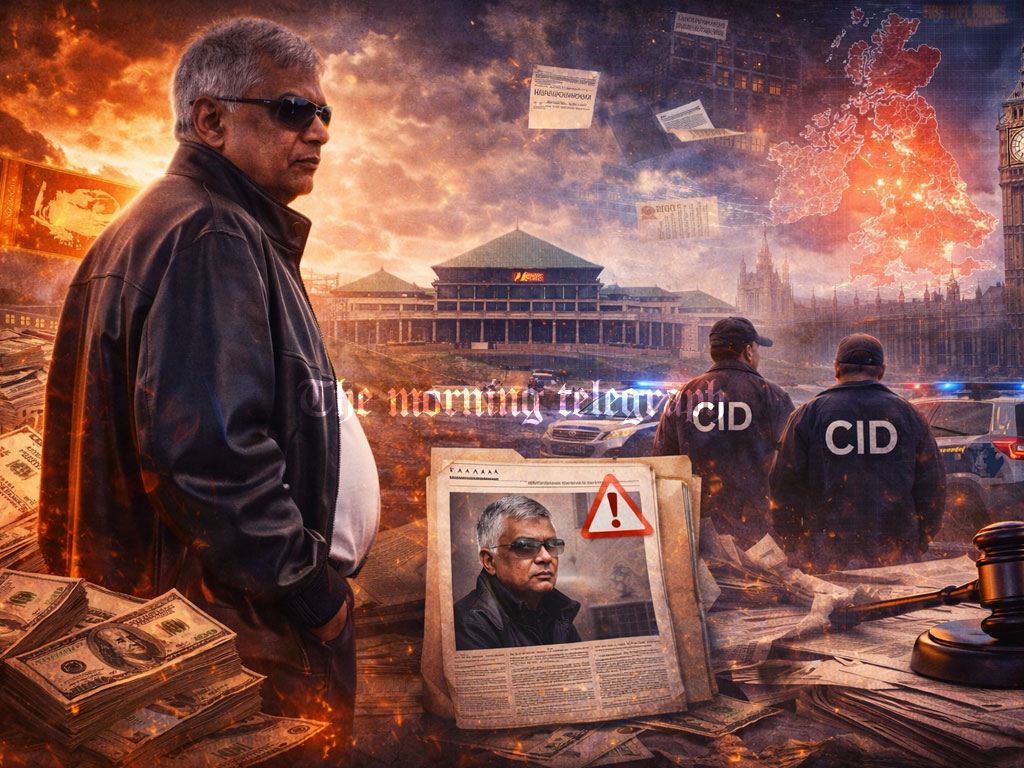
Sri Lanka’s Attorney General’s Department is facing an unusual internal rift over whether former President Ranil Wickremesinghe should be prosecuted for the alleged misuse of Rs. 16.6 million in state funds during a visit to the United Kingdom. Conflicting legal opinions at the highest level have raised fresh questions about accountability, evidence, and the credibility of the investigative process.

At the center of the controversy is Ranil Wickremesinghe, who is accused of misappropriating public money amounting to approximately USD 26,000. Two senior officials within the Attorney General’s Department have taken opposing positions on whether the evidence gathered so far is strong enough to justify criminal charges.
According to Sunday Times, Deputy Solicitor General Wasantha Perera, who had been overseeing the investigation, resigned from his supervisory role after differences of opinion emerged. Perera, who also conducted a parallel inquiry into the former president’s secretary, Saman Ekanayake, concluded that the evidence was insufficient to proceed against either party. He maintained that without clear proof of wrongdoing by the former president, Ekanayake could not be charged with aiding or abetting the alleged misuse of state funds.
In a detailed six-page report submitted to Attorney General Parinda Ranasinghe, Perera raised procedural concerns. These included the Criminal Investigation Department’s failure to secure Mutual Legal Assistance from UK authorities before attempting to verify the authenticity of an invitation letter from the University of Wolverhampton. He also noted that Wickremesinghe’s stopover in the UK while traveling from Cuba to New York was routine and unrelated to the alleged financial misconduct.
A contrasting view has been presented by Additional Solicitor General Dileepa Peiris, the lead supervising officer of the probe, who has advised that charges could still be filed based on the available evidence. CID investigators supporting this assessment claim there is sufficient material to arrest Ekanayake, citing an 11-page report prepared by State Counsel Samadari Piyasena.
The case remains unresolved, with the CID yet to respond to a formal request from the Attorney General’s Department for further documentation from its UK investigation, leaving critical questions unanswered.