A controversial workshop and an unusual deck of playing cards have ignited a national debate over whether labour reforms are being used to quietly introduce broader social ideologies without public consent.
The government’s move to ratify the International Labour Organization Convention No. 190 on violence and harassment in the workplace has triggered fresh controversy, with critics alleging that the initiative is being used to subtly promote LGBTQ related ideologies under the cover of labour reform. The Daily Mirror reported that while the stated objective of Convention C190 is to protect workers from violence and harassment, concerns are growing over how it is being introduced and communicated.

Religious groups, political parties, and civil society organisations argue that certain awareness programmes linked to the convention go beyond workplace safety. They claim these programmes promote social values that have not been openly debated in Parliament or discussed with the wider public. According to critics, this approach risks bypassing democratic scrutiny while reshaping sensitive social norms.
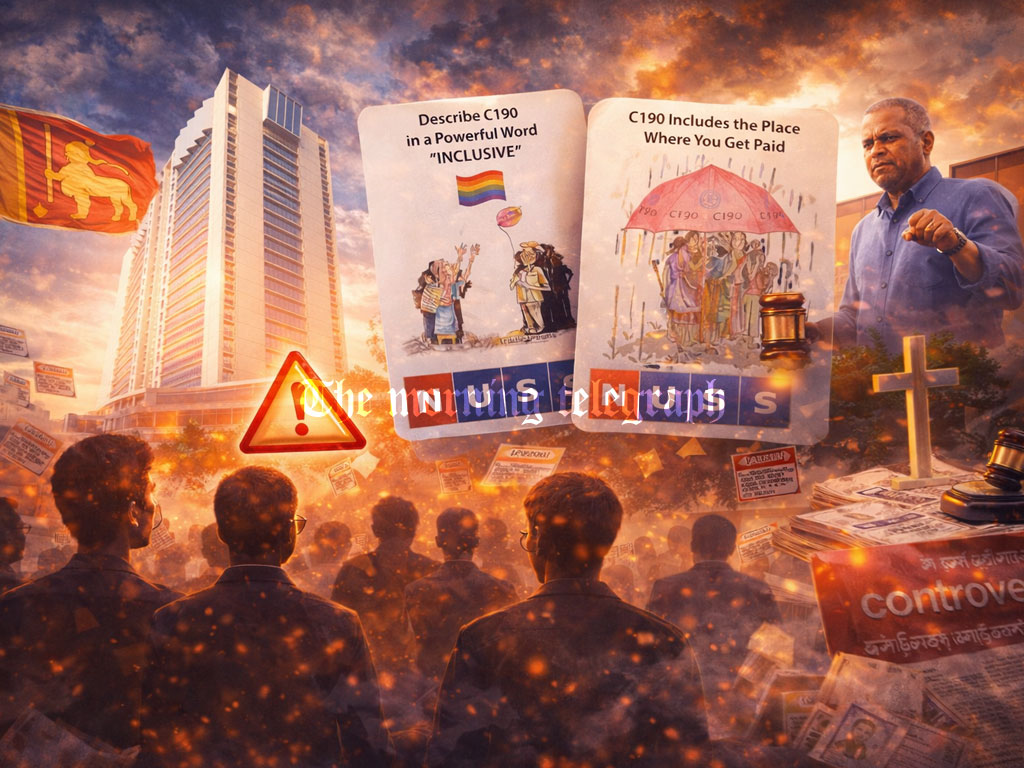
The controversy intensified following a workshop held on January 9 at the Labour Ministry auditorium under the patronage of Deputy Minister of Labour Mahinda Jayasinghe. Participants expressed concern over a set of playing cards distributed during the event. Unlike a standard 52 card deck, several cards reportedly featured drawings and cartoons conveying specific ideological messages.
A union leader who attended the workshop, speaking to the Daily Mirror on condition of anonymity, described the material as a “covert attempt” to promote LGBTQ acceptance under the banner of workers’ rights. He also claimed that only selected trade unions with narrow agendas were invited, and that the programme extended beyond occupational safety into socially sensitive territory.
The playing cards were distributed by the National Union of Seafarers of Sri Lanka, with the packaging stating that “this card set will help end violence and harassment in the workplace.” The initiative is supported by the Dutch trade union federation FNV and its international arm, Mondiaal FNV. Particular attention has focused on the Hearts 9 card and several others, which critics say depict LGBTQ identities as protected categories under Convention C190.
Civil society representatives argue that using international labour standards to introduce broader social change undermines parliamentary oversight and public consultation. They note that same sex relationships remain illegal under Sri Lanka’s existing legal framework, raising questions about policy coherence and intent.
Convention C190, adopted at the 108th International Labour Conference in Geneva, applies to both public and private sector workers and offers a wide definition of the “world of work.” Critics insist the government must clearly explain whether these reforms are solely about worker welfare or part of a wider social reform agenda.