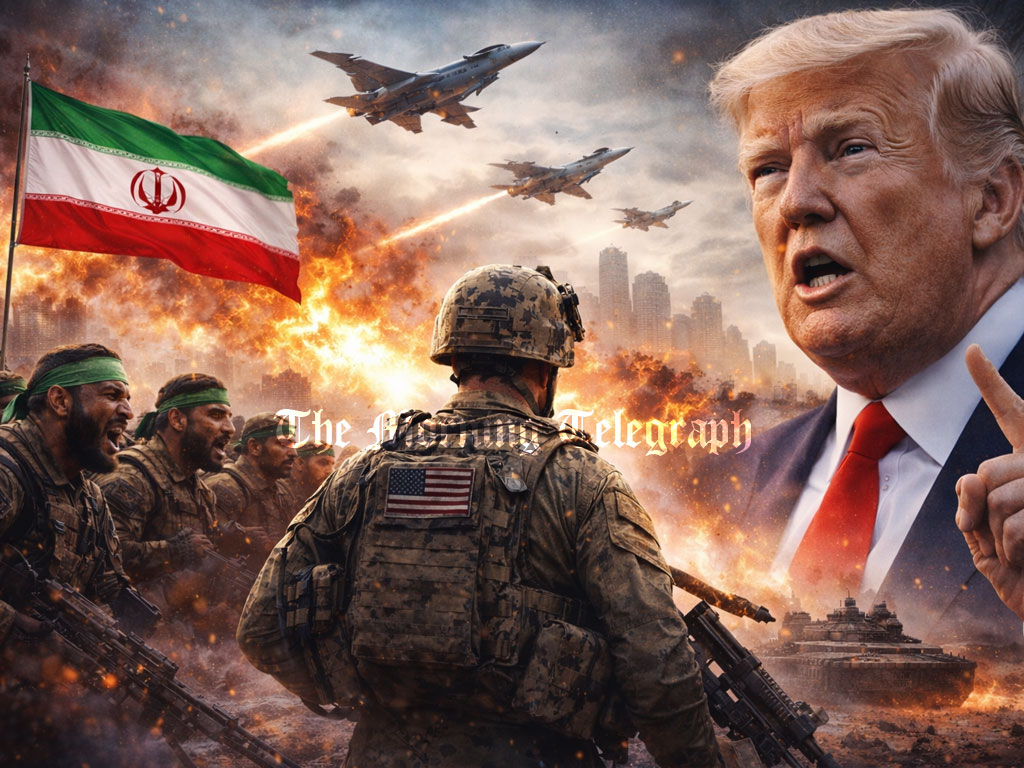
Fears of a major Middle East conflict are intensifying as reports suggest the United States is preparing to strike Iran within hours, while quietly repositioning troops and warning of unprecedented retaliation.
European officials have indicated that the United States is likely to carry out military action against Iran within the next 24 hours, as tensions across the Middle East reach a critical point. According to these officials, the decision appears to have been taken at the highest political level, although the precise scope, timing, and targets of the operation have not been publicly disclosed.

US President Donald Trump is understood to have approved the move amid growing regional instability, while maintaining strategic ambiguity around the operation. As diplomatic efforts stall, military preparedness on all sides has sharply increased, raising fears of a wider regional confrontation.
In parallel with these developments, the United States has begun repositioning its troops stationed across the Middle East. A senior US official speaking anonymously to Reuters emphasized that this was not a full troop withdrawal but a precautionary redeployment intended to reduce risk to personnel in the event of escalation.
One of the most notable moves involves the Al Udeid Air Base in Qatar, the largest US military installation in the Middle East, which hosts approximately 10,000 American troops. Reports indicate that some officers stationed at the base have been instructed to leave as part of the redeployment process. Similar steps were reportedly taken ahead of US air strikes on Iran in June, underscoring the seriousness of the current situation.
Iran has responded with strong warnings, stating that any US attack would be met with immediate retaliation. Tehran has made it clear that it would target US military bases located in neighboring countries if Washington launches an assault. According to Iranian officials, countries such as Saudi Arabia, the United Arab Emirates, and Turkey have been formally informed of this position, heightening regional anxiety.
President Trump, meanwhile, has issued a stark warning of his own. He stated that if Iran attempts to retaliate against US forces or interests, it would face a response of an unprecedented level, signaling that Washington is prepared for a significant escalation if necessary.
The ripple effects of the crisis are not limited to the United States. Britain has also taken steps to withdraw officers from its air base in Qatar, reflecting broader concerns among Western allies about the security situation. Additionally, Poland, Italy, and the United States have advised their citizens to leave Iran immediately. Travelers have been urged to exit by land routes through Turkey or Armenia, as air travel becomes increasingly uncertain.
Diplomatic channels appear to be rapidly closing. Scheduled talks between the Iranian Foreign Minister and the US special representative have been suspended, further dimming hopes of a negotiated de-escalation. President Trump has confirmed that all planned meetings with Iranian officials have been canceled, reinforcing the perception that diplomacy has given way to military planning.
As troop movements, evacuation warnings, and threats of retaliation converge, the Middle East now stands on the brink of a potentially historic confrontation, with global implications for security, energy markets, and international stability.