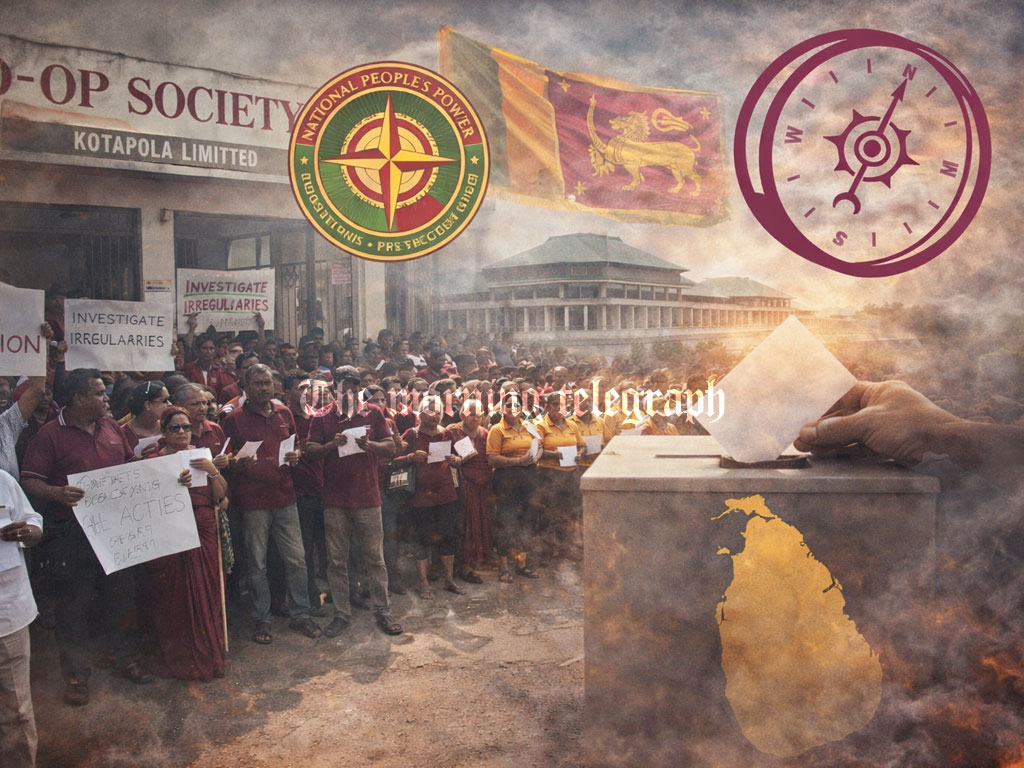
A local power struggle in Kotapola has ignited wider concerns about democratic conduct, raising uncomfortable questions about how political defeat is handled ahead of future national elections.
A protest erupted in front of the Kotapola Cooperative Society following a change of control after the National People’s Power Party, led by the Janatha Vimukthi Peramuna, lost its grip on the cooperative. The demonstration was organized by supporters aligned with the outgoing NPP-backed group, who gathered to oppose the transfer of power to the newly elected administration.

Protesters argued that control of the cooperative should not be handed over to what they described as a corrupt group. Several speakers alleged that the rival faction had used manipulated voter lists and irregular methods to secure victory, calling the election process into question. The group also submitted a memorandum to the Cooperative Commissioner, urging authorities to launch a formal investigation into the alleged electoral irregularities surrounding the cooperative society election.
Political analysts observing the incident say it exposes a deeper issue within Sri Lankan politics. They question how Compass supporters, who appear unwilling to accept defeat and peacefully transfer authority at the level of a small cooperative society, might behave during a high-stakes national election. Commentators warn that challenging election outcomes and resisting power transitions could undermine public trust in democratic processes.
The Kotapola episode, they argue, serves as a test case for political maturity, democratic accountability, and respect for electoral outcomes in Sri Lanka’s evolving political landscape.