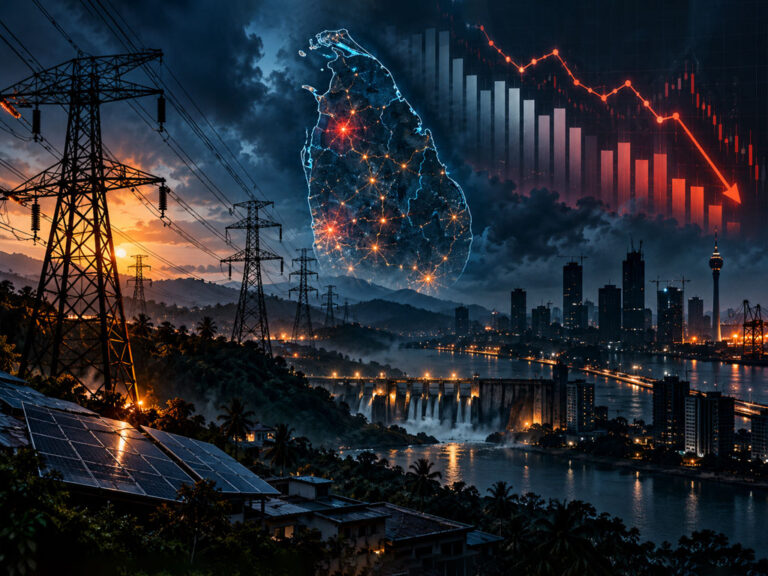
A massive cyclone has left the Ceylon Electricity Board facing nearly Rs. 20 billion in damages, raising serious concerns that tahe financial burden could quietly reach consumers through future electricity tariff hikes.
The damage caused by the recent cyclone to the Ceylon Electricity Board infrastructure has reached close to Rs. 20 billion, creating pressure on Sri Lanka’s already strained power sector. Senior officials confirm that the transmission network alone suffered losses of nearly Rs. 1 billion, while damage to the electricity distribution system is estimated at around Rs. 19 billion.

When questioned about whether consumers will be forced to bear this cost through higher electricity tariffs, a senior CEB official stated that the losses would not be recovered at once. Instead, the costs are expected to be gradually reflected in future electricity pricing.
The key driver behind this approach is the mandatory electricity pricing formula tied to Sri Lanka’s International Monetary Fund program, which requires tariffs to reflect the real cost of power supply. Electricity tariff revisions are scheduled on a quarterly basis under this framework.
Recently, the Ceylon Electricity Board requested an 11.57 percent tariff increase to offset losses from the previous quarter. However, the Public Utilities Commission of Sri Lanka ruled out any tariff revision for the first quarter of 2026.
This decision followed the CEB’s failure to submit a formal proposal within the required timeframe, along with shortcomings in submitted reports. The commission had earlier set November 14, 2025 as the deadline for proposals covering January to March 2026.
Although the government remains reluctant to raise power prices now, economic analysts warn that delaying revisions could force sharper electricity tariff increases in later quarters to meet IMF conditions.