A parliamentary claim meant to expose obscenity in school textbooks has backfired, after closer scrutiny revealed a major factual error that has now sparked embarrassment and fresh debate.
Reports circulating on social media say Deputy Minister of Labour Mahinda Jayasinghe has come under criticism after presenting incorrect information to Parliament while addressing allegations of obscenity linked to education reforms. During his speech, the Deputy Minister strongly argued that the moral decline in education began in 2015 and cited what he described as disturbing evidence from school textbooks.

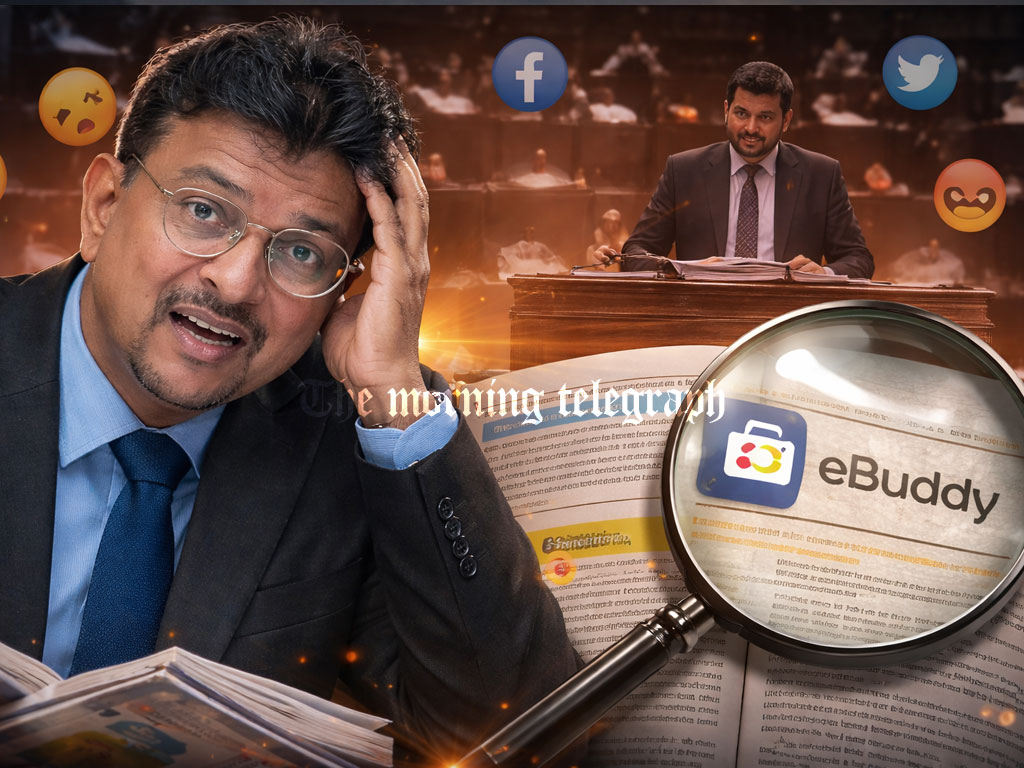
Addressing Parliament, Mahinda Jayasinghe claimed that a link named “Buddy,” allegedly leading to obscene websites, appeared on page 77 of the 2016 printed Grade 11 Information and Communication Technology textbook. He questioned why Venerable Ulapane Sumangala Thero focused only on a Grade 6 textbook while ignoring this issue in the Grade 11 syllabus.
However, a review of the relevant textbook has revealed a critical error in that claim. The reference in question does not point to any obscene website. Instead, it refers to “e-buddy,” a widely used instant messaging software at the time, introduced purely for educational purposes under a section explaining instant messaging tools.
Education analysts now say the Deputy Minister confused outdated communication software with inappropriate online content. They stress that the Grade 11 reference relates strictly to technology education and is unrelated to the controversy surrounding the Grade 6 textbook.
The clarification has intensified criticism, with observers warning against careless claims that can mislead Parliament and the public alike.