By Marlon Dale Ferreira
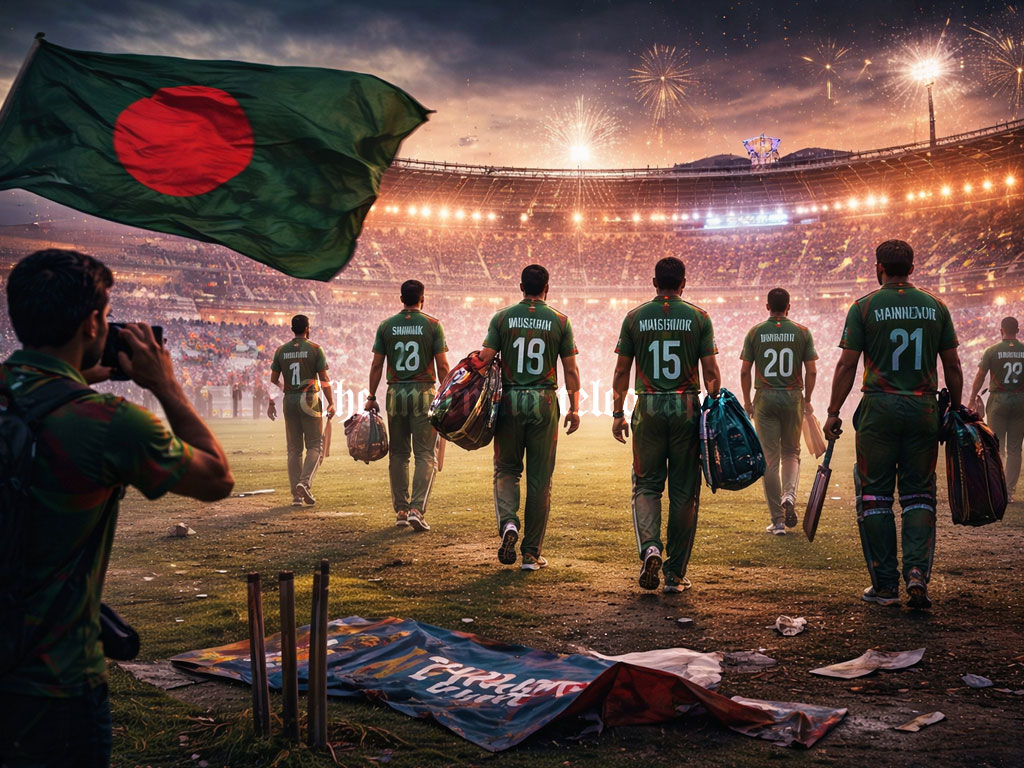
In a bold and unprecedented stand, Bangladesh withdraws from the 2026 T20 World Cup, challenging what critics call the politicisation and monopoly of global cricket power.
Bangladesh’s decision to withdraw from the 2026 T20 Cricket World Cup is more than a sporting announcement. It is an emotional rupture that cuts through the heart of modern cricket, raising uncomfortable questions about power, fairness, and the slow politicisation of a game meant to unite nations.

By confirming it will not play in the tournament after refusing to travel to India, Bangladesh has effectively told the cricketing world that there are limits it will not cross. Along with the team, nearly 200 million Bangladeshi fans have been told that this World Cup will go on without them. For many, that absence will speak louder than any protest ever could.
This moment feels historic because Bangladesh has chosen resistance over compliance. Cricket is not meant to be a proxy battlefield for political disputes, yet that is increasingly what it has become. In recent years, India has blurred the boundary between sport and state interest, bringing regional political tensions directly onto the cricket field.
The sequence of events tells its own story. India refused to tour Pakistan for the 2025 Champions Trophy, forcing a compromise where matches were shifted to Dubai. Conditions there suited India perfectly, and they emerged champions. Pakistan, despite strained relations, had toured India for the 2023 ODI World Cup. Yet reciprocity never followed. Now Pakistan too has refused to play in India for the 2026 T20 World Cup, opting for Sri Lanka as a neutral venue.
Bangladesh found itself drawn into the same web. The removal of Mustafizur Rahman from the IPL on the grounds of communal sensitivities inside Bangladesh pushed the issue beyond cricket. What was framed as a social concern quickly became a political lever, and Bangladesh responded decisively. IPL broadcasts were halted, and a line was drawn. If safety and neutrality can be cited by one nation, they can be cited by another.
The controversy has since widened. Visa delays for players of Pakistani origin across several teams have exposed how deeply power now runs through international cricket administration. Even players representing countries far removed from the subcontinent have been affected, prompting quiet unease within the cricketing fraternity.
What makes Bangladesh’s stand striking is its loneliness. Traditional powerhouses like England and Australia have chosen caution and silence. Bangladesh did not. Despite long standing criticisms of its on field temperament, this off field decision reflects courage and self respect.
Sport is meant to bridge political divides, not deepen them. Bangladesh’s withdrawal is painful, costly, and deeply emotional. But in walking away, they have forced the world to confront an uncomfortable truth: when cricket stops being fair, sometimes the only victory left is the refusal to play.