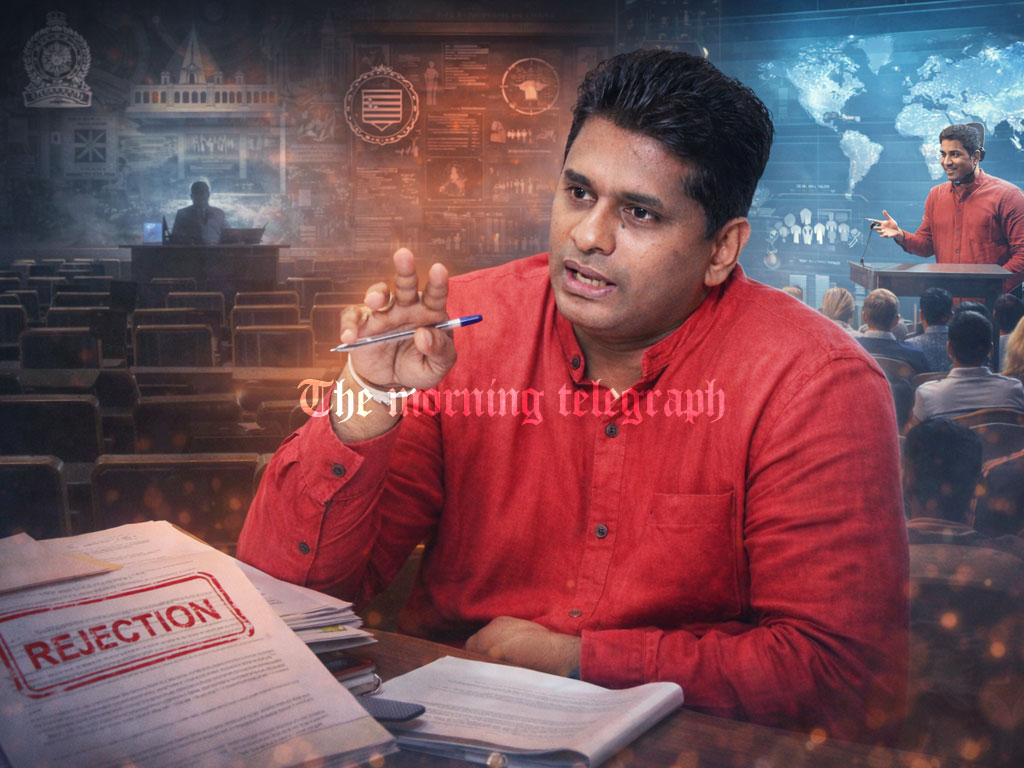
Despite global recognition and multiple international awards, a leading Sri Lankan scientist finds himself sidelined at home while teaching abroad, raising troubling questions about university governance and academic independence.
Dr. Channa Jayasumana, a scientist ranked among the world’s top two percent by Stanford University, is currently being denied reappointment to Sri Lanka’s state university system, even as he continues to teach at foreign universities. The situation has sparked growing concern within academic and professional circles over the treatment of internationally recognised scholars in the country.

Dr. Jayasumana previously served as a professor at the Faculty of Medicine of Rajarata University. He resigned from his post in order to contest the 2020 general election, a move permitted under university regulations. In December 2024, he formally applied for reappointment to his former position. However, despite repeated applications, the university’s governing authority has consistently refused to reinstate him.
This refusal comes at a time when the relevant department at Rajarata University reportedly has only one serving professor and several academic vacancies. No official explanation has been provided for the continued delay or rejection. Dr. Jayasumana has written several times to the Minister of Education and Prime Minister Harini Amarasuriya seeking clarification, but has received no response.
Dr. Jayasumana is a four-time recipient of Presidential Awards for scientific research. In 2016, he made history by becoming a professor at the age of 36, breaking a long-standing academic record set by the late Dr. Senaka Bibile. In 2019, he received an international award from the Association for the Advancement of Science in the United States, becoming the first South Asian to receive that honour. The award recognised his pioneering research into chronic kidney disease affecting agricultural communities, research he continued despite sustained opposition and pressure.
Stanford University has ranked him among the world’s top two percent of scientists three consecutive times. While Sri Lankan medical students are currently deprived of his expertise, Dr. Jayasumana now serves as a visiting professor at two overseas universities.
Meanwhile, Rajarata University continues to face administrative instability. For the third consecutive time, its Governing Council has failed to finalise the appointment of a Vice Chancellor. The post has remained vacant for over a year, with an Acting Vice Chancellor in place. Critics allege that procedural delays are being used to prolong interim control rather than appoint a permanent Vice Chancellor, further deepening concerns about governance and accountability in Sri Lanka’s higher education system.