A fresh warning claims Sri Lanka is paying twice for bad coal through lower power output and higher diesel costs, with electricity users left to foot the bill.
Frontline Socialist Party Education Secretary Pubudu Jagoda has challenged claims that Sri Lanka suffers no economic loss when substandard coal is accepted after imposing fines, calling the narrative misleading and dangerous for electricity consumers.

Responding to recent remarks by Cabinet Media Spokesperson Minister Nalinda Jayatissa, Jagoda said similar statements had earlier been made by the Minister of Power and Energy, but key facts were being ignored. He explained that under previous practice, coal rated between 5900 and 6050 KCal per kilogram was accepted only after fines, while coal between 6050 and 6200 KCal per kilogram was accepted without penalties. Coal falling below 5900 KCal per kilogram was classified as reject value and should not be accepted at all.
Jagoda recalled that an Indonesian supplier, Trafigura, had earlier shipped coal below this reject value, prompting authorities to reject the cargo, divert the vessel, and cancel further orders. He stressed that the same standard must apply now, arguing that the Indian supplier Trident Chemphar should not be protected if tender conditions are violated. According to the tender, he noted, two inferior shipments are grounds for cancellation.
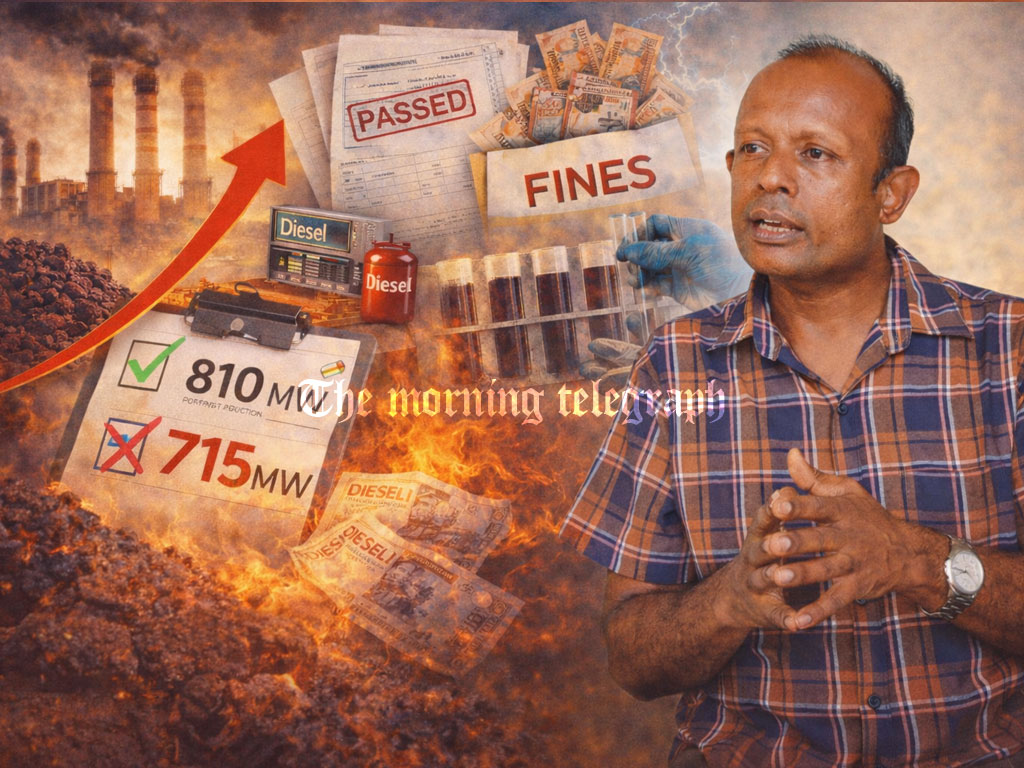
He rejected the argument that fines offset losses, explaining that fines address contract breaches, not energy deficits. Citing recent data, he said the Norochcholai Lakvijaya Power Plant generated only about 715MW instead of the expected 810MW from a recent coal shipment, leaving a shortfall close to 100MW per hour. That gap, he warned, is covered by costly diesel generation at night, with unit costs about four times higher than coal.
Jagoda also warned of long-term damage due to higher ash content, with repair costs ultimately added to electricity tariffs. Questioning whether fines will even be collected, he raised concerns over attempts to send umpire samples to a third laboratory without accepting Indian inspection reports. He urged a transparent sampling process and a full investigation, warning that without accountability, consumers will bear the entire burden.