By Dwayne Ferreira
The economic landscape in Colombo has been a whirlwind over the last 48 hours. While local metrics suggest a “Goldilocks” moment of stability, a tightening geopolitical vice is forcing Sri Lanka’s financial desks to rethink their 2026 strategy.

On February 2, the Monetary Policy Board held the Overnight Policy Rate (OPR) steady at 7.75%. This “hold” signal, paired with a January inflation report showing a manageable 2.3%, suggests the Central Bank of Sri Lanka (CBSL) is satisfied with domestic recovery. However, the move is deeply defensive. By maintaining rates, the CBSL is building a buffer against “global uncertainties”—a polite nod to the escalating trade war with the United States.
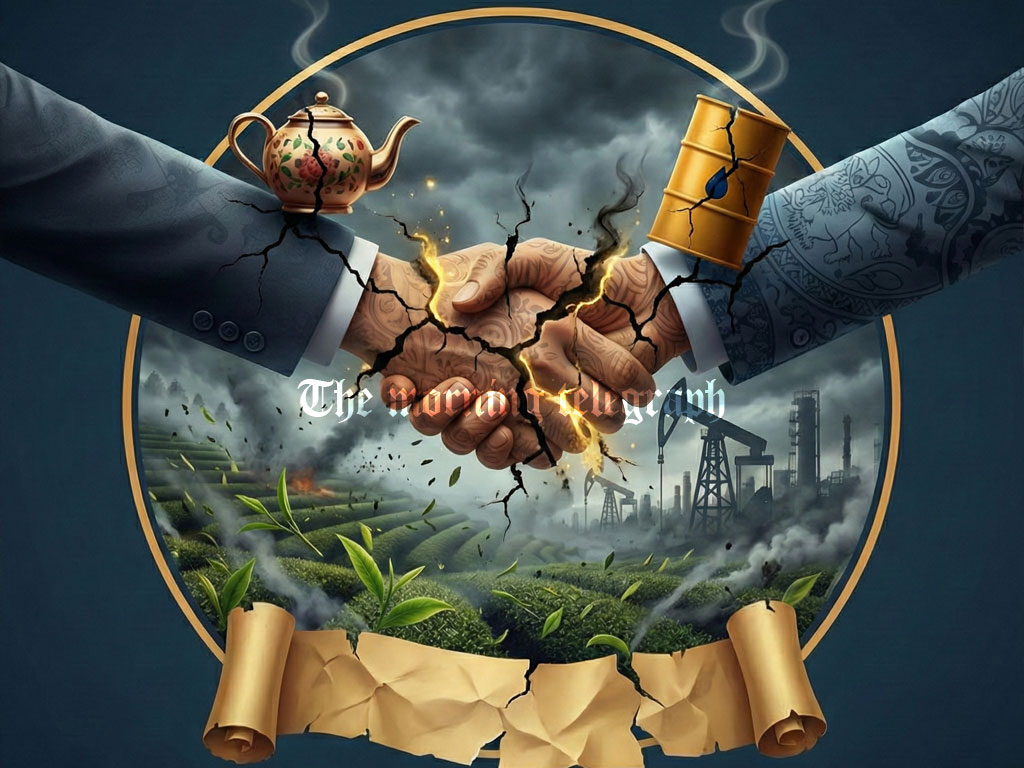
The most immediate threat is the future of Sri Lanka’s innovative barter deal with Tehran. Under the “Tea-for-Oil” arrangement, Sri Lanka has been settling a $251 million legacy debt by shipping Ceylon Tea to Iran, bypassing the U.S. Dollar.
However, a recent January 2026 directive from Washington has changed the stakes. The U.S. has threatened a 25% secondary tariff on any nation “conducting business” with Iran. For Colombo, this creates an existential crisis: continuing the debt settlement could trigger massive penalties on the island’s primary exports to its largest market (United States).
Compounding this pressure is the sudden shift in regional trade dynamics. While Sri Lanka navigates these sanctions, India has just secured a landmark trade deal with the U.S., reportedly slashing tariffs on Indian goods from 50% down to 18%.
This is a direct blow to the Sri Lankan garment sector. Previously, Indian textiles faced punitive “penalty tariffs” for Russian oil purchases, keeping Sri Lanka’s apparel competitive. With India’s rate now potentially dropping below Sri Lanka’s 20%–30% reciprocal tariff bracket, American buyers are likely to shift orders across the Palk Strait. Industry analysts at JAAF (Joint Apparel Association Forum) warn that if Indian garments become the “cheaper, safer” alternative in the eyes of Washington, Sri Lanka risks losing a significant share of its $5 billion apparel industry.
As Colombo attempts to rebrand its Iran deal as “humanitarian debt settlement,” the reality is clear: Sri Lanka is being squeezed between its debt obligations and its export dependencies. In this new era of 18% Indian tariffs and 25% U.S. sanctions, domestic stability is no longer enough.