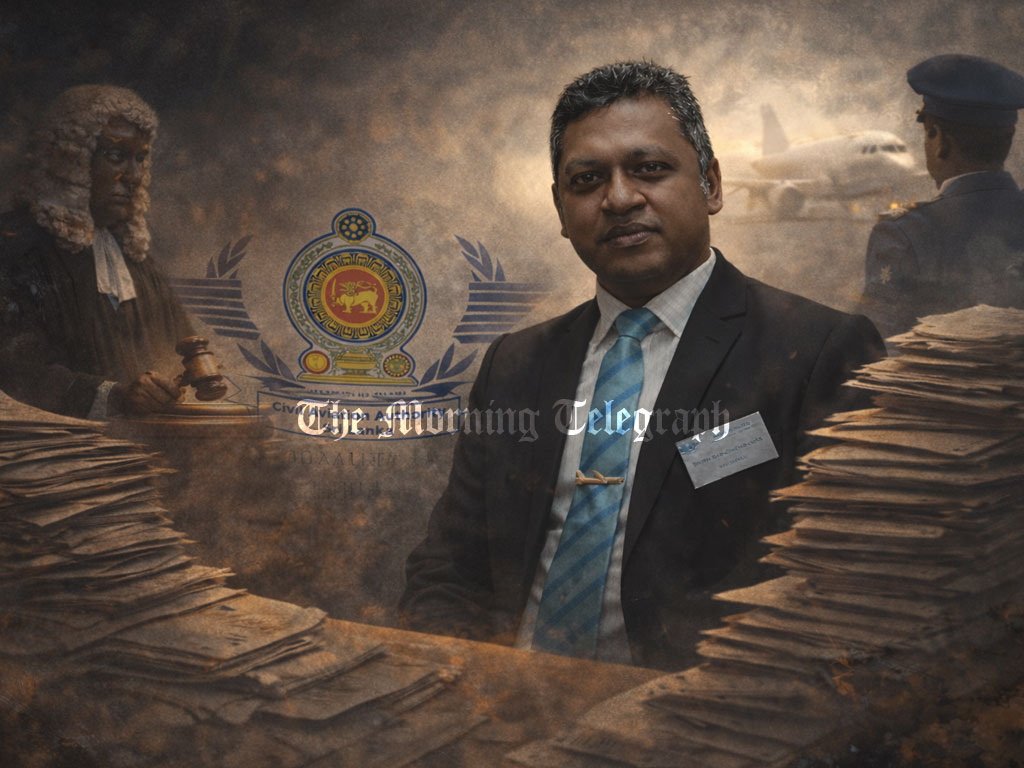
A respected pilot, a rejected application – again – and fresh questions over who really gets promoted at Sri Lanka’s aviation watchdog. As one insider heads back to court, doubts over fairness, favourites, and failed checks refuse to go away.
In what is fast becoming one of the most uncomfortable internal controversies at the Civil Aviation Authority of Sri Lanka, senior aviation professional Isuru Sarathchandra has once again cried foul after his application for the advertised post of Deputy Director General- Flight Safety Regulations (DDG-FSR) was rejected, without him not even being called for an interview.

Sarathchandra, an old boy of Maliyadeva College, Kurunegala, and a serving Civil Aviation Inspector (Aircraft Flight Operations) at the CAASL, is described by colleagues as deeply disillusioned by a system they say refuses to reward merit. This marks the second time his application for a senior role has been passed over. After the first rejection, he took the CAASL to court, but the case (SC.FR. No.155/24), heard before a three-judge bench comprising Justices Janak De Silva, Achala Wengappuli, and M. Sampath K. B. Wijeratne, went against him. The ruling concluded: “We have heard the learned counsel for the petitioner and the learned counsel for the Deputy Solicitor General for the 1st, 2nd, 9th and 12th Respondents. We are of the view that the Petitioner has failed to make a prima facie case for leave to proceed.”
Undeterred, and convinced that due process has again been denied, Sarathchandra has formally questioned CAASL authorities over the latest rejection and is widely tipped to return to court, demanding transparency on why he was not even shortlisted for interview.
A CV That Refuses to Be Ignored
According to colleagues and senior officials within CAASL, Sarathchandra’s professional credentials are difficult to dismiss. He is described as an experienced pilot with a proven track record across the aviation sector, possessing deep expertise in flight instructing, flight planning, flight safety, commercial aviation, and regulatory oversight.
He is a strong operations professional, holding an Airline Transport Pilot qualification in Aviation from Delta Qualiflight, and has built a reputation internally as a technically sound and safety-focused aviation inspector. Supporters argue that his knowledge, competence, and hands-on experience align squarely with the responsibilities outlined in the Deputy Director General job description.
Sarathchandra also holds a Boeing 737 type rating, completed in Berlin, after benefiting from an Air Operator Certificate issued to an operator yet to commence commercial operations in Sri Lanka an opportunity that further strengthened his technical standing.
Yet, despite these credentials, questions have been quietly raised by detractors over whether he meets certain criteria stipulated in the vacancy notice criteria that, critics argue, appear selectively enforced.
Shortlist Raises Eyebrows
What has intensified the controversy is information received by The Morning Telegraph relating to one of the shortlisted candidates. According to internal documents, Capt. Lasantha Dahanayake, currently attached to Saffron Aviation (Pvt) Ltd, the parent company of Cinnamon Air, is reported to have previously failed a Pilot Proficiency Check (PPC).
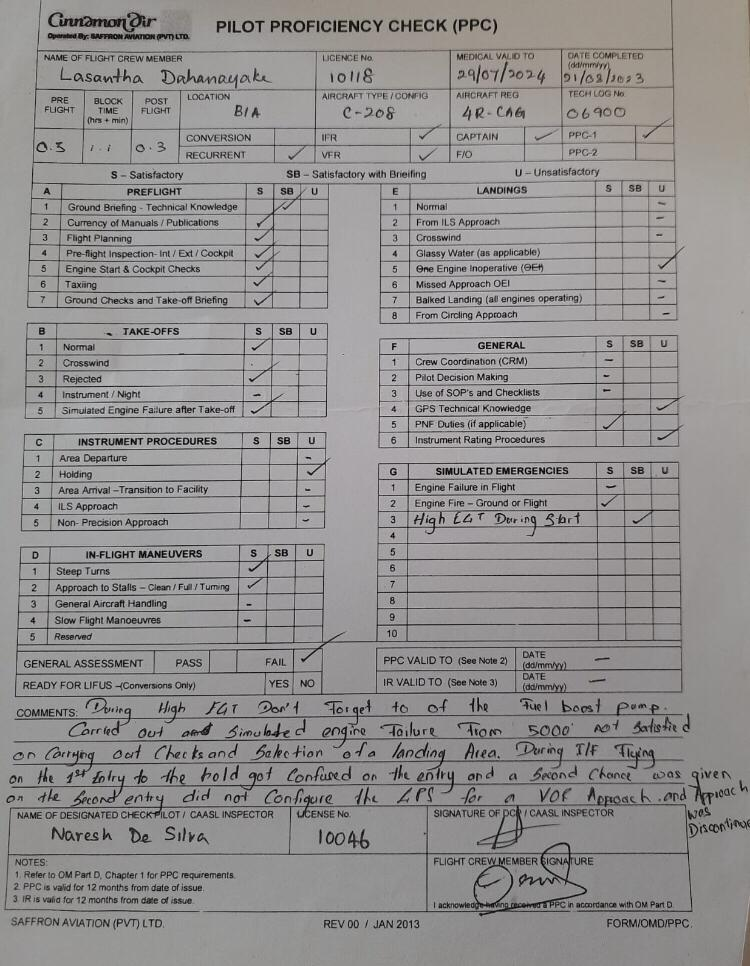
That check was reportedly conducted by Capt. Naresh De Silva, a designated check pilot and CAASL inspector. While a failed PPC is not necessarily career-ending, aviation insiders say it raises legitimate questions about consistency and standards, especially when candidates with strong regulatory and operational backgrounds are excluded without interview.
An Old Pattern in a New Selection?
Within aviation circles, CAASL has long been perceived – fairly or unfairly – as an institution that disproportionately recruits former Sri Lanka Air Force personnel when filling senior vacancies. Many insiders now believe that the same unwritten preference may once again be shaping the outcome of this recruitment process.
If true, critics argue, such a pattern risks sidelining civilian aviation professionals with extensive commercial and regulatory experience, undermining confidence in the Authority’s commitment to fairness and competence-based appointments.
A Question of Trust in the Regulator
For Sarathchandra, the issue goes beyond personal disappointment. Supporters say his repeated exclusion reflects a deeper malaise within CAASL, one where transparency, equal opportunity, and accountability are increasingly questioned.
As he prepares to once again seek answers through the courts, the spotlight is firmly on CAASL’s leadership. Why was a serving inspector with extensive qualifications not even called for interview? What benchmarks were applied and to whom? And can Sri Lanka’s aviation regulator afford another controversy at a time when public confidence is already under strain?
For now, one thing is clear: the skies over CAASL are anything but clear.