A fake movie, a daring CIA gamble, and six Americans who escaped death by pretending to be filmmakers in revolutionary Tehran.
Close your eyes and imagine being trapped in a foreign land where crowds chant for your country’s destruction, embassies burn, and every knock on the door could mean execution. This was the reality in Tehran in November 1979, during one of the most volatile moments of the Iranian Revolution. What followed remained a top secret operation for nearly three decades.

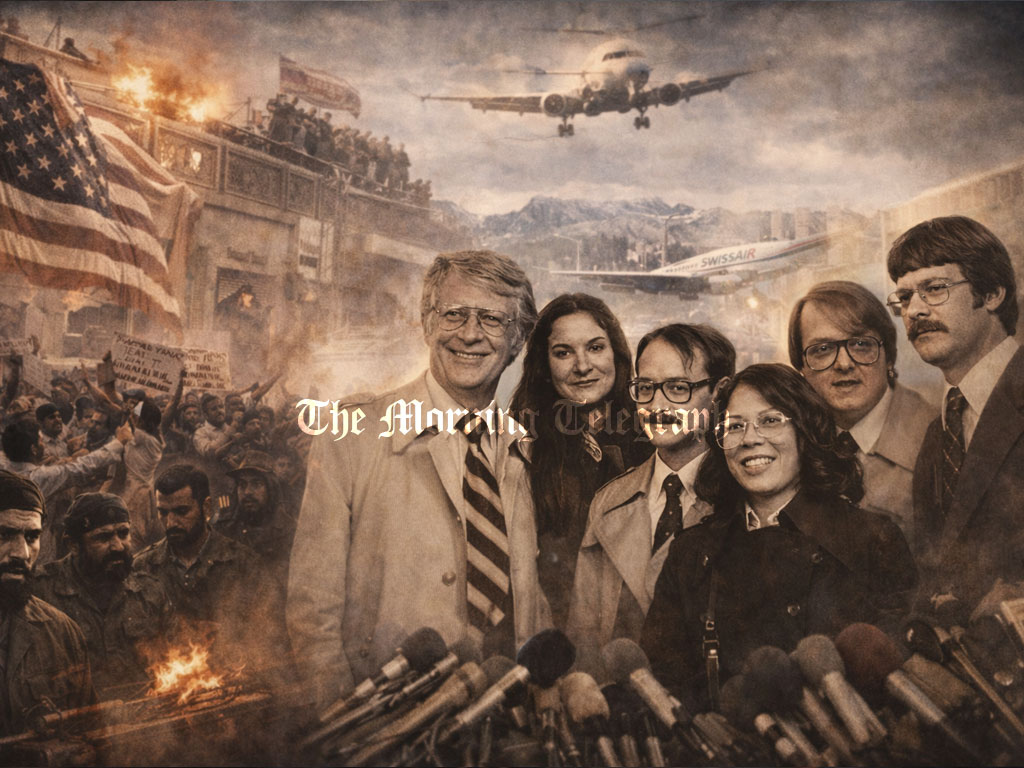
On November 4, 1979, thousands of furious protesters stormed the US Embassy in Tehran after Washington allowed the former Shah of Iran to enter the United States for cancer treatment. As crowds breached the compound, embassy staff scrambled to destroy classified documents, but chaos overtook caution. Fifty two Americans were taken hostage.
Yet, amid the confusion, six people slipped through unnoticed. Five visa officers and the wife of one officer were in a separate building. As the main embassy fell, they escaped through a back exit, blending into the rain soaked streets with umbrellas, terrified and directionless.
For weeks, they moved between safe locations until Canadian Ambassador Ken Taylor made a life risking decision to hide them inside the Canadian Embassy. Iran’s revolutionary authorities had no idea they were there, but danger grew by the day. Militants painstakingly reconstructed shredded embassy documents, even using children to piece them together. The CIA soon realized the fugitives’ photos would be exposed. If discovered, public execution was almost certain.
With time running out, the CIA turned to Tony Mendez, its master of disguise and forgery. Conventional escape ideas collapsed one by one until Mendez proposed something outrageous. He suggested posing as a Hollywood film crew scouting locations in Iran and flying the six out openly.
To make the lie believable, Mendez partnered with legendary makeup artist John Chambers. They created a fake studio called Studio Six Productions and resurrected a science fiction script titled Argo. Ads appeared in Variety and The Hollywood Reporter, offices were opened, phones were answered, and Hollywood buzzed about a new film.
On January 25, 1980, Mendez entered Tehran under a false identity. He met the six fugitives and transformed them into a Canadian film crew overnight. Each memorized a new life story. Fear followed every step.
On January 28, they reached Mehrabad Airport, facing armed Revolutionary Guards. Suspicion flared, but the film storyboards and alien sketches captivated one officer enough to wave them through. One final test remained. Their Swissair flight was delayed, stretching nerves to the breaking point.
Then the plane lifted off. When the pilot announced they had exited Iranian airspace, the cabin erupted in tears and relief.
The world later praised Canada for the rescue, unaware of the CIA’s role, kept secret to protect remaining hostages. Tony Mendez quietly received the Intelligence Star. Even his wife remained unaware for years.
Only in 1997, when President Bill Clinton declassified the files, did the world learn how cinema became the ultimate disguise in one of history’s boldest rescue missions.