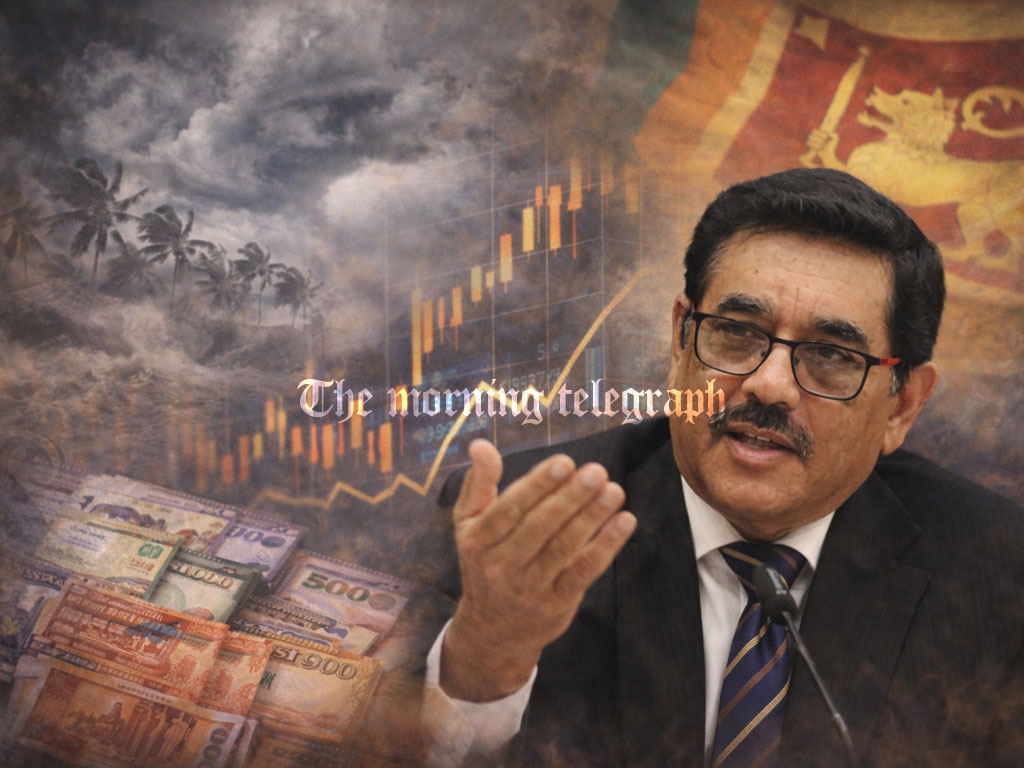
Bold fiscal discipline, near record low inflation, and a revived banking sector are shaping Sri Lanka’s cautious but confident path out of crisis, even as the country absorbs fresh climate shocks.
Sri Lanka’s Central Bank Governor Nandalal Weerasinghe has signaled renewed confidence in the country’s economic recovery, stressing that maintaining inflation below the 5 percent threshold remains the core national economic objective. Speaking in Colombo, he noted that inflation is currently hovering close to 2 percent, a level that provides policymakers with valuable space to manage growth carefully while avoiding renewed price instability.

Addressing a conference on Economic Growth in the Age of Artificial Intelligence and Digitalization, the governor said Sri Lanka’s economy continues to be guided by strict fiscal and monetary discipline despite disruptions caused by Cyclone Ditva. He emphasized that sound financial management and tighter policy coordination have enabled the country to absorb external shocks without triggering another wave of economic instability.
A key pillar of this stabilisation, he explained, has been the dramatic turnaround in state owned banks. Once burdened by a combined deficit of nearly one trillion rupees before the economic crisis, these institutions are now recording a surplus of around one trillion rupees. This shift reflects stronger income generation, improved governance, and tighter financial controls introduced over recent years.
According to the governor, this banking sector recovery has played a critical role in easing pressure on public finances. At a time when debates continue around government spending, borrowing, and debt restructuring, the improved position of state banks has helped the government avoid additional borrowing during a period of economic vulnerability. This, he noted, has strengthened overall macroeconomic stability and boosted investor confidence.
Turning to the impact of Cyclone Ditva, the governor acknowledged that the storm caused significant damage to property and infrastructure. However, he said the overall economic cost now appears lower than initially feared. Earlier estimates, including figures cited from a World Bank report, placed potential losses at around US$4.1 billion. More detailed assessments now suggest that reconstruction costs will be less than expected.
While the cyclone may temporarily affect short term growth figures, updated economic data is expected soon. The governor expressed confidence that Sri Lanka is on track to achieve an economic growth rate of around 5 percent from next year, signaling cautious optimism that the recovery is gaining momentum under disciplined fiscal and monetary management.