The Human Rights Commission has issued a firm warning to Sri Lanka’s top police leadership, urging an immediate end to the growing practice of using criminal investigation units to pursue alleged insults and defamatory speech, calling it a direct threat to free expression and democracy.
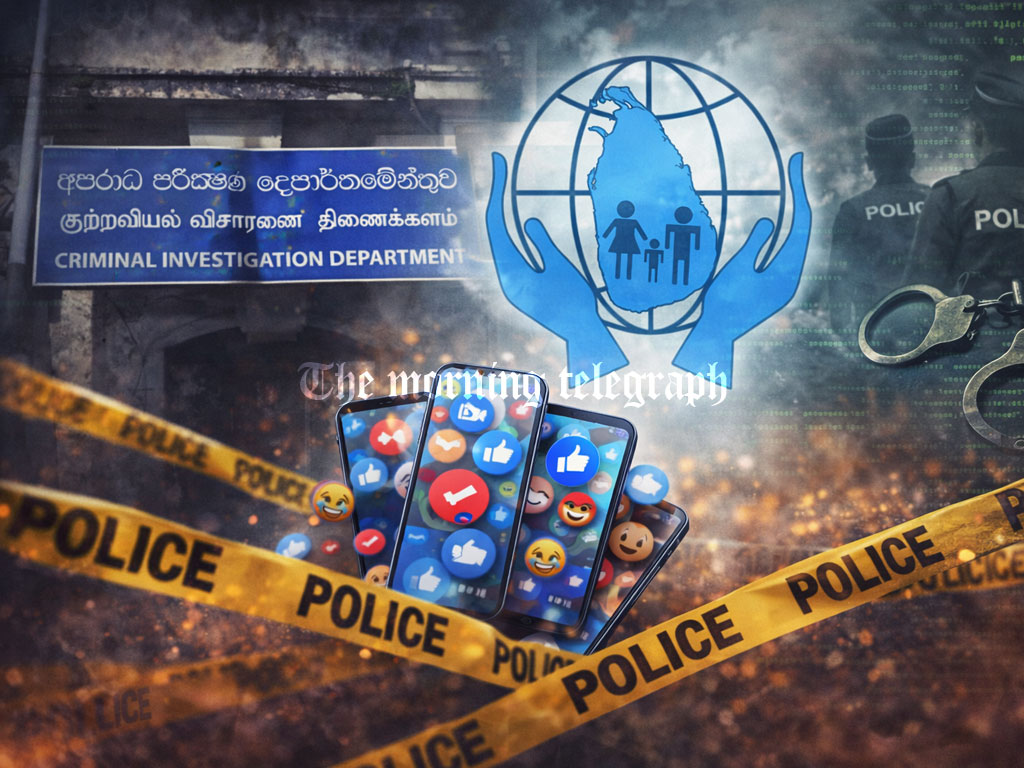
The Sri Lanka Human Rights Commission has formally advised the Inspector General of Police that complaints relating to insults or defamation should not be referred to criminal investigation bodies such as the Criminal Investigation Department or the Computer Crime Investigation Division.

The recommendation follows a clear pattern observed by the Commission, where politicians, public officials, social activists and other influential individuals increasingly turn to law enforcement to respond to criticism, negative commentary or alleged false statements made against them on traditional and online media platforms.
In a special statement, the Commission stressed that allegedly defamatory statements do not constitute a criminal offence under Sri Lankan law. As such, it emphasized that police divisions and stations should be clearly instructed that false statements or insults fall outside the scope of criminal investigations.
The Commission further stated that complaints based on hypothetical insults or perceived reputational harm should be avoided altogether by law enforcement authorities. It noted with concern that investigations initiated on assumed defamatory publications have increasingly been used to suppress freedom of expression and undermine internet freedom.
According to the Commission, expressing ideas, opinions and ideologies is a fundamental right of citizens and a cornerstone of democratic participation, a principle repeatedly affirmed by Supreme Court rulings. It warned that unnecessary and unreasonable restrictions on expression pose a serious risk to social stability and can fuel public dissatisfaction and unrest.
The Commission also reminded that international human rights standards require public representatives, including political leaders and state officials, to demonstrate a higher level of tolerance toward criticism than private individuals. Law enforcement agencies, it said, have a special responsibility to uphold and protect this freedom rather than restrict it.
Additionally, the Commission recommended that the Ministry of Justice declare a moratorium on the use of the Online Security Act until it is replaced with legislation that includes appropriate safeguards for freedom of expression.
Recent complaints lodged with the CID by Trade, Commerce, Food Security and Cooperative Development Minister Wasantha Samarasinghe, his public relations officer Nimodhi Wickramasinghe, MP Nilanthi Kottahachchi, Deputy Media Minister Dr. Kaushalya Ariyaratne and several others were cited as part of this wider trend.