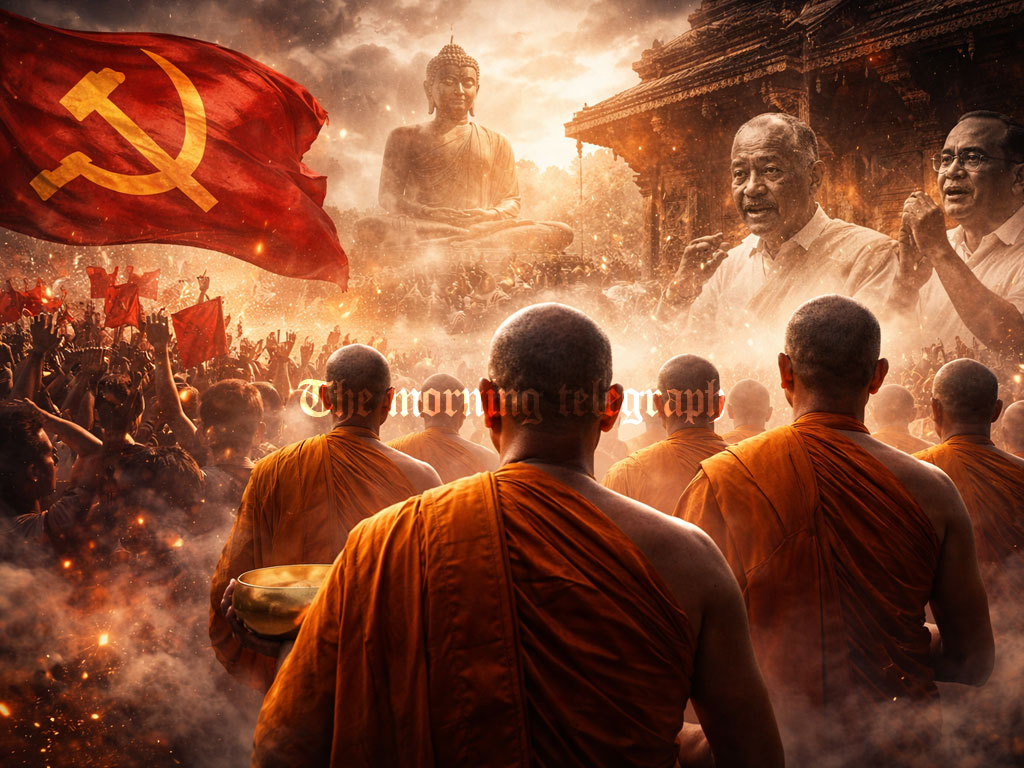
A sweeping look at how ideology, religion, and political power repeatedly collide in Sri Lanka, revealing why faith-based backlash has shaped governments from the 1960s to the present day.
Sri Lanka’s first Marxist coalition government emerged when the Lanka Sama Samaja Party joined hands with the Sri Lanka Freedom Party, creating a powerful alliance that unsettled the political establishment. The appointment of LSSP leader N. M. Perera as Finance Minister symbolized the seriousness of this ideological shift and sent shockwaves through the opposition.

At the time, the United National Party viewed this government with deep anxiety. Marxist influence, when combined with the charismatic public image of Prime Minister Bandaranaike, created a political force that the UNP feared it could not easily counter. This concern was not limited to electoral calculations but extended into the cultural and religious fabric of the country.
Marxist ideology did not place importance on religion, and as a result the SLFP Marxist coalition formed in 1964 was viewed with suspicion by Buddhist monks and the Christian Church alike. Bandaranaike’s earlier decision to nationalize church-controlled schools had already angered religious institutions. Sensing a growing Buddhist backlash, Opposition Leader Dudley Senanayake and strategist J. R. Jayewardene recognized that religion would become the central battleground.
By this stage, Dudley and J. R. had replaced Sir John Kotelawala, whose controversial remarks about monks had alienated Sinhala Buddhist voters. Dudley, in contrast, enjoyed respect among monks and lay Buddhists, making him the natural figure to engage with religious leadership.
“Dudley, you are the one who can control this force…”
Acting on this belief, Dudley abandoned formal political attire, adopted traditional dress, visited the Temple of the Tooth, and personally warned the Mahanayake Theros of what he described as the danger communism posed to religion. This symbolic gesture marked a decisive turning point.
Leadership of the religious resistance was entrusted to former Chief Justice and Attorney General Hema Henry Basnayake, whose close ties with senior monks made him uniquely influential.
“Sinhala Buddhism is in great danger. Hema, you take charge of this…”
With his appointment, prominent monks who had already gained public recognition aligned themselves with the movement. Leading figures from the Asgiri and Malwatte chapters offered their blessings, consolidating a powerful religious front. At the same time, Archbishop Thomas Cooray mobilized the Catholic community, convinced that the Marxist coalition was undermining religious freedom.
Tensions escalated further when the Press Act was introduced. Religious leaders accused the government of threatening both press freedom and freedom of belief. United by monks, priests, and opposition parties, resistance intensified. The SLFP Marxist coalition, once considered politically formidable, collapsed. After years in opposition, the UNP returned to power with renewed stability.
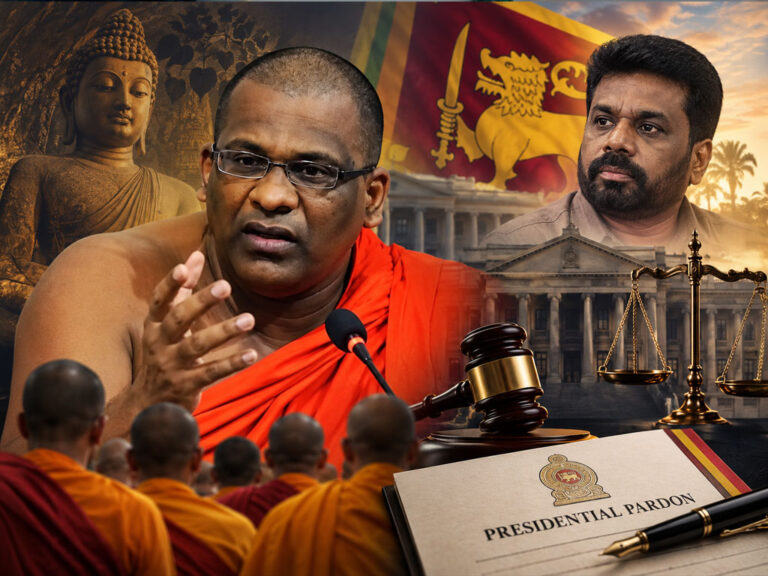
Fast forward to the present, Sri Lanka does not operate under a Marxist coalition but under a Marxist JVP-led government. While it has abandoned rigid Marxist economic policies in favor of liberal approaches, its cultural posture remains contentious. Disputes over history, sexual matters, military symbolism, and religious ceremonies have revived old anxieties. The arrest of monks has further inflamed tensions within the Sangha.
The Catholic Church, including the Cardinal, has joined this wave of concern, warning against disrespect toward religious leaders. Similar controversies surrounded Ranil’s governments in 2002 and 2015, where critics argued that his policies alienated Sinhala Buddhist tradition. Instead of adapting to cultural realities, Ranil attempted to reshape society to suit his leadership, a strategy that ultimately failed.
The JVP now faces a comparable dilemma. Despite President Anura’s attempts to signal respect for Buddhist tradition, the party’s ideological rigidity continues prevents meaningful reconciliation with cultural sentiment.
The death of Soma Thero in the early 2000s ignited a Sinhala Buddhist wave that reshaped Parliament. Later, the 2019 Easter attacks again unified religious forces against the ruling coalition.
“Will a Sinhala Buddhist wave also emerge against the JVP government…?”
The answer remains uncertain. Yet history suggests that beneath Sri Lanka’s political surface, faith and ideology continue to smolder, waiting for the next spark.