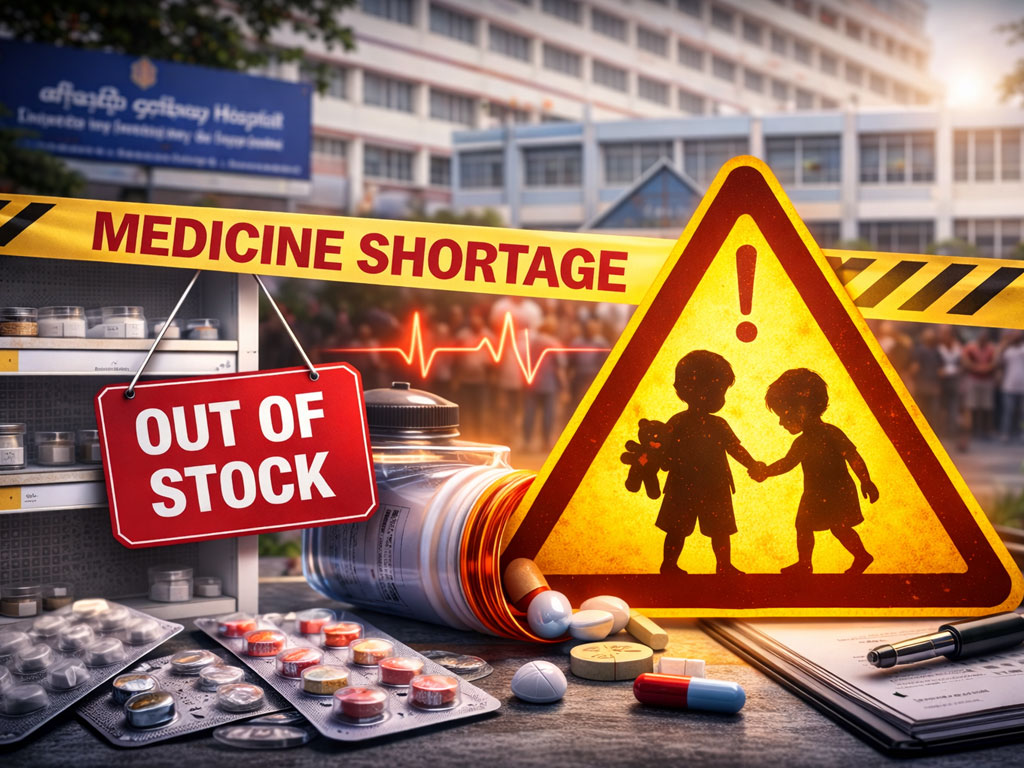
A deepening pediatric drug shortage is pushing vulnerable children toward medical crisis while families are forced to pay thousands out of pocket as state hospitals struggle to maintain uninterrupted treatment.
A growing shortage of essential medicines for children in Sri Lanka has triggered serious concern among doctors and public health advocates. Medical professionals warn that lives are now at risk due to the disruption of critical pediatric drug supplies across several state hospitals. The Alliance of Doctors for Medical and Civil Rights has described the situation as an urgent national public health emergency affecting some of the country’s most vulnerable patients.

The impact is already visible at the Lady Ridgeway Children’s Hospital and other specialized pediatric clinics. According to the Alliance, key medicines used to treat epilepsy, seizure disorders, and certain kidney conditions are not being supplied consistently. These supply chain failures are interrupting carefully structured treatment plans and exposing children to dangerous health complications.
Chairman Chamal Sanjeewa has attributed the crisis to breakdowns in procurement systems and weaknesses in pharmaceutical distribution networks. Hospitals, he says, are unable to maintain stable stocks of life saving pediatric medications. Doctors caution that even short interruptions in dosing can lead to worsening illness, preventable medical emergencies, and long term complications.
The Alliance has urged the Ministry of Health to intervene immediately and reform the institutional supply chain. Instead of ensuring continuous stock management, authorities are reportedly spending heavily on emergency purchases from private pharmacies. This has transferred a severe financial burden onto already struggling families.
Parents are now reportedly paying at least Rs. 30,000 per month for seizure medication when hospital supplies run dry. Medical professionals warn that unless procurement reforms and distribution stabilization occur swiftly, inequality in healthcare access will widen and children dependent on uninterrupted medication will face escalating risk.