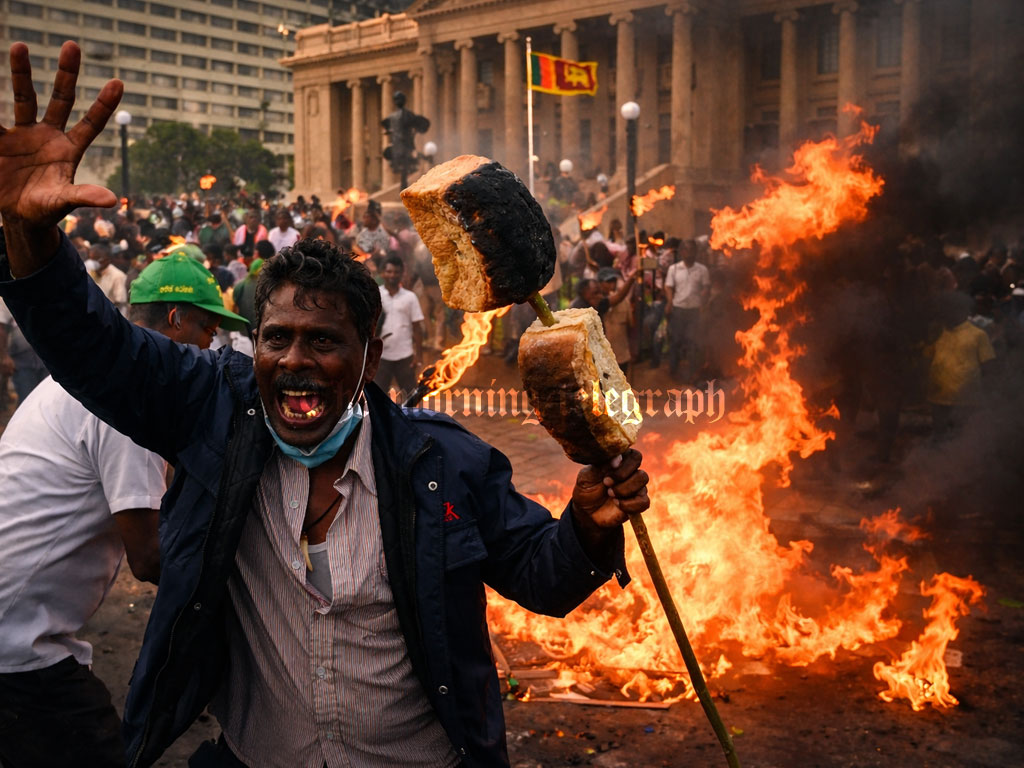
A gripping political what-if explores how the Aragalaya uprising altered Sri Lanka’s power structure, fractured opposition rivalries, and possibly prevented a Rajapaksa political comeback that could have shaped the 2029 presidential race.
“What would Sri Lanka look like today if the Aragalaya had never happened?”
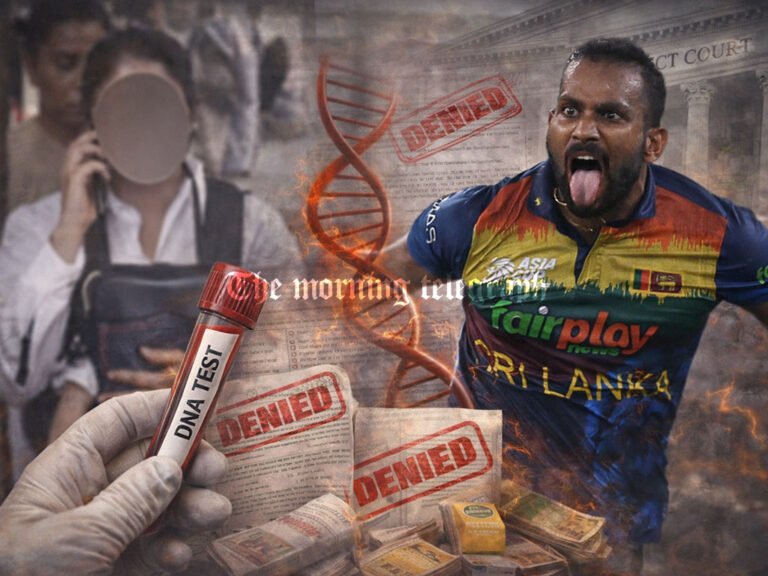
That question, posed by a foreign embassy official to a journalist, cuts straight to the heart of Sri Lanka’s recent political transformation. The reply came without hesitation. The Rajapaksas would be preparing Namal Rajapaksa for the 2029 presidential election.

Political history often revolves around the idea of what might have been. The biography of J. R. Jayewardene reflects on how different his path may have been if Dudley Senanayake had not died when he did. Similarly, Sri Lanka’s recent past invites a powerful counterfactual analysis. Without the Aragalaya protest movement, would the Rajapaksa political dynasty still dominate governance today?
When the Aragalaya began, the Rajapaksas appeared politically untouchable. Their control over Parliament and the state machinery resembled an empire that could not be shaken. The Samagi Jana Balawegaya led by Sajith Premadasa served as the main opposition, yet internal fragmentation weakened the anti-government front. The Rajapaksas strategically facilitated the return of Ranil Wickremesinghe to Parliament through the National List after he lost his seat in 2020. Many interpreted this move as an attempt to counter Sajith and deepen divisions within the opposition.
Public political discourse was aggressive. SLPP leaders, including Namal Rajapaksa, openly mocked Sajith. Statements from various quarters questioned his competence. Meanwhile, the battle within the opposition was not about capturing the presidency but about securing the influential post of Leader of the Opposition. Ranil sought institutional leverage inside Parliament. Anura Kumara Dissanayake aimed to expand his national appeal by strengthening his political base.
Then came the spark. In November 2021, during strict COVID restrictions, Sajith and the Samagi Jana Balawegaya organized a massive gathering at Galle Face. It was the first visible public challenge to Gotabaya Rajapaksa’s administration. Although supporters demanded an immediate siege of the Presidential Secretariat, the protest was staged strategically within sight of it.
On March 16, 2022, another massive demonstration surrounded the Secretariat. Effigies were burned. Public anger intensified. Soon after, Hirunika Premachandra led women protesters toward Mirihana, challenging the president directly at his residence. Youth activists under the Frontline Socialist Party followed, escalating the confrontation. Police crackdowns only fueled public outrage.
Social media became a catalyst. Calls for nationwide resistance spread rapidly. While some leaders warned against leaderless uprisings, others urged citizens to take to the streets. Sajith openly encouraged peaceful public action without party ownership. The protests expanded beyond party lines.
Unexpectedly, the movement gathered unstoppable momentum. Fuel shortages, gas queues, and economic collapse deepened public frustration. Protest camps at Galle Face became a symbol of civic resistance. Soon, all major opposition forces converged at the site. The slogan unified them: Gota go home.
The Aragalaya fundamentally reshaped Sri Lanka’s political narrative. It disrupted what many believed was an entrenched political dynasty immune to electoral defeat. Rivalries persisted within the protest space, as various parties attempted to assert leadership. Yet the collective pressure proved decisive.
Had the Aragalaya not erupted, the political landscape would likely have evolved differently. In a hypothetical 2024 presidential election, Sajith, Ranil, and Anura might have contested separately. A divided opposition vote could have paved the way for Gotabaya Rajapaksa to secure another term. Such an outcome would almost certainly have positioned Namal Rajapaksa as Prime Minister and successor, preparing him for 2029.
Instead, the uprising altered that trajectory. The Rajapaksas exited office under immense public pressure. Ranil Wickremesinghe rose to the presidency through constitutional processes. Anura Kumara later capitalized on shifting voter sentiment. The political realignment that followed demonstrated how mass protest can recalibrate institutional power.
The Aragalaya also exposed the limits of electoral politics. Many opposition leaders understood that defeating the Rajapaksas through a traditional election seemed unlikely at that moment. The protest created a new political equation that formal politics alone could not produce.
Yet the aftermath reveals complexity. Some early supporters of the uprising did not reap electoral rewards. Activist groups struggled to convert street energy into sustained political capital. The movement’s gains were unevenly distributed among competing actors.
Still, the central conclusion remains powerful. Without the Aragalaya, Sri Lanka’s governance structure might look dramatically different today. The Rajapaksa administration may have consolidated further authority, and succession planning for 2029 could already be underway.
Counterfactual political analysis underscores a fundamental lesson. Moments of public mobilization can disrupt entrenched power structures more effectively than fragmented electoral strategies. The Aragalaya stands as one of those pivotal turning points in Sri Lanka’s democratic evolution.
History does not unfold inevitably. It is shaped by decisions, crises, and collective action. In Sri Lanka’s case, the Aragalaya transformed what seemed politically permanent into something temporary. Without it, the Rajapaksas may well have continued ruling. With it, the course of national leadership was permanently altered.