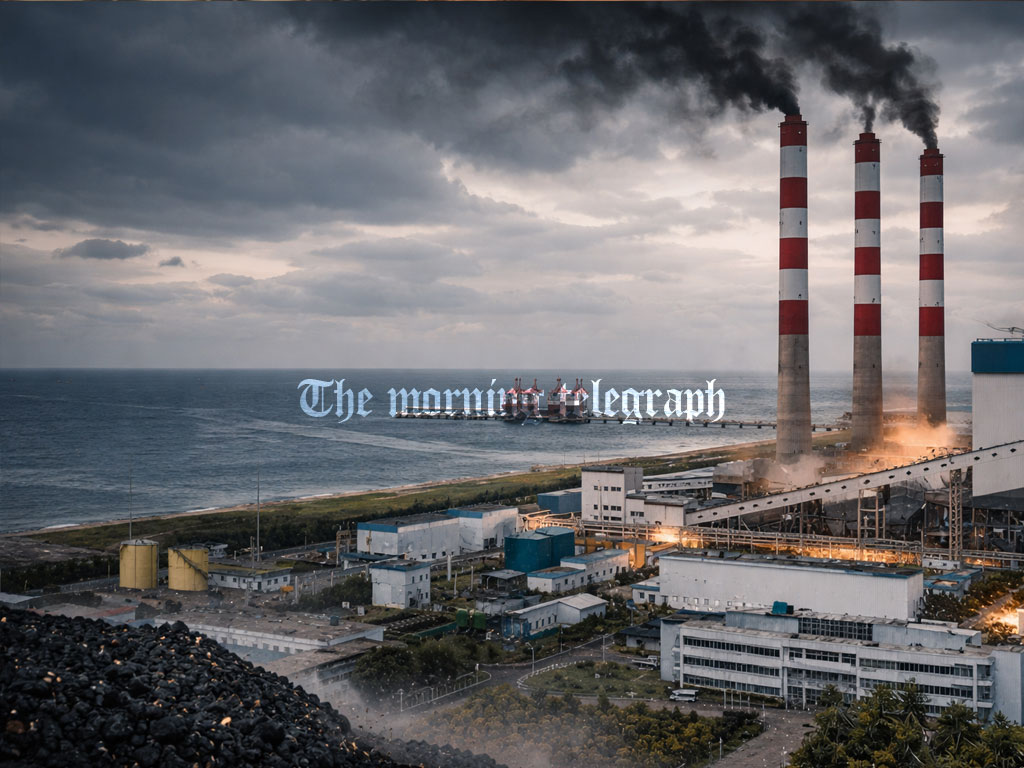
A damning internal report exposes how low-quality coal shipments crippled Norochchola’s power generation, drained billions in public funds, and triggered urgent legal and technical reviews.
The Ceylon Electricity Board has reported a staggering direct financial loss exceeding Rs. 2,796 million due to the use of substandard coal at the Norochchola Coal Power Plant. According to a detailed assessment submitted by the General Manager of the CEB, four separate coal shipments failed to meet the plant’s design specifications, leading to serious operational inefficiencies and reduced electricity generation.

The report breaks down the losses by shipment. The first consignment resulted in a loss of Rs. 595.1 million. The second shipment caused Rs. 288.5 million in damage. The third shipment proved the most costly, with losses amounting to Rs. 1,047.4 million. The fourth shipment added a further Rs. 865.0 million to the total. These figures were calculated by valuing each unit of electricity that could not be generated due to coal quality defects at Rs. 57.53 per unit.
While fines have been imposed on the coal suppliers, the penalties fall significantly short of the total losses. The cumulative fine amounts to approximately Rs. 1,037 million. This includes Rs. 644.5 million for the first shipment, Rs. 135.1 million for the second, Rs. 150.3 million for the third, and Rs. 107.1 million for the fourth. The financial gap raises serious concerns about accountability and procurement oversight.
Beyond the direct financial loss, the Electricity Board has highlighted severe technical damage to plant machinery. Cleaning blockages in the Air Pre-Heater is estimated to cost Rs. 50 million. Boiler pipe system repairs are expected to require at least Rs. 10 million. Correcting turbine blade overheating could exceed Rs. 100 million, adding further strain to maintenance budgets.
The report confirms that a comprehensive scientific study is being prepared to assess the full impact of substandard coal on system performance and long-term plant stability. The matter has also been presented before the Parliamentary Sectoral Oversight Committee. Legal clarifications are underway regarding the cancellation of coal supply agreements.
The findings intensify scrutiny over energy sector procurement practices and the broader financial implications for Sri Lanka’s power generation system.