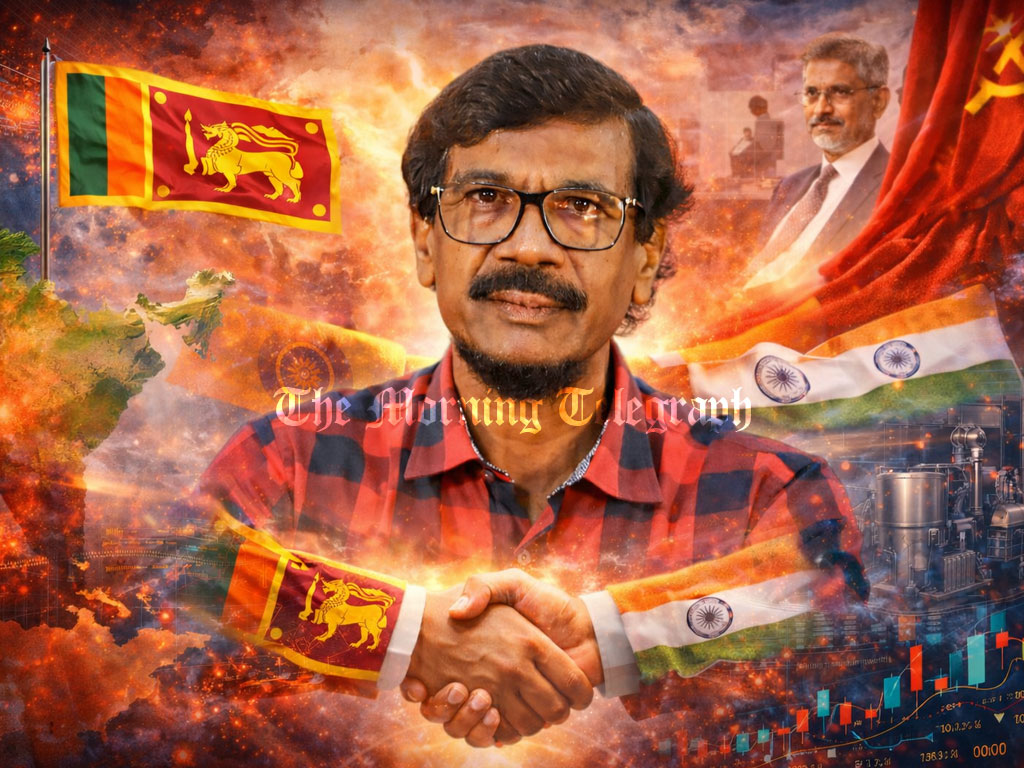
JVP General Secretary Tilvin Silva declares a new era of trust, economic cooperation, and technology-driven partnership between Sri Lanka and India, marking a decisive shift in regional diplomacy.
The era of anti-India rhetoric is over, and Sri Lanka is now stepping into what JVP General Secretary Tilvin Silva describes as a new chapter of trustworthy friendship with India. Speaking during a special discussion on Sirasa TV, Silva made it clear that the relationship between the two neighboring nations has entered a phase of strategic cooperation and mutual respect.

Addressing past criticism of the JVP’s anti-India stance, Silva clarified that the party’s earlier position was rooted in policy disagreements, not hostility toward India itself. He explained that objections in the past were directed at specific measures adopted by the Indian government at that time. “That issue is over now. The friendship between India and Sri Lanka is important for both countries as well as the region,” he said, underscoring the importance of regional stability and South Asian cooperation.
Silva described India’s willingness to act as a trustworthy partner as a positive development and even a diplomatic victory. Commenting on his recent official visit to India, he revealed that discussions with a delegation including Indian External Affairs Minister Dr. Subrahmanyam Jaishankar focused primarily on economic development, investment, and technology transfer. He stressed that there were no talks on provincial councils or domestic political matters, dismissing speculation circulating online.
During his visit to Gujarat, Silva said he closely observed India’s dairy industry model and advanced digital infrastructure. He noted that Sri Lanka aims to adopt technical expertise and innovation while safeguarding national assets, making it clear that the government has no intention of selling the local dairy industry to foreign interests.
Responding to social media debate over the red northern robe presented to him by the Communist Party of India in Kerala, Silva described it as a customary cultural gesture, not a political symbol. He concluded by stating that the government’s foreign policy is based on transparency, direct engagement, and honest diplomacy with India.