A fresh criminal complaint challenges the credibility of Sri Lanka’s aviation safety process, alleging interference, concealment, and manipulation in the preliminary report on the Gregory Lake aircraft accident.
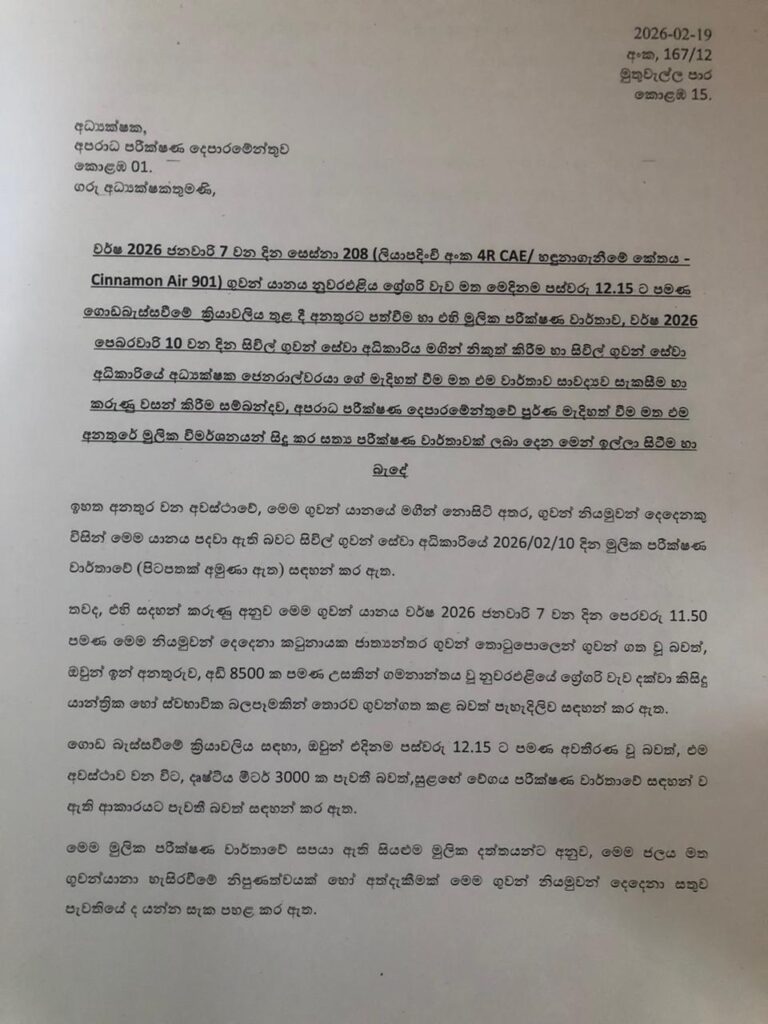
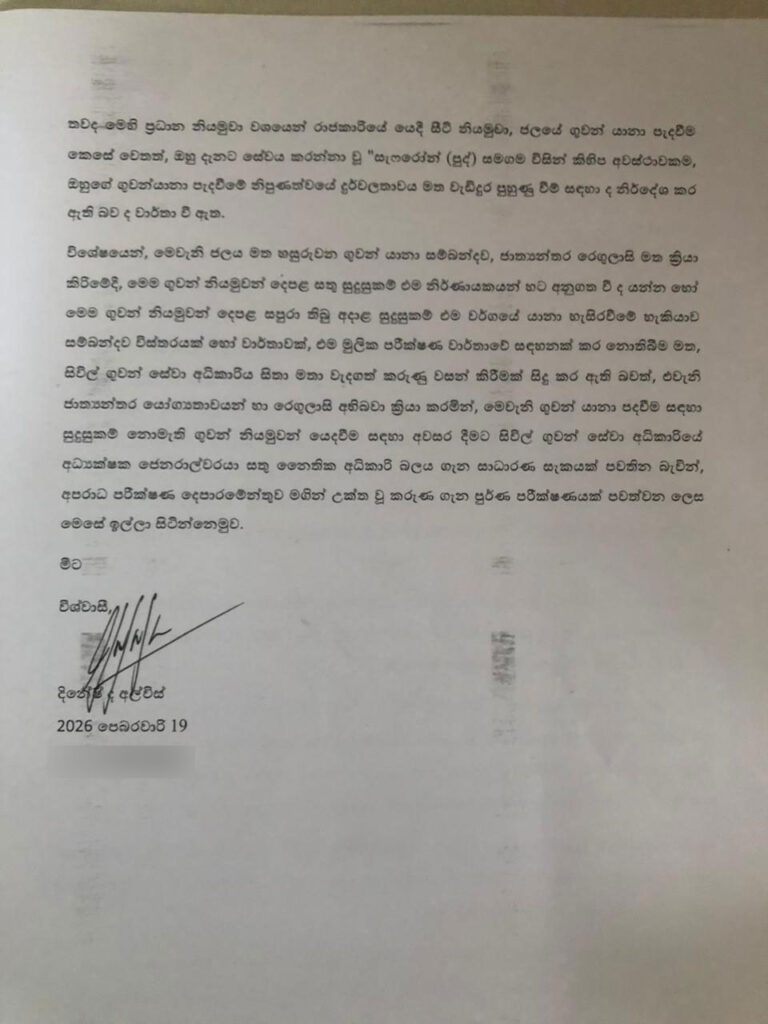
A formal complaint has been lodged with the Criminal Investigation Department by an individual identified as Dinesh De Alwis, raising serious questions about the preliminary investigation report into the Cinnamon Air crash at Gregory Lake, Nuwara Eliya.

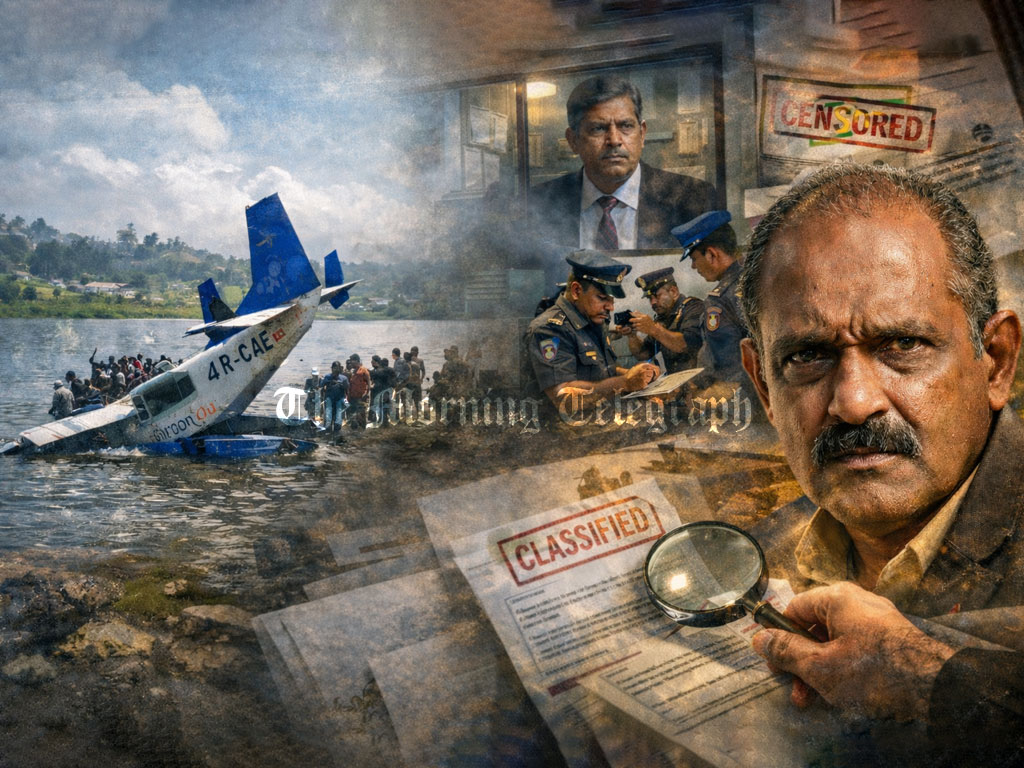
The complaint a copy of which is in the procession of The Morning Telegraph, relates to the Cessna 208 aircraft, registration 4R-CAE, operating as Cinnamon Air 901, which met with an accident on January 7, 2026, at approximately 12:15 PM during landing at Gregory Lake. The Civil Aviation Authority of Sri Lanka released its preliminary investigation report on February 10, 2026, through its Aircraft Accident Investigation Board.
However, the complainant alleges that the report was falsely prepared and materially influenced due to the intervention of the Director General of the Civil Aviation Authority. According to the submission made to the CID, key findings may have been concealed or presented in a manner that does not reflect the factual circumstances of the accident.
The complaint further calls for a comprehensive and independent criminal investigation into the preparation of the preliminary report itself. It urges the CID to conduct a full factual inquiry into both the crash and the alleged interference in the investigative process, citing what is described as complete involvement of the Criminal Investigation Department to ensure transparency and accountability.
This development adds a new dimension to an already controversial aviation incident. The crash, which drew significant public attention due to its location at Gregory Lake in Nuwara Eliya, has been under scrutiny from aviation observers and safety advocates. The preliminary nature of the CAA report means it is not a final determination of cause, yet allegations of manipulation at this early stage have intensified public concern.
If substantiated, the claims could have serious implications for aviation governance, regulatory independence, and public confidence in Sri Lanka’s air safety oversight framework. The CID is now expected to examine the complaint and determine whether further investigative steps are warranted.
The unfolding situation places renewed focus on the integrity of accident investigations and the importance of institutional independence in matters of public safety.