Explosive claims in Parliament allege powerful drug kingpins are seeking safe passage home while government MPs are accused of links to narcotics networks, deepening Sri Lanka’s political storm.
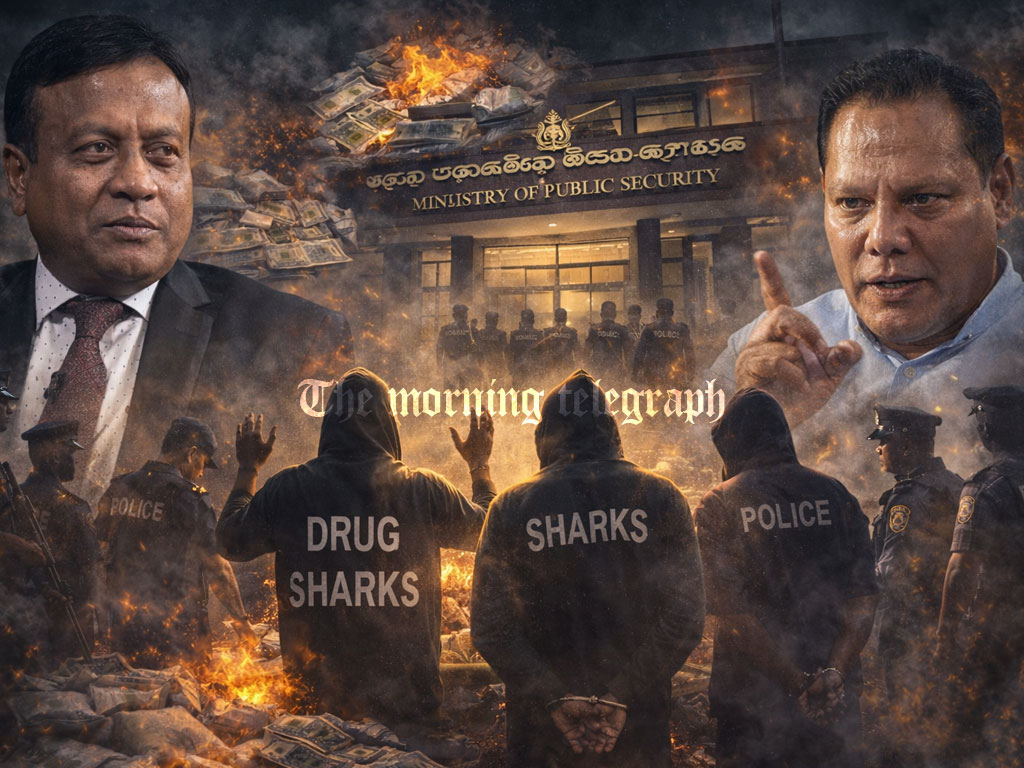
Sri Lanka’s drug war took a dramatic turn in Parliament as Deputy Minister of Public Security Sunil Watagala declared that the era of catching only “small fish” is over. According to him, previous administrations merely targeted minor players in the narcotics supply chain, while the real drug kingpins operated freely. He said the current government has identified the major traffickers, described as the sharks of the drug trade, many of whom are based overseas, and has begun decisive legal action against them.

The Deputy Minister revealed that several high profile traffickers have already been arrested abroad and that steps are underway to extradite them to Sri Lanka. He further claimed that strict enforcement of the law without political interference has placed these figures under pressure. As a result, some are now seeking an opportunity to come before the Ministry of Public Security and surrender voluntarily. Mr. Watagala made these remarks during a parliamentary debate focused on national security and law enforcement reforms.
However, the discussion quickly widened when MP Dayasiri Jayasekara alleged that a significant number of local government representatives affiliated with the ruling party are themselves linked to drug trafficking. He argued that although the administration speaks of a national anti narcotics campaign, politicians continue to be caught in drug related raids. These allegations have intensified debate about political accountability and governance standards.
The MP also highlighted infrastructure shortcomings at the Colombo District Court, pointing out that thousands of employees lack access to basic facilities. He urged the Minister of Justice to address these deficiencies urgently.
Further concerns were raised about intelligence clearance requirements for Waqf Council appointments and the continued detention of religious materials at the port. Jayasekara challenged the government to clarify its policy stance. He also questioned the functioning of special high courts and judicial promotions.
In response, the Minister of Justice defended daily hearings in complex cases and clarified that judicial promotions are determined by the Judicial Service Commission.