In the wake of Cyclone Ditwah, a landmark workshop empowers Sri Lankan women journalists to champion gender-sensitive, ethical and inclusive disaster reporting that puts vulnerable communities at the center of the story.
South Asian Women in Media – Sri Lanka together with the Sri Lanka Press Institute and UNDP in Sri Lanka bring together women journalists
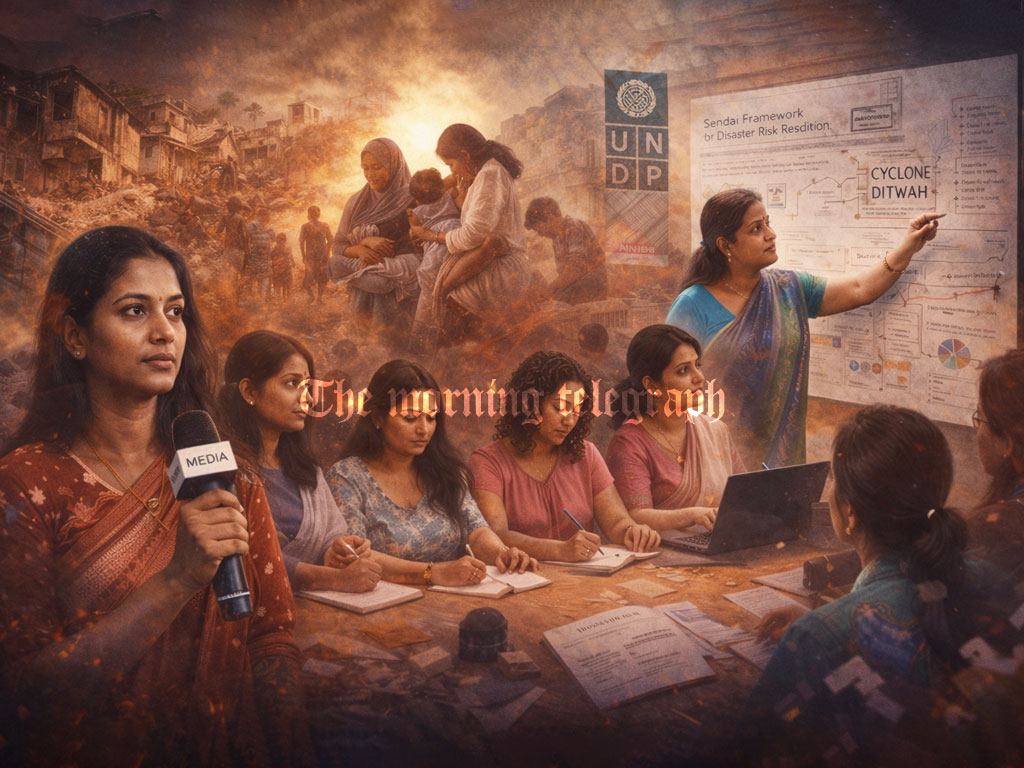
South Asian Women in Media Sri Lanka successfully conducted a comprehensive capacity building workshop on Gender Sensitive Disaster Reporting on February 17, convening 25 women journalists from print, broadcast and digital media platforms. The initiative was designed to strengthen gender perspectives in post disaster media coverage, particularly following the impact of Cyclone Ditwah, and to encourage responsible, inclusive journalism in times of crisis.

Organized in collaboration with the Sri Lanka Press Institute and technical partner UNDP in Sri Lanka, with support from Duryog Nivaran, the workshop focused on promoting ethical reporting standards, disaster risk governance and socially accountable journalism. The discussions were aligned with the priorities of the Sendai Framework for Disaster Risk Reduction 2015 to 2030, highlighting the importance of building resilient communities through informed and inclusive communication.
The workshop agenda was multidisciplinary and practical. Expert led sessions explored disaster risk reduction, lived experiences in post disaster contexts and the principles of gender sensitive journalism. Presentations were delivered by Madhavi Ariyabandu of Duryog Nivaran, Kumudini Samuel of the Women and Media Collective and award winning investigative journalist Dilrukshi Handunnetti, Trustee of South Asian Women in Media and Director of the Centre for Investigative Reporting Sri Lanka.
Speakers emphasized the critical role of the media in shaping disaster narratives and policy conversations. They stressed the need to recognize structural vulnerabilities affecting women, girls, persons with disabilities, the elderly and other marginalized groups during emergencies. Participants were encouraged to move beyond event driven coverage and instead examine how inequality influences disaster preparedness, response strategies and long term recovery efforts.
A documentary titled Facing Disasters, Making Decisions Gender Dimensions, produced in the aftermath of the 2004 Indian Ocean tsunami, was screened to illustrate how women’s voices and needs were often sidelined in recovery processes. Journalists reflected on the similarities between past and present challenges, acknowledging persistent gaps in gender inclusive disaster response frameworks.
Through case studies, group discussions and practical exercises, participants developed story ideas that highlight women’s leadership, community resilience and inclusive recovery. SAWM Sri Lanka reaffirmed its 16 year commitment to advancing women in media and strengthening gender sensitive journalism across the country.
For further information, please contact South Asian Women in Media Sri Lanka at sawmsrilanka@gmail.com