Public sector unions say any move to deploy troops in health services will trigger strikes, escalating a wider battle over jobs, recruitment, and civilian control.
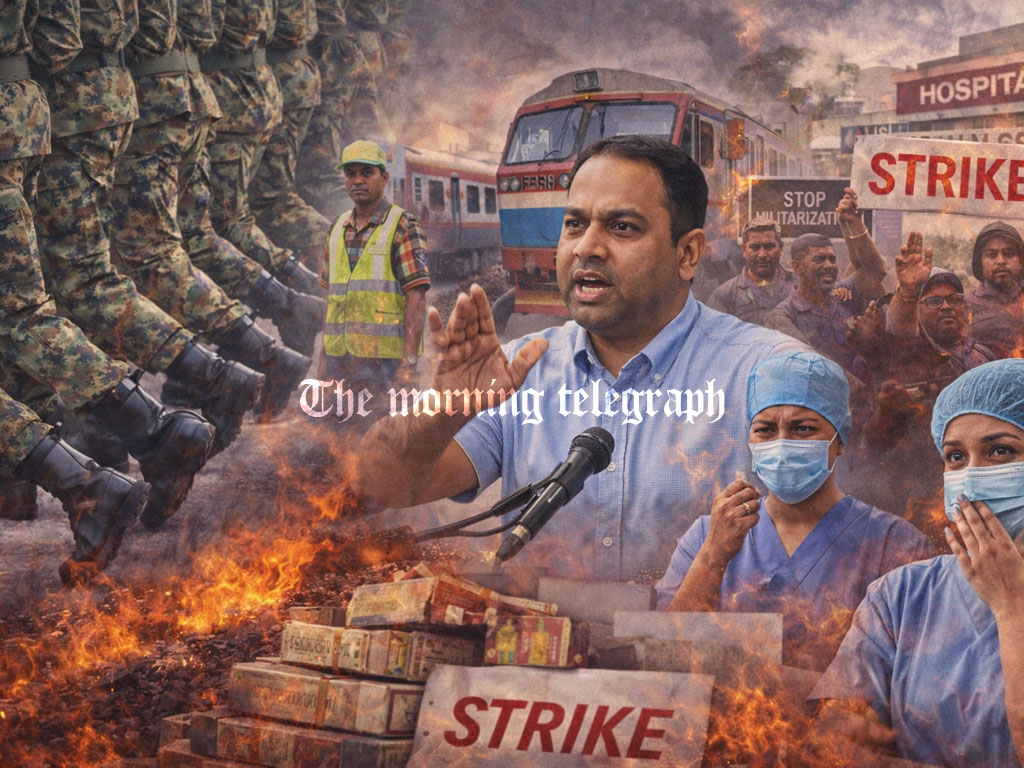
The Alliance of Public Service Unions is warning of an immediate wave of trade union action if the government deploys the armed forces inside civilian government institutions, especially the health sector. Union leaders say they are hearing renewed talk of using military personnel to support health services, and insist that any such move will trigger strike action across hospitals and related services.

Dhammika Munasinghe, Secretary of the Joint Development Officer Center and a member of the alliance, pointed to a recent flashpoint in the railway service. Train drivers strongly objected to a proposal to train a group of military officers as train drivers, and he says the government later cancelled that plan. He cautioned that if the decision is brought back, railway unions will merge their professional action with unions from other state institutions, widening the shutdown risk.
Munasinghe also claims the government is considering assigning members of the three armed forces not only to rail operations but also to health service duties. He said previous governments attempted similar tactics when civil servants launched professional action for salary, recruitment, and working-condition demands, and that even unions linked to today’s governing parties opposed such deployments at the time.
He argued that the current administration, elected with significant support from public servants, is now repeating the same approach by trying to suppress worker demands. In health care, he noted that more than a thousand degree holders remain unemployed, even while vacancies persist in the system.
The union’s position is that the first solution is proper recruitment of qualified unemployed graduates into health service posts, not militarization of public administration. If the government proceeds, he said, continuous industrial action across the public sector will be unavoidable. He urged talks with the Health Ministry, warning patients will suffer if confrontation replaces negotiation and planning.