A bold constitutional call from the North reignites the debate on devolution, provincial autonomy, and the future structure of Sri Lanka’s state.
No unitary state.. A united country that gives power to the provinces in the North..
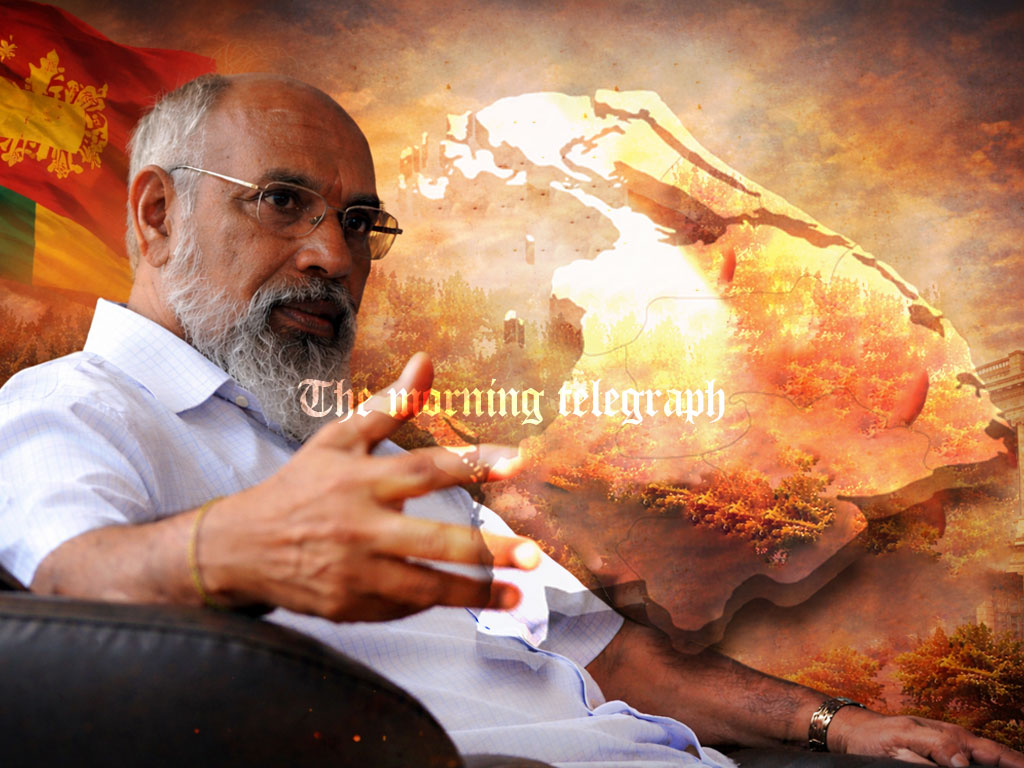
The expectation of the people of the North is not a “unitary” system of governance but a “united” state concept, emphasizes former Chief Minister of the Northern Provincial Council and leader of the Tamil Makkal Kuttani Party C. V. Wigneswaran.

According to him, the root cause of many crises that have arisen in the country is the unitary state structure that centralizes power in a single place. He argues that excessive centralization has weakened provincial autonomy and prevented meaningful power sharing in Sri Lanka’s governance framework.
If the next constitution is drafted on a strictly unitary state foundation, he warns, it will lead to serious political and social tensions in the future. Constitutional reform, in his view, must move beyond rigid central control and instead embrace structured devolution of powers.
Although powers are concentrated in one authority under a traditional unitary system, Wigneswaran believes that a united state model can ensure fair distribution of authority to all communities. He frames this as a balanced approach that protects national unity while empowering provincial councils.
If power is properly decentralized to the Northern and Eastern Provincial Councils, he states, local administrations will be better equipped to address daily governance needs, economic development, and community welfare.
Mr. Wigneswaran further emphasizes that a lasting solution to the long-standing ethnic and political issues in the North can only emerge through genuine power sharing within a united national structure.