Norway’s Parliament prepares to question governance, human rights, and minority protections in Sri Lanka, signaling renewed European scrutiny one year after national elections.
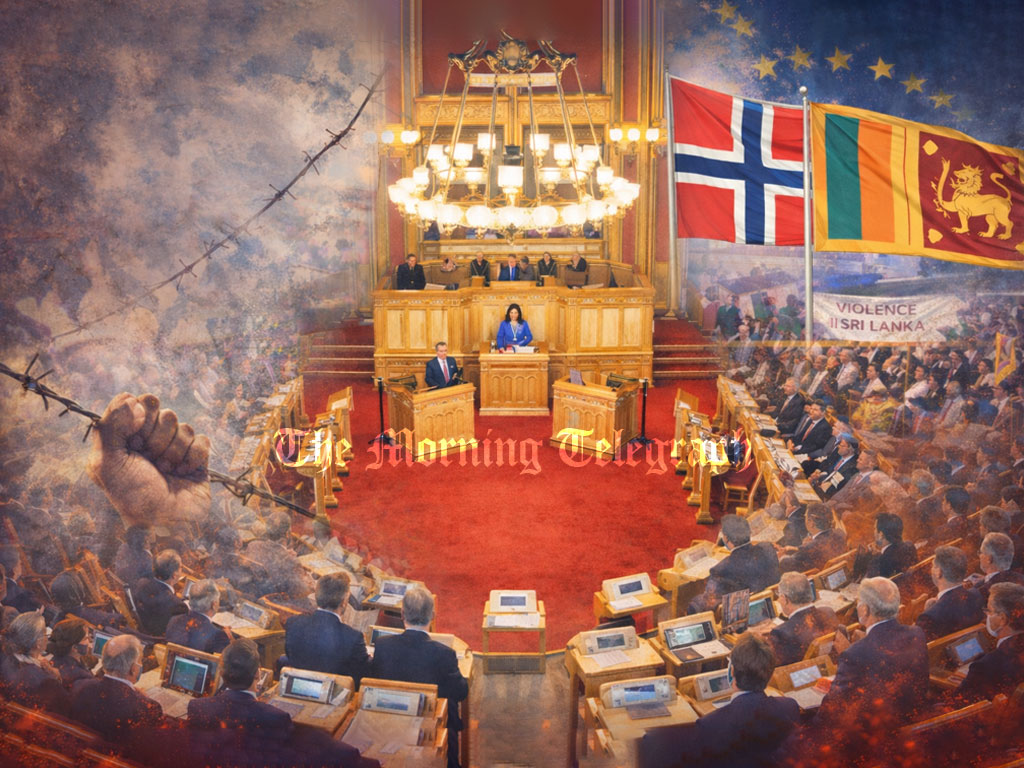
The Norwegian Parliament, known as the Stortinget, is preparing for a significant parliamentary debate examining Sri Lanka’s political climate and human rights record. Scheduled for today, this session comes exactly one year after Sri Lanka’s most recent national elections, placing governance, democratic reforms, and accountability firmly in the international spotlight. The move reflects increasing European attention on developments within the island nation.

The debate was initiated by Norwegian Labour Party Member of Parliament Kamzy Gunaratnam, who has called for a thorough discussion on Sri Lanka’s governance trajectory. Norway’s Minister of Foreign Affairs is also expected to address the chamber. Central themes include anti corruption commitments, minority rights, the human rights situation, post conflict reconciliation, and concerns surrounding militarisation and state accountability.
Gunaratnam has emphasized that Sri Lanka has experienced serious political, economic, and social pressures in recent years. She framed the parliamentary discussion as part of a broader international engagement process rooted in democratic principles and long term stability. By bringing Sri Lanka’s governance challenges before lawmakers in Oslo, Norway is positioning itself as an active voice in global human rights discourse.
The session will utilize Norway’s interpellation procedure, a formal mechanism that enables Members of Parliament to question government policy in depth. Through this process, lawmakers will evaluate Norway’s diplomatic approach toward Sri Lanka while considering future engagement strategies. The debate signals a renewed European interest in democratic reforms, minority protections, accountability mechanisms, and political transparency in Sri Lanka.
As international scrutiny intensifies, the outcome of this discussion could influence diplomatic relations, foreign policy positioning, and broader European perspectives on Sri Lanka’s governance and human rights trajectory.