Unverified reports of Iran’s Supreme Leader’s death have triggered retaliatory missile strikes, regional alerts, and fears of a wider Middle East war with global consequences for security and energy markets.
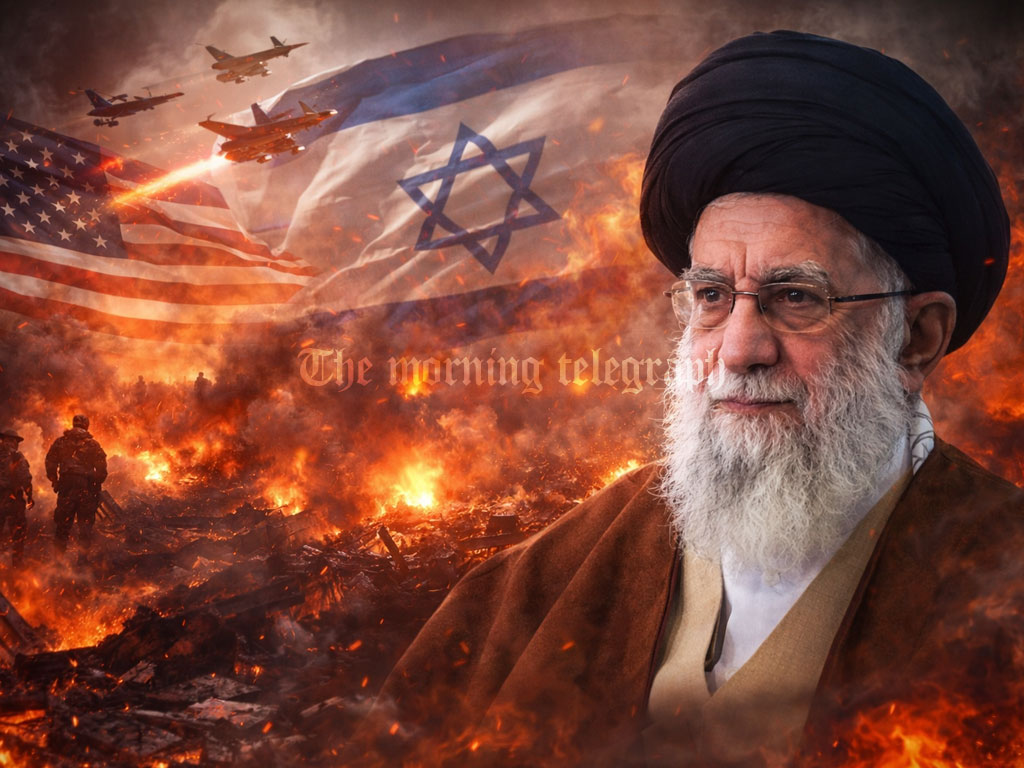
Iran’s Supreme Leader Ayatollah Ali Khamenei has reportedly died following coordinated United States and Israel military strikes, according to multiple sources in Iran and Israel. However, conflicting assessments continue to circulate. Some Israeli security evaluations suggest that the targeted attacks aimed at Khamenei and the Iranian President may not have fully achieved their intended objectives. Despite the uncertainty, Israel’s ambassador to the United States, Yechiel Leiter, has reportedly informed senior officials in Washington that Khamenei has been killed.

If confirmed, the reported death of Iran’s long serving Supreme Leader would mark one of the most dramatic turning points in modern Middle East geopolitics. Khamenei has been the central authority in Iran’s political, military, and ideological structure for decades, shaping Tehran’s nuclear program, regional alliances, and strategic posture toward Israel and the United States. His reported death immediately intensifies an already volatile Iran Israel conflict and places the region on edge.
In response to the alleged strikes, Iran has launched retaliatory missile attacks, firing approximately 35 missiles toward Israel since early morning. Initial reports indicate that at least five to six missiles reached their intended targets. The missile barrage underscores how quickly this crisis has escalated from covert operations and proxy confrontations into open interstate military engagement.
The unfolding developments have triggered heightened security alerts across the Middle East. Confirmed strikes and missile interceptions have been reported in Iraq, Iran, Israel, Bahrain, Qatar, and the United Arab Emirates. Regional defense systems have been activated, airspace restrictions implemented, and diplomatic channels placed under strain. Analysts warn that the rapid exchange of fire increases the risk of miscalculation and a broader regional war involving multiple state actors.
Meanwhile, Iran’s Khatam Al Anbiyaa Central Command Headquarters issued a strongly worded statement, framing its missile operations as a direct response to what it described as shameless aggression by the United States and what it called the Zionist regime. The statement declared that all occupied territories and American bases in the region had been struck by Iranian missiles and warned that operations would continue until the enemy was decisively defeated.
The Iranian military leadership further stated that American bases, economic interests, and strategic assets across the region would be treated as legitimate targets. It urged the Iranian population to remain calm while affirming that the Armed Forces of the Islamic Republic would firmly defend the nation and its sovereignty. The language signals a deliberate effort by Tehran to project strength domestically while also sending a message of deterrence internationally.
The United Arab Emirates Ministry of Defense confirmed that several Iranian ballistic missiles aimed at the country were successfully intercepted by its air defense systems. According to the official statement, the UAE handled the missile threat with high efficiency and prevented further damage.
Authorities in Abu Dhabi reported that debris from intercepted missiles fell in a residential area, resulting in material damage and the death of an individual of Asian nationality. The UAE government emphasized that the security situation remains under control and that relevant agencies are monitoring developments around the clock. The Ministry condemned the attack, describing it as a dangerous escalation and a violation of national sovereignty and international law.
The UAE reiterated its right to respond and take necessary measures to safeguard its territory, population, and national interests. Officials stressed that civilian facilities, infrastructure, and national institutions must not be targeted under any circumstances. The Ministry also urged residents to rely on official sources for accurate information and avoid spreading rumors or unverified reports.
As the situation develops, the global implications are significant. Energy markets are closely watching the risk of disruption to key oil transit routes such as the Strait of Hormuz. Financial markets are reacting to geopolitical uncertainty, and diplomatic efforts are intensifying behind the scenes. Whether the reports of Khamenei’s death are fully verified or not, the current escalation represents a pivotal moment in Middle East security dynamics and could redefine the balance of power across the region.