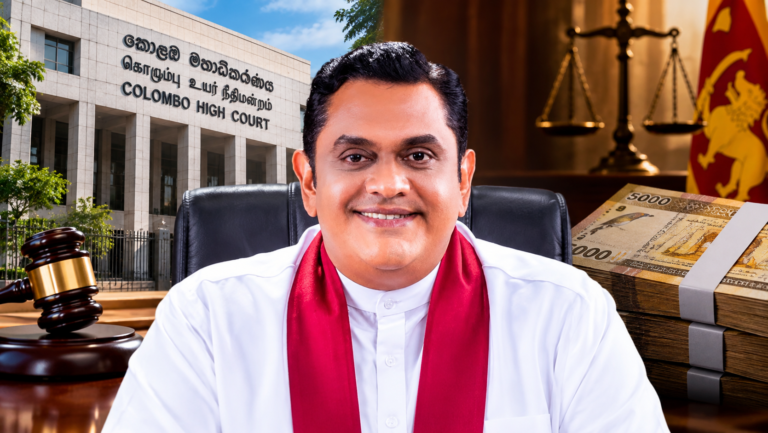
Sri Lanka’s impressive tax collection surge hides a darker reality where aggressive enforcement, weak legal protections, and arbitrary administration are transforming the tax system from a revenue-raising mechanism into an instrument of economic repression that threatens investment, growth, and fundamental property rights. As the government celebrates reaching a revenue-to-GDP ratio of 16 percent for the first time since 2006, taxpayers face a system where procedural safeguards exist only on paper and the cost of challenging arbitrary assessments far exceeds the disputed taxes themselves .
Sri Lanka has achieved remarkable progress in tax collection, particularly through improvements to its value added tax system. These additional revenues help pay public sector salaries, fund education and healthcare, and generate cashflows needed to service past debt obligations. The numbers tell an impressive story: income tax files more than tripled from 333,313 in 2022 to 1,093,134 in 2024, while VAT registrations doubled from 10,604 to 21,227 over the same period. Tax revenues surged 55 percent in 2023, followed by another 25 percent increase in 2024, with the first half of 2025 showing a further 25 percent rise. The 2026 budget projects total revenue of approximately 5,300 billion rupees, aiming to achieve a primary surplus of 860 billion rupees and reduce debt to 96.8 percent of GDP .

These increases followed aggressive macroeconomic policies centered on a 5 percent inflation target that produced serial currency crises and multiple IMF programs after the civil war ended, culminating in an eventual external default. The necessity of taxing citizens now seems undeniable given this fiscal legacy. President Anura Kumara Dissanayake’s government has pursued these revenue targets as part of the Extended Fund Facility arrangements with the International Monetary Fund, successfully completing successive reviews and meeting structural benchmarks .
Yet fundamental questions remain unasked amid the celebration of rising collections. Is this tax being collected justly? Are enforcement powers being applied in ways that place undue pressure on taxpayers through wide interpretations of tax law or arbitrary assessments designed to extract payments that may not actually be legally due? This is not merely a question of administrative efficiency but a deeper inquiry into how power operates and how a society reconciles the coercive authority of the state with the rights and freedoms of its citizens.
The 2026 budget has introduced further tax measures that expand the compliance burden. The VAT registration threshold has been reduced from 60 million to 36 million rupees, bringing previously exempt small businesses into the tax net . This move, while intended to broaden the tax base and align with international practices, places significant compliance costs on small and medium enterprises that often lack the administrative capacity to manage complex tax obligations . The government has also proposed amending the Inland Revenue Act to increase capital gains tax from 10 to 15 percent for individuals and from 10 to 30 percent for trusts and unit trusts, while significantly expanding the 5 percent withholding tax net to cover a wide range of professionals including auditors, artists, social media specialists, brand ambassadors, and IT specialists . These measures represent a net tightening of the tax framework that will affect thousands of previously unregistered economic actors.
There are inherent limits to how heavily people can be taxed, especially through income levies and taxes on savings that destroy investible capital and undermine aspirations for higher economic growth. People’s savings and investments are made from earnings already subjected to taxation. Some taxes may discourage both investments and the investors themselves. Wealth taxes imposed on assets that generate no cashflow can discourage housing construction and push up rents. In the United States, wealth taxes on housing have undermined property maintenance because improvements push up values and trigger higher tax liabilities.
Taxes, always coercive by nature, may become confiscatory and undermine property rights that remain absolutely necessary for market economies to function properly. The element of coercion distinguishes taxation from charity, but this same element makes it difficult to distinguish taxation from confiscation. If tax rates are set so high that taxpayers must dispose of the specific property being taxed or turn it over to government to satisfy tax obligations, there remains little distinction between the two, giving rise to confiscatory taxation.
The paradox is that even where taxation is not considered confiscatory, it violates the fundamental principle that private property cannot be taken for public purposes without just compensation. Nevertheless, the law confers the power to tax. The concepts of property and tax are deeply intertwined, since without private property there is no economic substance to tax. Yet if the state is obligated to uphold property rights, it requires resources that flow from taxation.
The element of coercion inherent in taxation places tax administrators in positions of significant power relative to citizens. The eternal problem with power is that it may be abused. Preventing abuse requires that power be limited by strong institutions: the rule of law and the system of justice. Where these institutions are weak, citizens face oppression. President Dissanayake’s government has emphasized governance reforms and anti-corruption drives, with initiatives such as the “Clean Sri Lanka” program receiving expanded funding of 6,500 million rupees for 2026 . However, the effectiveness of these programs in addressing institutional weaknesses remains questionable, with analysts pointing to a significant gap between legal reforms and actual implementation .
In Sri Lanka, both institutions and citizen rights have weakened due to various factors including the lack of permanent secretaries and broader governance failures. The Asian Human Rights Commission has consistently documented the exceptional collapse of the rule of law in Sri Lanka, a view echoed by analysts and international bodies. The World Justice Project ranked Sri Lanka 74th out of 143 countries in 2025, reflecting serious institutional weaknesses. Despite the government’s two-thirds parliamentary majority, political space for meaningful reform has narrowed due to governance gaps, economic constraints, and emerging corruption allegations that threaten to erode public trust .
One investor described being subjected to audits in multiple consecutive years, creating constant stress and uncertainty. In one instance, matters from 15 years earlier were raised despite statutory time limits that should provide finality. Faced with this experience, he ultimately chose to simplify his affairs, retreating from active business involvement into passive investment income. This outcome illustrates how aggressive administration can distort economic behavior in ways that harm long-term growth prospects.
Sri Lanka is raising some taxes that effectively fritter away capital precisely when Western nations that engaged in massive stimulus and shattered their fiscal metrics are pushing for higher income taxes, potentially preventing more efficient, less harmful, and more growth-friendly tax systems from evolving. Higher tax collections do not necessarily lead to lower debt, especially if monetary stability is not maintained and rate cuts trigger crises that produce lower growth or contractions, along with sharp spikes in debt and interest rates, as Sri Lanka experienced after the civil war ended.
The experience of the United Kingdom from World War II through 1980, and Germany until the end of World War II, demonstrates the problems associated with high tax rates combined with monetary instability. At the opposite end of the spectrum lie East Asian nations with low tax rates covering both VAT and income tax, very high growth, and monetary stability, alongside Gulf Cooperation Council countries that maintain monetary stability with low or no income tax until recently, relying instead on imported labor and other revenue sources. The Colombo Port City project, backed by Chinese investment, represents an attempt to create a tax-free enclave similar to Dubai and Singapore, where all transactions will be denominated in foreign currency and worker salaries will be tax-exempt . While this project aims to attract foreign investment, it also raises questions about creating parallel tax jurisdictions and potential money laundering risks .
Sri Lanka’s first steep tax hikes came after the central bank’s maiden balance of payments crisis beginning in 1952, when national debt stood at less than 20 percent of GDP. The pattern of using tax increases to address monetary failures has deep historical roots.
The Relationship Between Citizens and the Inland Revenue Department
To understand current issues clearly, it is useful to contrast taxation with charity. Both involve private contributions toward broader social ends, but charitable contributions remain voluntary while taxes are exacted by law. Citizens have no choice in taxation; compliance is ensured through penalties and enforcement powers.
The Inland Revenue Department’s powers are extensive. In the event of default, property can be seized and bank accounts frozen. Under certain conditions, company officers including directors, chief executives, and chief financial officers can be held personally liable for corporate tax defaults. While these powers are intended to deter noncompliance, in a country where oversight is inadequate and redress mechanisms weak, they create genuine fear. The 2026 budget has proposed further strengthening these powers, including broader information-sharing authority allowing the Commissioner General to share taxpayer information with the Financial Intelligence Unit, the Inspector General of Police, and the Sri Lanka Accounting and Auditing Standards Monitoring Board . This expansion of surveillance capacity, while potentially useful for combating financial crimes, also raises concerns about taxpayer privacy and the potential for information misuse.
The government has also introduced a risk-based tax audit framework for returns filed after January 2026, moving toward more targeted enforcement . While this approach could reduce the burden on compliant taxpayers, its effectiveness depends on transparent criteria and proper oversight mechanisms that remain underdeveloped. The proposed national electronic invoicing system, which will connect taxpayer enterprise resource planning systems directly with the revenue administration management information system platform, represents a significant step toward digital tax administration . However, such systems also create new compliance costs and potential points of failure that could disproportionately affect smaller businesses.
The rule of law is not upheld by good intentions but by systems that effectively limit power. Adhering to the rule of law requires that people in positions of authority exercise power only within a constraining framework of well-established public norms rather than in arbitrary or ad hoc manners. If questions of unauthorized action arise, officials should be accountable through law. The government has acknowledged this need, with President Dissanayake stating in his budget speech that “corruption is a tax on the poor, and it is a fetter on our development” . The administration has taken steps to strengthen the Commission to Investigate Allegations of Bribery or Corruption, including budgetary and staff independence, and plans to introduce a digital asset declaration system by March 2026 .
Important procedural safeguards that limit arbitrary power include adequate notice before action, reasons for decisions, fair opportunity to be heard, and the right to appeal. The Inland Revenue Act incorporates provisions intended to uphold these principles, which are also found in the Taxpayer Charter adopted by the IRD. However, ensuring compliance depends on the quality of oversight mechanisms and the effectiveness of redress procedures. Civil society organizations have repeatedly noted that despite legal progress, Sri Lanka’s anti-corruption framework suffers from weak implementation and persistent structural weaknesses .
In the United Kingdom, HM Revenue and Customs is subject to multiple levels of institutional oversight designed to reinforce the rule of law and protect taxpayers from arbitrary treatment. HMRC is constituted as a nonministerial department, a status intended to insulate tax administration from political pressure and promote impartiality in enforcement. Although accountable to Parliament, HMRC operates at arms length from ministers, reflecting constitutional recognition that the power to tax must be exercised according to law rather than political expediency.
Oversight of HMRC is exercised through both internal governance and external scrutiny. HMRC is accountable to a board that includes a majority of independent nonexecutive directors whose role is to challenge strategy, performance, and organizational culture. A dedicated Charter Committee that includes representatives of different taxpayer groups monitors compliance with the Taxpayer Charter. The committee conducts reviews of HMRC performance at bimonthly meetings and oversees an annual customer survey of performance against Charter standards, differentiated by customer type. HMRC is required to report annually on its performance against Charter standards.
Externally, parliamentary committees including the House of Lords Economic Affairs Committee and the House of Commons Public Accounts Committee conduct detailed inquiries into HMRC powers and their use, taxpayer safeguards, access to justice, customer service, and institutional culture. These mechanisms reflect understanding that legal protections must be enforceable: sustained oversight, transparency, and independent challenge are necessary to ensure that tax administration remains consistent with the rule of law.
Such comprehensive oversight is entirely absent in Sri Lanka, where redress procedures are prohibitively costly and subject to long delays. The International Chamber of Commerce Sri Lanka has proposed several reforms to modernize tax administration, including tax credits for digitalization investments, a simplified service economy tax framework for freelancers and small service providers, and an integrated taxpayer record tracking dashboard . These proposals, if implemented, could help bridge the gap between taxpayers and administrators by reducing manual processes and data errors. However, their adoption remains uncertain, and even with digital tools, the underlying institutional weaknesses in oversight and accountability would persist.
Redress Procedures in Sri Lanka: Costly and Ineffective
The redress procedure in Sri Lanka involves three sequential stages: an internal administrative review by the Commissioner General of Inland Revenue, an appeal to the Tax Appeals Commission, and finally appeals to the courts. Unlike in the United Kingdom where taxpayers can either request internal review or go directly to an independent tribunal, Sri Lankan taxpayers must follow each stage in sequence while adhering to set time limits for filing appeals.
Administrative review by the Commissioner General may take up to two years. The Tax Appeals Commission is supposed to conclude appeals within nine months, but this timeline is frequently exceeded. As an internal process, administrative review lacks the independence necessary to provide effective safeguard. The TAC is independent of the IRD, but when it rules in favor of taxpayers, the IRD almost invariably appeals to the courts, delaying the process by years. In practice, therefore, even the TAC does not operate as an effective check on power.
Even if the Court of Appeal holds in favor of taxpayers, the IRD will more often than not appeal further to the Supreme Court. Moreover, in interpreting provisions of the law, the IRD does not follow precedents established by the courts. This refusal to adhere to judicial precedent undermines the entire legal framework and creates uncertainty for taxpayers. The government has acknowledged the need for judicial ethics reforms, with plans to appoint an expert committee to introduce a code of ethics for judicial officers in 2026 . However, such measures do not address the specific problems of tax litigation.
The financial burden imposed on taxpayers during the appeal process compounds this problem significantly. For income tax under the 2017 Act, though not for VAT or SSCL, where the IRD rejects a return and issues its own assessment, penalties are imposed and interest accrues at 1.5 percent per month from the original due date of payment. Interest was not charged under the previous 2006 Act. Assessments may be issued up to 30 months after returns are filed, yet interest is calculated retrospectively from the original due date with no cap applied. As a result, before any redress process can even begin, taxpayers may face immediate claims for substantial accumulated interest and penalties. According to retired officials, some assessments are deliberately issued close to the time bar, maximizing interest accrual and placing intense pressure on taxpayers to settle.
Should taxpayers seek to challenge assessments before the TAC, they must first make either a nonrefundable deposit of 10 percent or a refundable deposit of 25 percent of the disputed tax, or provide an equivalent bank guarantee. If matters proceed further, appeals to the courts are effectively costless for the IRD, as cases are handled by the Attorney General’s Department. Taxpayers, however, must pay additional legal costs while interest continues to accrue. Because interest forms part of IRD collections and staff incentives are partly linked to revenue performance, this creates perverse incentives to prolong disputes.
The result is that in many cases, the cost of challenging an assessment far exceeds the disputed tax itself. Tax practitioners observe that only large companies or multinationals, often seeking to establish legal principles rather than immediate relief, are able to pursue litigation. For most taxpayers, negotiation and settlement, even of questionable assessments, becomes the only realistic option. The redress process as a whole is prolonged, costly, and beyond the reach of most taxpayers, which undermines the right to appeal and erodes the rule of law by insulating the IRD from meaningful accountability. Recent amendments to the Inland Revenue Act do include some taxpayer-friendly provisions, such as allowing the Commissioner General to write off interest on underpayments outstanding up to March 2023, conditional on full settlement of tax and penalties within six months . While this provides targeted relief, it does not address the systemic issues in the appeals process.
From Institutional Failure to Administrative Abuse
The weaknesses in oversight and redress described above translate directly into day-to-day administrative practices that undermine taxpayer rights and depart from basic requirements of legality and fairness. Taxpayers report numerous instances of harassment, including arbitrary assessments, excessive and intrusive audits, disregard of statutory time limits, and imposition of disproportionate penalties that appear designed to maximize collection rather than ensure compliance.
Taxes are charges on income, and finality in taxation is essential for individuals and businesses to plan and invest with confidence. An important safeguard for taxpayers is the statutory time bar that provides financial certainty by preventing indefinite reopening of past tax periods. Yet taxpayers frequently complain that they receive no finality in practice. Weaknesses in the IRD’s information technology systems have resulted in demands for arrears and penalties relating to periods many years and in some cases decades old. There have even been instances where companies long since wound up have received claims for alleged tax defaults dating back to the 1960s. The government’s allocation of 5 billion rupees for RAMIS development in 2026, similar to the 2025 allocation, aims to address these systemic weaknesses . However, past investments in technology have not translated into improved taxpayer experiences, suggesting deeper institutional problems.
Serious problems arise when errors within the IRD’s own systems are treated as taxes in default, with the burden placed on taxpayers to prove otherwise. Where records have not been retained indefinitely, taxpayers are left with no practical means of disputing such claims. Similarly, demands are sometimes issued for tax disputes that were settled years before, again placing the onus on taxpayers to produce proof of settlement. In one recent case, a garment exporter received a demand relating to a dispute resolved a decade earlier and chose to settle, making a second payment of tax rather than contest it, solely because the relevant records were no longer available.
When tax positions that were settled years earlier can be reopened, the result is chronic uncertainty: balance sheets cannot be closed, risks cannot be priced, and business decisions are distorted by the possibility of retrospective tax claims. This uncertainty acts as a hidden tax on all economic activity. The government has introduced a safe harbor provision in the amended tax code: an individual’s return will be accepted without amended assessment where declared tax is at least 120 percent of the previous year’s tax, the full amount is paid without claiming a refund, and an affidavit confirms absence of fraud or evasion . While this provides certainty for some taxpayers, it effectively rewards those who accept higher assessments regardless of their true liability.
Sri Lanka operates a self-assessment system under which taxpayers calculate and declare their own tax liabilities. Unless there is evidence of error or fraud, returns should not be contested. In practice, however, there are instances where officials reject self-assessment returns merely because income appears low, providing no reasons for their conclusions contrary to legal requirements. Case law including New Portman Limited versus W. Jayawardane and Fernando versus Ismail has established that these must be supported by proper reasons. Statements such as profit margins are insufficient or expenses are not deductible amount to conclusions, not reasons, and fail to meet the standard required by law.
The consequences of this approach are illustrated by a case in which a firm’s return was rejected on the ground that its margins were too low. The company reported losses due to the recent economic crisis and submitted audited accounts to the IRD. The IRD did not accept the explanation, rejected the audited accounts, and raised an assessment. Due to the cost and uncertainty of appeal, the company opted to negotiate a settlement and paid income tax despite incurring a loss. The following year with economic recovery, losses reduced but there was still no tax liability. The IRD proposed taxation based on the previous settlement rather than actual results, an entirely arbitrary assessment that bore no relationship to the company’s actual financial position.
IRD audit practices impose heavy burdens on taxpayers. Companies are routinely required to produce extensive reconciliations covering bank deposits to sales, sales quantities to values, VAT returns to turnover, and numerous other comparisons. Some of these do not naturally reconcile due to differences in accounting bases, timing, exemptions, and pricing variations. The exercise can occupy accounting staff for weeks or months, diverting resources from productive activity. Even minor discrepancies are sometimes treated as grounds to disallow entire categories of expenditure with little effort to distinguish between genuine errors or oversights and deliberate actions, despite explicit commitments in the Charter to make such distinctions. In extreme cases, all bank deposits including fund transfers and nonincome items have been treated as turnover for tax purposes.
IRD audits are conducted mostly on businesses and high-net-worth individuals, for whom tax administration can become an ordeal. One investor described being subjected to audits in multiple consecutive years creating stress and uncertainty. In one instance matters 15 years old were raised despite statutory limits. Faced with this experience, he ultimately chose to simplify his affairs, retreating from active business involvement into passive investment income, an outcome that illustrates how aggressive administration can distort economic behavior and reduce productive investment.
Similar concerns arise in technically complex areas such as capital gains taxation, where valuations are frequently disputed without adequate justification. The proposed increase in capital gains tax rates to 15 percent for individuals and 30 percent for trusts will likely intensify these valuation disputes . Another source of contention is the treatment of interest-free advances, where the IRD imputes notional interest and adds it to taxable income despite the absence of any actual receipt or realized gain.
Similar problems are present in other revenue agencies, particularly in Customs, where extensive detention powers and the ability to disrupt supply chains magnify the economic impact of arbitrary actions. Board of Investment firms were until recently insulated from routine customs investigation for this very reason. In the current drive to prevent alleged leakages, BOI firms are now being subjected to extensive customs audits. This shift introduces new operational and regulatory risks that are particularly problematic for exporters who rely on predictable timelines and logistics. The government has introduced new Strategic Development Project regulations offering tax holidays ranging from 5 to 10 years based on investment size and job creation, with exemptions from import duties, VAT, PAL, and CESS during implementation periods . While these incentives aim to attract investment, they also create a two-tier system where protected projects operate under different rules than ordinary businesses.
In a recent case, a penalty exceeding 100 times the duty was imposed on an otherwise compliant firm for a single offense resulting from a technical miscalculation. By comparison, Singapore’s maximum penalty is capped at 20 times the duty and applies only upon a third offense, while for a first offense the maximum penalty is only 10 times the duty. Such disproportionate penalties bear no rational relationship to the offense and appear designed to punish rather than ensure compliance.
Taken together, these practices reveal a system in which procedural safeguards exist on paper but are largely absent in practice. The gap between legal protections and actual administration represents a fundamental failure of the rule of law. The government’s ambitious goal of achieving 7 percent GDP growth in the coming years requires addressing these institutional weaknesses . Without meaningful reform of tax administration, the private sector investment necessary for such growth will remain constrained by regulatory uncertainty and arbitrary enforcement.
The Political Economy of Revenue Extraction
The current tax strategy cannot be divorced from its political context. President Dissanayake’s government came to power on a platform of radical change, promising to alleviate the burdens of IMF-mandated austerity while simultaneously reviving growth . However, the economic realities of post-default Sri Lanka have constrained these ambitions. With interest payments consuming a significant portion of government expenditure, the administration faces the classic populist dilemma: it cannot spend its way into popularity while maintaining fiscal discipline.
The government’s two-thirds parliamentary majority provides immense legislative power but narrowing political space . Allegations of corruption within the administration, including the Norochcholai coal scam involving substandard coal imports and the 323 containers scandal at Colombo Port, threaten to erode the moral authority on which the government’s anti-corruption platform rests . These scandals create a perception of selective justice that undermines trust in all state institutions, including the tax administration.
The “Clean Sri Lanka” program, despite its expanded budget, risks becoming a vehicle for superficial environmental projects rather than substantive governance reform . Analysts argue that the program’s effectiveness is hampered by strategic overreach and unaddressed systemic flaws. Without refocusing on core anti-corruption outcomes, institutional strengthening, and enforcement of transparency laws, the program will not address the fundamental weaknesses that enable arbitrary tax administration .
The government’s approach to state-owned enterprise reform also sends mixed signals. While the budget proposes closing 33 non-performing SOEs and consolidating others, the handling of SriLankan Airlines remains uncertain, with the government calling off privatization attempts and adopting a wait-and-see approach . The proposed Public Commercial Business Management Act, scheduled for presentation in the first half of 2026, may provide a framework for reform, but its implementation timeline remains unclear .
Trade policy presents similar contradictions. While President Dissanayake stated the intention to phase out para-tariffs, revenue projections show continued and expanding collections from these levies through 2028 . This disconnect between policy announcements and fiscal reality undermines business confidence and export competitiveness. The revision of customs duty to a four-band tariff structure from April 2026 represents progress, but without genuine para-tariff elimination, the benefits for exporters will be limited .
Basic principles of justice require that whenever the state exercises powers that can deprive persons of property, liberty, or livelihood, those powers must be constrained. The power to tax falls firmly within this category. Because taxation directly affects people’s property and means of livelihood, due process is essential. Errors in tax administration by both tax officials and taxpayers are inevitable, so safeguards need to be in place to correct such errors fairly and without fear.
In Sri Lanka, the legal safeguards exist largely on paper. The inner workings that give effect to legal principles including independent oversight, timely appeals, and accessible remedies are weak or nonfunctional. For most taxpayers, mounting a successful challenge to revenue authorities is all but impossible. Under intense pressure to collect revenue, officials can act with relative impunity, secure in the knowledge that most people are unable to challenge them effectively. Under such conditions, taxation can become a source of oppression rather than a legitimate mechanism for funding public goods.
This experience cannot be viewed in isolation. The difficulties of taxpayers reflect the broader breakdown of the rule of law in Sri Lanka, frequently discussed in the context of human rights and rooted in the same failures of accountability. Where the system of justice is weak, administrative power whether exercised by police, regulators, or revenue authorities tends to operate without effective constraint. The government’s anti-corruption initiatives, while well-intentioned, have not yet translated into improved outcomes for ordinary citizens dealing with state institutions .
In this context, remedies through administrative measures alone are unlikely to succeed. The failure of measures such as the Taxpayer Charter and circulars issued in 2023 that set guidelines to prevent unnecessary and unreasonable tax assessments, which remain unimplemented, testifies to this reality. Paper protections mean nothing without institutional mechanisms to enforce them. The proposed integrated taxpayer dashboard and digital reforms could improve transparency, but only if accompanied by genuine institutional accountability .
These realities also call into question the political economy assumptions underlying revenue-based fiscal consolidation. While some tax increases were unavoidable given Sri Lanka’s fiscal position, a strategy that relies mainly on extracting additional revenue in a weak legal environment is ultimately self-defeating. Economics cannot be divorced from politics and institutions: where taxation is perceived as arbitrary and enforcement as punitive, higher rates and aggressive administration will deter investment, suppress growth, and erode the tax base itself.
Sri Lanka is already a difficult place to conduct business. Investors cite concerns about opaque and complex regulations, abrupt policy shifts, slow decision making, and inadequate support for established businesses. Arbitrary and aggressive administration by the Inland Revenue Department and Customs will only add to these problems, deterring long-term investment and sustainable growth. This can turn into a self-reinforcing destructive cycle: lower investment and growth result in lower revenues, leading to further rate increases and arbitrary actions to extract revenue, deterring investment even further. At some point, the whole scheme will unravel.
Signs that the limits of taxation may have been reached are becoming evident. The imposition of 15 percent tax on service exports in April 2025 has resulted in several firms in the information technology and business process outsourcing sector downsizing or shutting down completely. This process is still ongoing, with some firms closing entirely, others downsizing, and still others attempting to relocate either in the Port City or overseas. The most vulnerable firms are those operating in export markets where competition is intense and margins are thin. The import-substituting domestic firms cannot move elsewhere and will probably react to lower net returns caused by higher taxes by lobbying for further extensions of protectionism, creating additional economic distortions.
The Colombo Port City project offers an alternative vision: a jurisdiction where transactions occur in foreign currency, worker salaries remain tax-exempt, and investment approvals proceed rapidly through a commission with unprecedented powers . While this enclave approach may attract some foreign capital, it also creates a parallel economy that risks becoming a haven for money laundering and other illicit activities . More fundamentally, it represents an admission that the mainstream tax system and administrative framework are too broken to support competitive economic activity.
If Sri Lanka proceeds on its current path, its already small export sector will slowly wither, lowering overall productivity and leaving growth permanently stunted. The tax system designed to raise revenue for public purposes will have accomplished the opposite: undermining the economic base on which future revenues depend. This is the ultimate irony of a revenue strategy that ignores justice, the rule of law, and the institutional foundations of a market economy.
The way forward requires not just administrative tinkering but fundamental institutional reform. Independent oversight of tax administration, timely and accessible appeals, proportionate penalties, and genuine accountability for official misconduct are not luxuries to be postponed until after fiscal consolidation. They are prerequisites for sustainable revenue collection and economic growth. Without them, Sri Lanka’s tax system will continue to function not as a legitimate mechanism for funding public goods but as an instrument of economic repression that drives away the investment and enterprise the nation desperately needs.