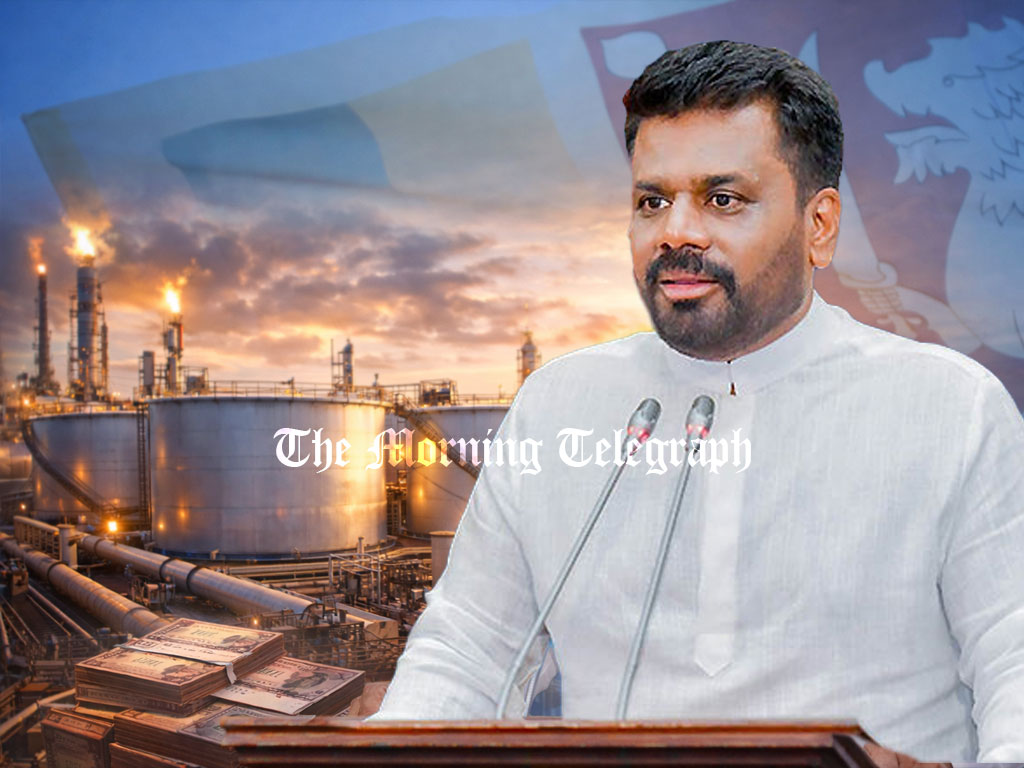
President Anura Kumara Dissanayake unveils ambitious multi billion rupee projects to expand fuel storage, modernize distribution, and strengthen Sri Lanka’s energy security while positioning the country as a regional aviation hub.
Sri Lanka is moving forward with an ambitious plan to expand its national fuel storage capacity through a series of major infrastructure projects aimed at strengthening energy security and improving fuel distribution. Addressing parliament, President Anura Kumara Dissanayake outlined a comprehensive strategy that includes building new storage facilities, restoring old infrastructure, and introducing modern automated systems across the fuel supply chain.

At the center of the expansion program is a new storage complex in Kolonnawa that will significantly increase the country’s fuel reserves. The project involves the construction of six completely new fuel storage tanks while replacing two older tanks that had previously been decommissioned. Once completed, the project will result in a total of eight new operational tanks with a combined capacity of 86,000 metric tons.
According to the president, the investment for the six tank cluster is estimated at around 3.32 billion rupees, while the replacement of the two old units will require an additional 1.45 billion rupees. When the entire complex becomes operational in 2027, it is expected to add roughly ten additional days of fuel storage capacity to Sri Lanka’s national reserves.
Sri Lanka’s daily consumption of petrol and diesel currently fluctuates between 8,600 and 8,800 metric tons. Expanding storage capacity is therefore considered essential for maintaining stable fuel supplies and reducing vulnerability to global energy disruptions.
The government is also working to strengthen aviation fuel infrastructure as part of its broader economic development strategy. To support plans to transform Bandaranaike International Airport into a regional aviation hub, authorities are planning to fast track construction of a dedicated oil pipeline connecting Muthurajawela to Katunayake. The project includes a jet fuel storage facility with a capacity of 63,000 metric tons, creating a ten day supply buffer for aviation operations.
Officials said tenders for this pipeline and storage project have already attracted interest from private sector investors, with the contract expected to be awarded within three weeks.
Meanwhile, the Ceylon Petroleum Corporation has started restoring the historic oil tank farms in Trincomalee. The restoration effort is being combined with new pipeline tenders designed to make the entire 210,000 metric ton capacity fully operational.
The government is also modernizing fuel distribution facilities. A 1.5 billion rupee project is currently underway to automate gantry systems used to load fuel bowsers, replacing older manual crane based operations and significantly speeding up dispatch procedures.
Energy analysts say these projects mark a critical step toward modernizing Sri Lanka’s fuel infrastructure. However, they argue that further reforms, including greater liberalization of the fuel sector and attracting large scale foreign direct investment, will be necessary to fully transform the country’s energy logistics and storage capacity.