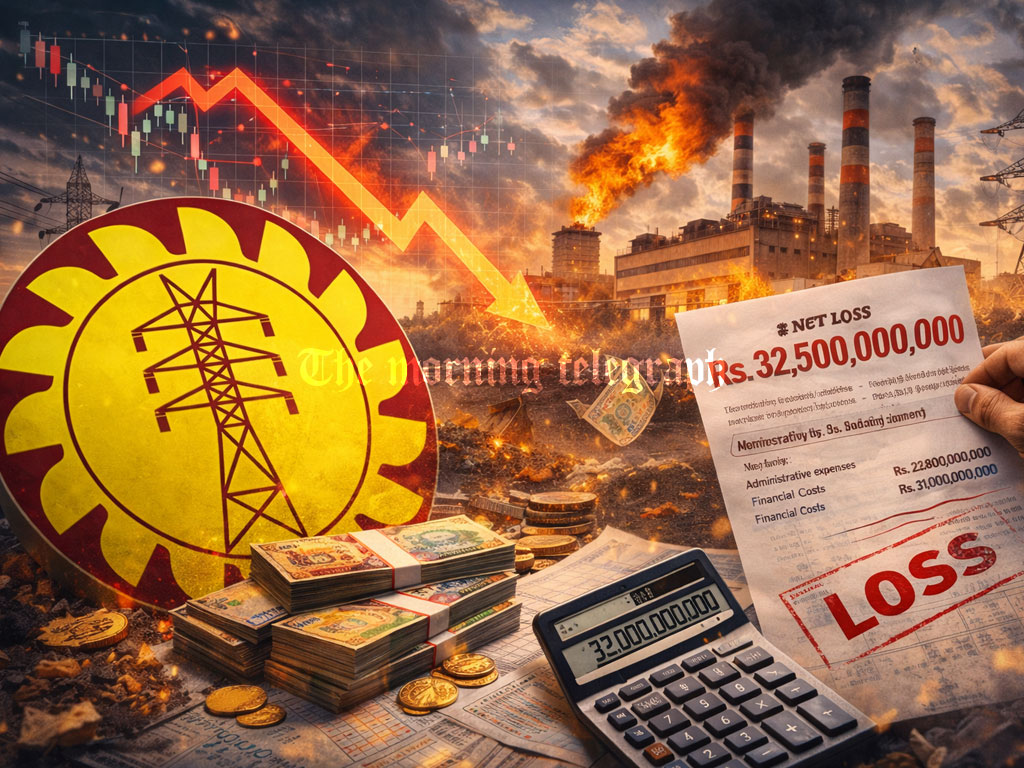
Sri Lanka’s state electricity giant has plunged into a fresh financial crisis after reporting a staggering Rs. 32.5 billion net loss for 2025, raising serious concerns about revenue decline, rising power generation costs, and mounting financial pressure on the national energy sector.
The Ceylon Electricity Board has once again entered a difficult financial phase after posting a heavy net loss for the financial year ending December 31, 2025. According to the board’s latest financial statements, the national power utility recorded a net loss of Rs. 32.5 billion despite previously reporting profits in 2024.

Financial data shows that the primary reason for the downturn is a sharp decline in total revenue. The board’s income, which stood at Rs. 565.3 billion in 2024, fell significantly by about 23 percent to Rs. 436.1 billion in 2025. This revenue drop has placed considerable pressure on Sri Lanka’s electricity sector.
At the same time, the cost of electricity generation and distribution continued to rise. The cost of sales increased from Rs. 438.7 billion to Rs. 452.8 billion, reflecting a three percent growth in operational expenses.
Administrative expenses also rose notably. The board’s administrative cost reached Rs. 22.8 billion, representing an increase of around fifteen percent.
Meanwhile, financial obligations remain a major burden. Interest payments for bank loans and financial facilities have exceeded Rs. 31 billion, further weakening the financial stability of the CEB.