Sri Lanka’s sudden fuel restrictions spark outrage as new vehicle owners struggle to register for QR fuel passes while bus operators warn that the weekly quota is too small to keep public transport running.
With the government enforcing new restrictions on fuel distribution starting this morning (15), owners of newly registered vehicles across Sri Lanka are experiencing serious difficulties obtaining petrol and diesel.
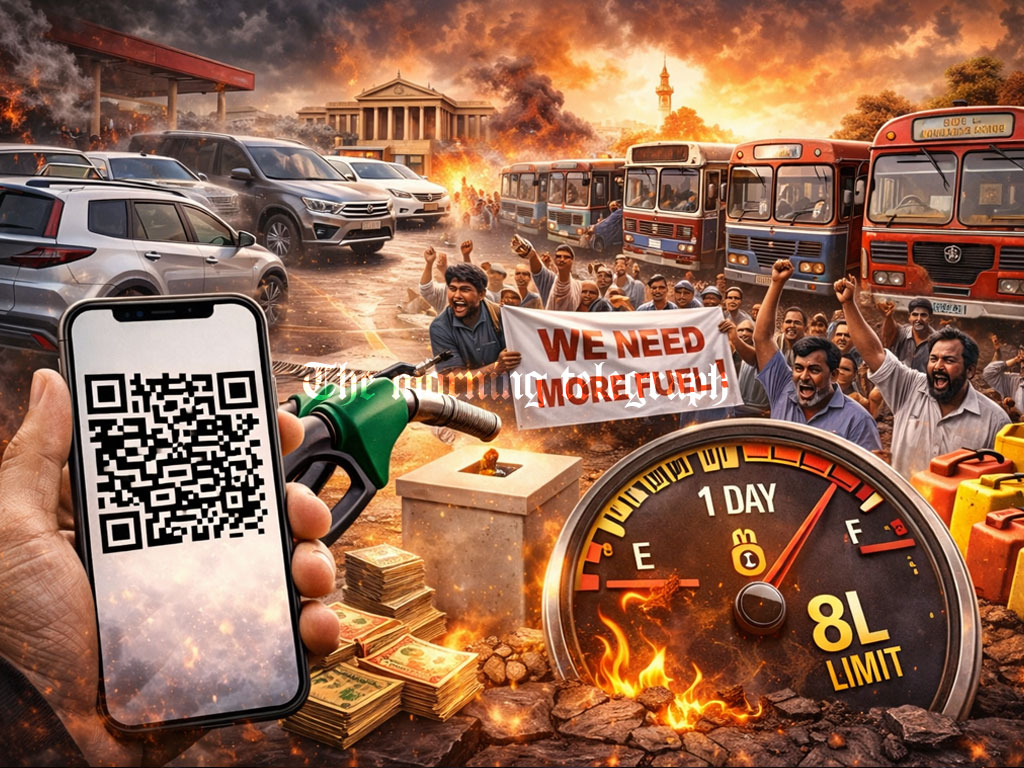
Under the present fuel management system, customers who already possess existing fuel QR codes are still able to receive fuel within their allocated quota. However, motorists attempting to newly register for the Fuel Pass system say they have not yet been given access to enter the platform.

In particular, many owners of newly purchased vehicles who attempted to update their accounts after changing their registered mobile phone numbers have reported that the system is not allowing them to complete the update process.
As a result, these motorists say they are currently unable to obtain fuel through the QR code fuel distribution system.
Meanwhile, private bus owners and major bus associations have expressed strong opposition to the new fuel restrictions introduced by the government beginning this morning (15).
According to the latest circular issued by the Ministry of Energy, the weekly fuel quota allocated for a bus has now been restricted to only 60 liters.
Bus industry representatives point out that this quantity of diesel is not even sufficient for a single day’s journey, particularly for buses operating on long distance routes.
They further emphasize that even for regular passenger transport services, a 60 liter weekly quota would only allow buses to operate for a maximum of one or two days.
Bus associations warn that if the issue is not addressed immediately, there is a serious risk that public transport services across Sri Lanka could face major disruption in the coming days.
The Ministry of Energy states that the decision to restrict fuel distribution was taken due to disruptions in global fuel supply routes caused by the ongoing war in the Middle East, as well as illegal fuel stockpiling operations carried out by certain groups.
According to the government’s position, Sri Lanka’s available oil reserves must be carefully managed in order to sustain the country’s economic activities and prevent further fuel shortages.
The Ministry of Energy has also stated that a separate special fuel distribution system is currently being implemented through the Sri Lanka Transport Board to supply diesel to private passenger transport buses operating essential services.