A looming global energy crisis, rising inflation, and fragile economic recovery place Sri Lanka at a critical crossroads where urgent leadership and long-term vision will determine whether the nation stabilizes or slips back into turmoil.
There is a time for political maneuvering and a time for national responsibility. Sri Lanka is now firmly in the latter. The escalating Middle East conflict is not a distant geopolitical issue but a direct economic threat that could reshape the country’s fragile recovery. At a moment when global markets are already under pressure, any attempt to play politics, distort facts, or delay action risks deepening the crisis. The current posture of sections of the Opposition and certain trade unions reflects a troubling lack of urgency, resembling avoidance rather than engagement. Meanwhile, the inconsistent performance of some ministers only compounds the uncertainty. What Sri Lanka needs now is not rhetoric but accountability, strategic leadership, and decisive action to shield citizens from the worst impacts of an impending economic storm.

A previous analysis titled “Strait of Hormuz closed by Iran: An economic tsunami in the making for Sri Lanka?” outlined the severe consequences that could follow a prolonged Middle East war. That warning now feels increasingly relevant. There is little indication that the conflict will end soon, and the ripple effects across the global economy are already visible. For Sri Lanka, a country still recovering from its 2022 economic collapse, the stakes are particularly high. While recent indicators suggest some recovery, the structural weaknesses in the economy remain unresolved. Decades of inconsistent policy, short-term planning, and reliance on borrowing for consumption rather than investment have left the nation vulnerable.
A credible economic strategy must focus on long-term sustainability. This includes disciplined fiscal management, strengthening foreign reserves, boosting export-driven growth, and creating conditions that attract foreign direct investment. It also requires building a resilient economic base that prioritizes productivity over dependency. Sri Lanka’s past failures to establish such a framework have been costly, culminating in bankruptcy. The proposed National Economic Governance Framework remains a critical blueprint for reform, offering a path toward stability if implemented with commitment and bipartisan support.
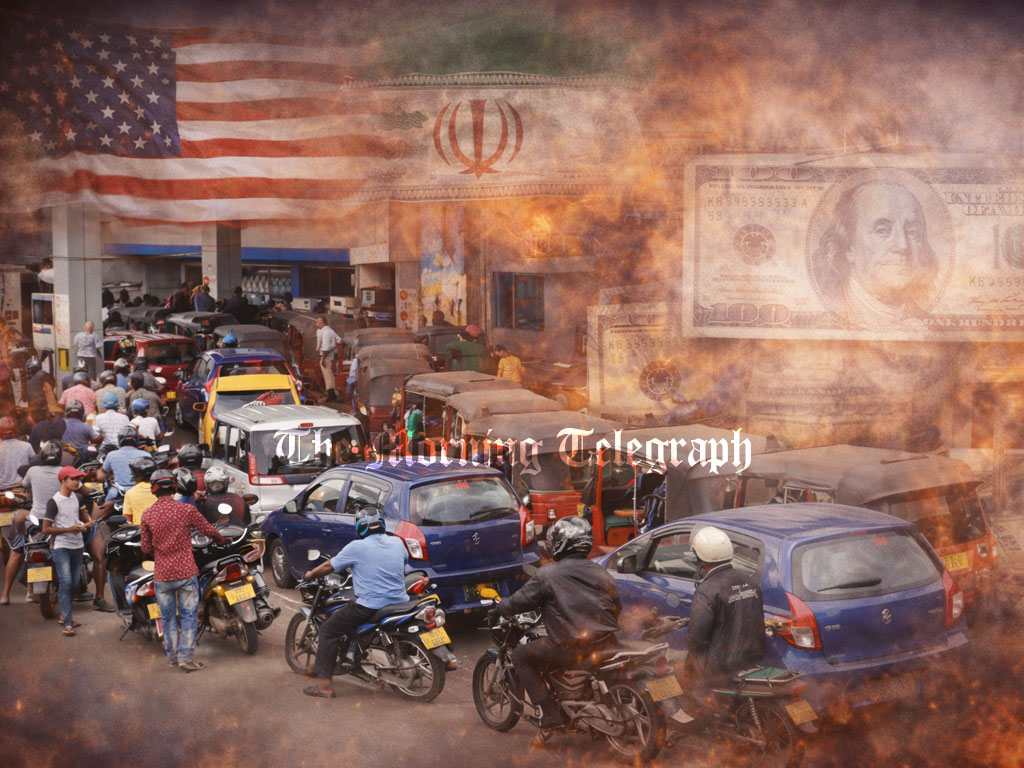
The unfolding Middle East crisis is likely to trigger widespread economic disruption. For Sri Lanka, the consequences will be both immediate and long term. Energy supply chains are already under strain, and any closure or disruption in key routes such as the Strait of Hormuz would significantly impact global oil flows. This would drive up fuel prices, increase transportation costs, and create shortages across multiple sectors. Such developments would not remain isolated but would cascade through global economies, intensifying inflationary pressures and weakening purchasing power.
Sri Lanka’s vulnerability is amplified by its heavy reliance on imports, particularly for food. As production slows in exporting countries and logistics become more expensive due to fuel shortages, the cost and availability of essential goods will be affected. The shortage of fertilizers further threatens local agriculture, reducing domestic output and increasing dependence on imports. In this context, diversifying import sources and strengthening local food production are no longer optional strategies but urgent priorities. Food security must be treated as a central pillar of national policy.
The pharmaceutical sector is another area of concern. Many essential medicines are derived from petrochemical processes, meaning that disruptions in oil supply will directly affect drug production. From basic medications such as paracetamol to more complex antibiotics, the supply chain is deeply interconnected with global energy markets. Transportation bottlenecks will only worsen the situation. Sri Lanka must therefore act swiftly to assess its medical stock levels, secure critical imports, and develop contingency plans to prevent shortages that could endanger public health.
The broader macroeconomic outlook is equally challenging. Sri Lanka’s foreign reserves, currently estimated at around USD 7.2 billion, provide only limited coverage for imports. If export earnings decline and remittances weaken due to global economic slowdown, these reserves could quickly diminish. Inflation is likely to rise, placing additional strain on households already coping with high living costs. The Sri Lankan rupee may face further depreciation as pressure on foreign exchange intensifies. Managing these risks will require careful monetary and fiscal coordination to maintain stability without resorting to excessive borrowing.
Difficult decisions will be unavoidable. Governments rarely have the luxury of choosing ideal policies during crises, and Sri Lanka is no exception. Energy consumption will need to be reduced, potentially through controlled power cuts and fuel rationing. Public sector operations may have to be scaled back, with reduced office attendance and shorter school weeks becoming necessary to lower transportation and energy demand. While such measures may be unpopular, they could play a crucial role in stabilizing the economy during a period of global uncertainty.
At the same time, protecting the most vulnerable segments of society must remain a priority. Rising prices and reduced access to essential goods disproportionately affect low-income households. Targeted support mechanisms, including subsidies and social safety nets, will be essential to prevent widespread hardship. The healthcare system must also be safeguarded, with uninterrupted access to essential services ensured through emergency regulations if required.
Political stability will be just as important as economic policy. Crises often create opportunities for political confrontation, but such dynamics can be deeply damaging in a fragile environment. Any attempt to exploit the situation for short-term political gain could undermine national efforts to manage the crisis. Instead, there must be a collective commitment to stability, with all stakeholders recognizing the gravity of the situation. National unity is not merely desirable but necessary.
Incentivizing foreign currency inflows will also be critical. Exporters and remittance senders may need to be offered favorable exchange rates or other incentives to encourage inflows. At the same time, non-essential infrastructure projects may need to be paused, allowing resources to be redirected toward critical sectors such as healthcare, food security, and energy management. These are difficult trade-offs, but they are essential for preserving economic resilience.
Looking beyond the immediate crisis, Sri Lanka must address its structural weaknesses. Long-term reform is not just about recovery but about transformation. Increasing foreign reserves, expanding export capacity, and building foreign asset wealth are key objectives. Models such as Singapore’s sovereign wealth funds offer valuable lessons in how to manage national assets effectively. Strengthening the manufacturing sector can reduce reliance on imports while creating jobs and boosting economic output.
Healthcare reform should also emphasize prevention rather than cure. Integrating traditional practices such as Ayurveda with modern healthcare systems could provide cost-effective solutions while improving overall public health outcomes. Similarly, enhancing food security requires a multi-faceted approach that combines improved agricultural practices, better supply chain management, and strategic imports.
Energy independence is another critical area. Investing in renewable energy sources such as solar, wind, and hydro power can reduce dependence on imported fuel while promoting environmental sustainability. Innovative water management systems, inspired by successful models in other countries, can further enhance resource efficiency. These initiatives require long-term planning and sustained investment, but they are essential for building a resilient economy.
The concept of a National Economic Governance Framework must now move from theory to practice. Such a framework should be supported by all political parties and institutionalized through legislation to ensure continuity across administrations. Regular reviews and updates will be necessary to adapt to changing global conditions, but the core principles of stability, sustainability, and inclusivity must remain constant.
In the face of an unprecedented global challenge, Sri Lanka must rise above political divisions and focus on collective action. The establishment of a National Governance Committee could provide a platform for dialogue, coordination, and decision-making. This body should bring together representatives from government, opposition, and key sectors to develop and implement strategies that address both immediate and long-term challenges.
Equally important is clear and consistent communication with the public. Citizens must be informed about the nature of the crisis, its potential impact, and the measures being taken to address it. Transparency builds trust, and trust is essential for ensuring public cooperation during difficult times. Mixed messaging or lack of clarity can undermine confidence and exacerbate uncertainty.
Sri Lanka stands at a defining moment. The choices made in the coming months will determine whether the country can navigate the current crisis and emerge stronger or whether it will face another period of economic instability. The Middle East conflict may be beyond Sri Lanka’s control, but its response is not. With the right combination of leadership, policy, and unity, the nation can weather the storm. Without it, the consequences could be severe.
This is not the time for political games or short-term thinking. It is a time for courage, clarity, and commitment to the national interest.